-
Phone
-
E-mail
-
Whatsapp
-
WeChat

Leave Your Message
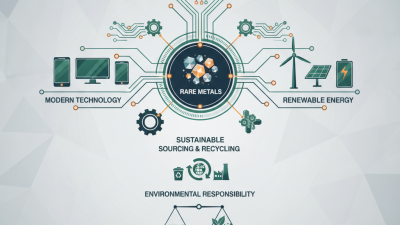
China’s rare metal supply chain remains central to electronics, renewable energy, aerospace, and advanced manufacturing. This guide examines China’s top 10 Rare Metal suppliers for global buyers. It focuses on production capability, export experience, product consistency, certifications, and responsible sourcing practices.
The International Energy Agency’s Global Critical Minerals Outlook 2024 reports that demand for lithium, nickel, cobalt, graphite, and rare earth elements could rise sharply by 2030. The report also warns that supply chains remain geographically concentrated. The U.S. Geological Survey’s Mineral Commodity Summaries 2025 identifies China as a leading producer or processor of several strategic minerals, including rare earths, tungsten, antimony, and graphite. These figures explain the market’s importance. They do not guarantee every supplier’s reliability.
Fatih Birol, Executive Director of the International Energy Agency, said, “The world is not going to run out of minerals, but there are concerns about the timely availability of supplies.” That concern is practical. A buyer may inspect shiny metal pellets, then discover inconsistent purity between batches. Testing matters. Documentation matters more than promises.
This supplier overview uses a buyer-focused approach. It considers laboratory analysis, traceability, packaging quality, communication speed, and compliance with international trade requirements. Some rankings remain subjective. Supplier performance can change quickly. Buyers should verify current licenses, specifications, certificates of analysis, and shipment records before signing contracts. A careful shortlist is useful, but independent due diligence remains essential.
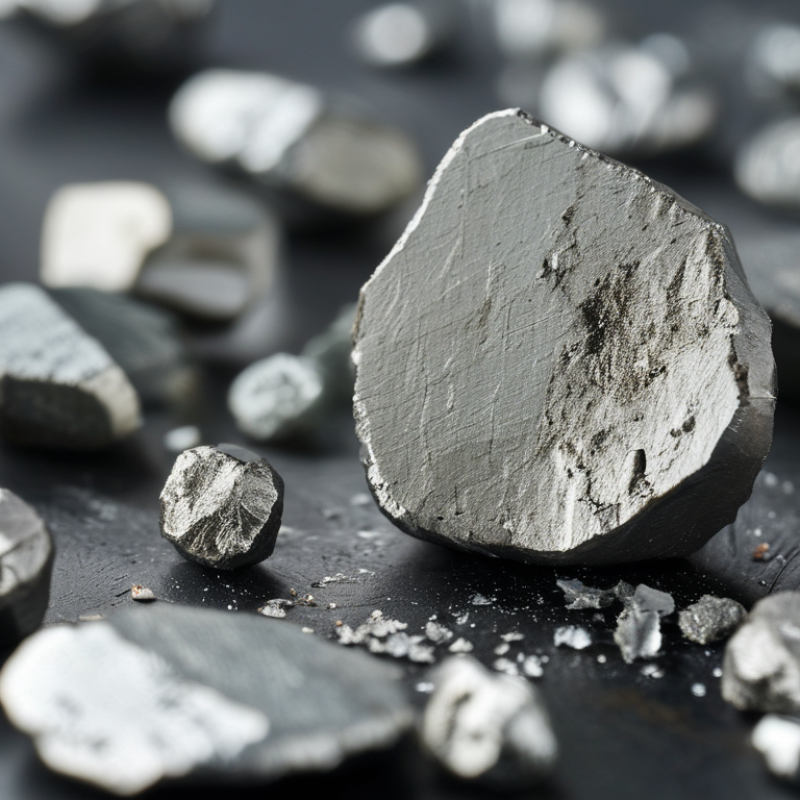
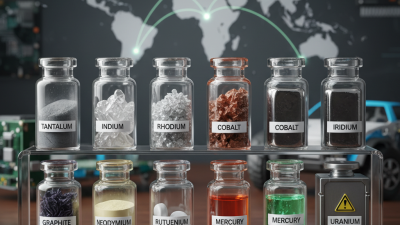
Rare metals are elements valued for scarcity, difficult extraction, or specialized industrial performance. The term is not perfectly standardized. That matters when global buyers compare Chinese suppliers or review a “top ten” list. Tungsten, molybdenum, indium, gallium, germanium, tantalum, niobium, cobalt, and lithium often appear in related discussions. Their classifications can vary by market and region.
These metals support semiconductors, aerospace components, rechargeable batteries, medical equipment, and renewable energy systems. A small amount can change conductivity, heat resistance, hardness, or battery efficiency. Gallium and indium support advanced electronic materials. Tungsten withstands intense heat. Cobalt and lithium remain important in several energy-storage designs, although technology is changing quickly.
Supply concentration creates both value and risk. Mining quality, refining capacity, export controls, energy costs, and recycling rates can influence prices. Procurement teams should request assay reports, batch numbers, origin records, impurity limits, and independent laboratory verification. Delivery consistency also deserves attention. A specification sheet may look precise, yet production results can vary between batches. That is an uncomfortable reality. Comparing only the quoted price is weak practice. Buyers should examine payment terms, packaging, traceability, environmental controls, and contingency plans. Chinese suppliers may offer strong processing capabilities, but capability should be verified through recent documents and sample testing. Rare-metal markets are strategic, but not always predictable. Forecasts can age badly.
| No. | Rare Metal | Common Supply Forms | Main Industrial Applications | China's Global Supply Position | Why It Matters Globally | Typical Buyer Quality Priorities |
|---|---|---|---|---|---|---|
| 01 | Rare Earth Elements | Mixed rare-earth carbonate, oxide, metal, alloy, and magnet-grade material | Permanent magnets, electric vehicles, wind turbines, electronics, catalysts, and defense systems | China is the leading global mining, separation, refining, and permanent-magnet manufacturing center; it is especially significant for light and heavy rare-earth processing | Rare earths enable high-performance magnets, energy-efficient motors, advanced optics, and specialized military technologies | Total rare-earth oxide content, individual element distribution, impurity profile, particle size, and traceability |
| 02 | Tungsten | Ammonium paratungstate, tungsten oxide, tungsten powder, carbide powder, and metal products | Cutting tools, mining tools, wear-resistant parts, aerospace components, and high-temperature applications | China has been the dominant global miner and processor of tungsten for many years | Its high density, hardness, and melting point make it difficult to substitute in demanding applications | WO3 or W content, particle-size distribution, carbon and oxygen levels, phase composition, and consistency between lots |
| 03 | Antimony | Antimony ingot, antimony trioxide, sulfide concentrate, and specialty compounds | Flame retardants, lead-acid batteries, ammunition, glass, ceramics, and semiconductors | China is one of the world's leading mine and refined-antimony producers | It supports fire-safety materials and critical battery and defense supply chains | Sb purity, arsenic and lead limits, oxide particle size, whiteness, moisture, and regulatory compliance |
| 04 | Gallium | High-purity gallium metal, gallium oxide, and gallium-containing compounds | Gallium nitride and gallium arsenide semiconductors, radio-frequency devices, LEDs, and power electronics | China is the leading global source of primary low-purity gallium and a major refining center | Gallium compounds are important for high-frequency communications, efficient power conversion, and optoelectronics | Purity grade, metallic and non-metallic impurities, crystal suitability, packaging, and export-control documentation |
| 05 | Germanium | Germanium dioxide, germanium metal, tetrachloride, and optical-grade materials | Fiber-optic systems, infrared optics, solar cells, radiation detectors, and semiconductor components | China is a major global producer and refiner of germanium recovered mainly as a by-product of zinc and coal processing | It is essential for infrared transmission, high-speed communications, and selected photovoltaic technologies | Purity, optical absorption, radionuclide content, particle size, moisture, and chain-of-custody documentation |
| 06 | Indium | Indium ingot, indium shot, indium oxide, and indium-tin oxide sputtering material | Touchscreens, flat-panel displays, thin-film solar cells, solders, and semiconductor devices | China is one of the largest refined-indium producers; indium is primarily recovered as a by-product of zinc refining | Its unique electrical and optical properties support transparent conductive coatings and advanced electronics | Purity, tin-to-indium ratio for ITO, metallic impurities, particle size, reclaimability, and packaging cleanliness |
| 07 | Bismuth | Refined bismuth ingot, oxide, nitrate, chloride, and low-melting alloys | Free-machining steels, solders, pharmaceuticals, ceramics, electronic components, and environmental materials | China is the leading global producer and exporter of refined bismuth | Bismuth offers a lower-toxicity alternative to lead in several alloys and chemical applications | Bi purity, lead and silver limits, oxidation condition, particle size, assay method, and safety documentation |
| 08 | Molybdenum | Molybdenum concentrate, roasted molybdenite concentrate, ferromolybdenum, oxide, and powder | Specialty steels, superalloys, catalysts, lubricants, electronics, and high-temperature furnace parts | China is among the world's leading molybdenum miners, refiners, and consumers | Molybdenum improves strength, corrosion resistance, and high-temperature performance in critical alloys | Mo content, sulfur and copper levels, particle size, oxide specification, carbon content, and heat-treatment performance |
| 09 | Vanadium | Vanadium pentoxide, ferrovanadium, vanadium nitride, and electrolyte-grade compounds | High-strength steel, tool steel, aerospace alloys, catalysts, and vanadium redox-flow batteries | China is a major vanadium producer and a leading market for vanadium-bearing steel products | It supports lightweight infrastructure steel and emerging long-duration energy-storage systems | V2O5 or V content, oxidation state, iron and silicon limits, particle size, electrolyte stability, and batch uniformity |
| 10 | Tin | Refined tin ingot, tin powder, tin oxide, solder alloy, and organotin-free industrial compounds | Electronics solder, tinplate, chemicals, photovoltaic applications, glass production, and specialty alloys | China is a major refined-tin producer and one of the world's largest tin-consuming and processing markets | Tin is central to electronics assembly and corrosion-resistant coatings, with limited direct substitutes in several uses | Sn purity, lead and arsenic limits, solderability, oxide content, grain size, conflict-mineral due diligence, and traceability |
Data note: The supply-position descriptions are based on publicly reported information from the U.S. Geological Survey Mineral Commodity Summaries, International Energy Agency critical-minerals assessments, and international trade and refining statistics. Rankings can vary by year and by whether mining, refining, recycling, or downstream processing is measured.