Choosing among China’s top Lanthanum Metal manufacturers requires more than comparing prices or polished websites. Buyers need evidence of consistent quality, dependable delivery, and responsible business practices. A manufacturer may offer attractive specifications, yet still lack stable batch control. This is where careful evaluation becomes essential.
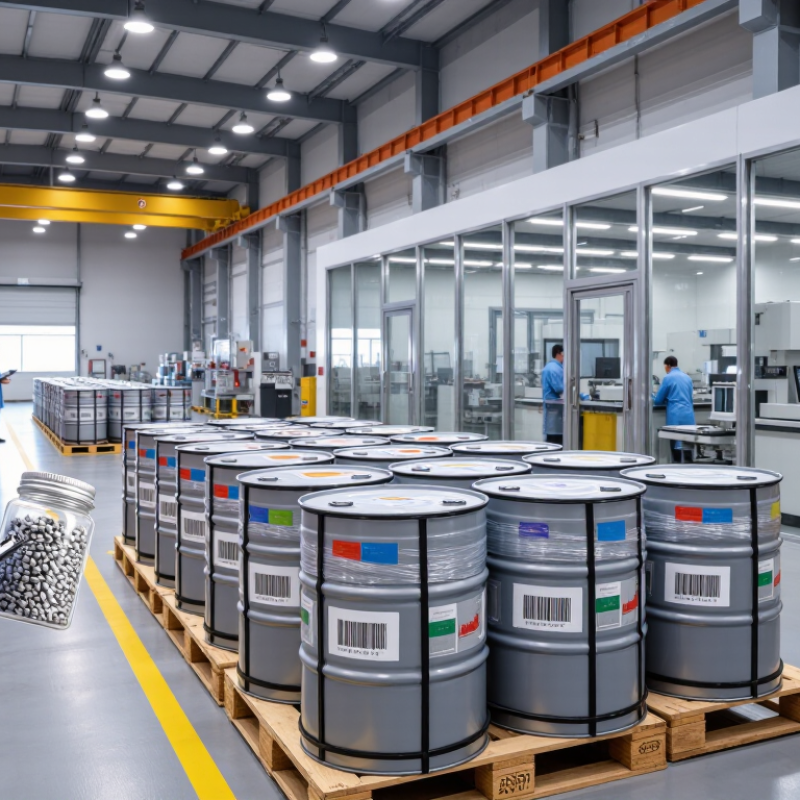
Start by checking the manufacturer’s production experience, technical staff, and actual product range. Ask for recent certificates of analysis, not only a general brochure. Review lanthanum purity, impurity limits, particle size, form, and packaging details. A reliable supplier should explain how these values are tested and recorded. Photographs of sealed drums, moisture barriers, and clear labels can reveal practical attention to detail.
Traceability matters. Each batch should connect to production records, inspection results, and shipment documents. Buyers can request samples and compare them with agreed specifications before placing larger orders. Communication also provides useful evidence. Do technical representatives answer clearly, or do they avoid difficult questions?
No checklist is perfect. A factory visit or independent inspection may still be worthwhile for critical applications. Consider delivery history, export experience, after-sales support, and the supplier’s response to quality disputes. Do not treat the lowest quotation as the best choice. Hidden costs may appear through delays, rejected material, or inconsistent performance.
This guide explores how to assess China-based Lanthanum Metal manufacturers with a practical and evidence-based approach. It focuses on quality verification, technical capability, documentation, and long-term reliability. The right supplier is not simply the largest one. It is the partner that can prove its promises, communicate honestly, and improve when weaknesses are identified.
Choosing a lanthanum metal manufacturer starts with precise specifications, not attractive product claims. Lanthanum has atomic number 57 and a melting point near 920°C. These values identify the element and support process planning. They also help engineers distinguish lanthanum metal from related compounds or alloys.
Ask for a clear certificate of analysis for every production batch. It should state purity, major impurities, lot number, and test methods. Inductively coupled plasma analysis can verify metallic composition. A dependable manufacturer should also explain whether the material is supplied as pieces, ingots, rods, or granules. Dimensions matter when the metal enters a controlled furnace. Small variations can affect feeding and melting behavior.
Storage details deserve equal attention. Lanthanum reacts with air and moisture over time, so sealed packaging and a dry inert atmosphere are practical safeguards. Check whether the container includes protective oil, argon filling, or another suitable barrier. Confirm the net weight after packaging. It sounds minor, but it prevents purchasing disputes. Technical support should answer questions about melting equipment, handling, and batch consistency with evidence, not vague promises.
No supplier is perfect. I would still request a recent sample and compare its appearance, analysis report, and delivery condition. A silvery surface alone proves little. Reliable selection combines atomic data, verified testing, careful packaging, and responsive documentation.

Choosing a top lanthanum metal manufacturer starts with purity, not a polished product page. Commercial purity is usually reported as lanthanum content, but test methods can differ. A 99.0% grade may suit alloy trials, research screening, or applications with wider impurity tolerance. Its lower cost can support early process development. However, the remaining one percent is not meaningless. It may include rare-earth elements, oxygen, carbon, iron, or calcium. Exact limits should appear on a lot-specific certificate of analysis.
A 99.5% grade offers tighter control for repeatable production. It can be a practical middle choice when performance matters but ultra-high purity is unnecessary. Ask for batch results, not only a general specification sheet. Check the assay method, impurity list, product shape, packaging, and moisture protection. Lanthanum oxidizes readily in air. Sealed packaging reduces surface contamination. Small detail, large impact.
The 99.9% grade fits demanding research, specialty alloys, and processes sensitive to trace elements. Higher purity does not automatically improve every product. It may increase cost without measurable benefit. A common mistake is selecting 99.9% material while overlooking crucible contamination or long storage. That weakens the grade’s value. I would still question whether the application needs this purity. A reliable manufacturer should provide traceable batch records, consistent product form, safety data, and clear technical answers.
| Comparison Dimension | Lanthanum Metal 99.0% | Lanthanum Metal 99.5% | Lanthanum Metal 99.9% | Purchasing Consideration |
|---|---|---|---|---|
| Nominal lanthanum content | ≥ 99.0 wt% | ≥ 99.5 wt% | ≥ 99.9 wt% | Confirm whether the stated purity refers to total metallic content, rare-earth content, or a complete impurity-controlled specification. |
| Typical balance | Lanthanum with controlled levels of other rare-earth elements, oxygen, carbon, iron, silicon, and other trace impurities | Lanthanum with lower trace-impurity levels than 99.0% material | Lanthanum with closely controlled rare-earth and non-rare-earth impurities | Request a batch-specific certificate of analysis rather than relying only on the headline purity. |
| Common product forms | Pieces, lumps, ingots, granules, or chips | Pieces, ingots, granules, or custom-cut pieces | Small pieces, granules, chips, or laboratory-scale ingots | Select a form that matches the melting, alloying, evaporation, or analytical process. |
| Appearance | Silvery-white to gray metallic solid; surface may tarnish in air | Silvery-white metallic solid; surface oxidation may occur during storage | Bright silvery metallic solid when freshly prepared; oxidation must be minimized | Color alone is not a reliable purity test; use chemical analysis and visual inspection together. |
| Atomic number | 57 | A fixed elemental property of lanthanum and not a grade-dependent value. | ||
| Relative atomic mass | 138.90547 | Use the standard atomic weight for stoichiometric calculations; commercial purity affects the actual assay of a batch. | ||
| CAS Registry Number | 7439-91-0 | Verify that the documentation identifies elemental lanthanum metal rather than lanthanum oxide, chloride, carbonate, or another compound. | ||
| Melting point | Approximately 920 °C | Process equipment should account for contamination, oxidation, and the melting behavior of the complete alloy system. | ||
| Density | Approximately 6.16 g/cm3 at room temperature | Actual bulk density varies with particle size, shape, and packing method. | ||
| Suitable applications | General alloying, metallurgical trials, research, and cost-sensitive applications | Controlled alloy production, specialty metallurgy, and applications requiring moderate impurity control | High-purity research, electronic or optical materials development, and sensitive laboratory processes | Choose the lowest grade that meets the technical impurity limits of the final product. |
| Impurity sensitivity | More suitable when trace impurities have limited impact on performance | Balanced option for improved consistency without the highest purity premium | Preferred when trace rare-earth, metallic, oxygen, or carbon impurities can affect performance | Specify individual maximum limits for critical impurities instead of specifying only total purity. |
| Typical cost position | Lowest of the three grades, subject to form and order quantity | Moderate price level | Highest price level because of additional refining, sorting, and analytical control | Compare price per unit of usable lanthanum, including packaging, testing, and yield losses. |
| Recommended documentation | Certificate of analysis, product specification, safety data sheet, and packaging details | All 99.0% documentation plus batch traceability and impurity breakdown | All 99.5% documentation plus a detailed trace-element analysis and analytical method | Check test date, analytical technique, detection limits, lot number, and consistency between documents. |
| Packaging and storage | Store tightly sealed, dry, and away from moisture, acids, and oxidizing materials; inert-gas packaging may be appropriate for oxidation-sensitive pieces. | Confirm packaging atmosphere, moisture barrier, net weight, labeling, and transport requirements before ordering. | ||
| Best overall selection | Choose for standard industrial use where impurity limits are not highly restrictive. | Choose when process consistency and cost efficiency must be balanced. | Choose when low trace-element levels and reproducible high-purity performance are essential. | The correct grade is determined by the end-use specification, not by nominal purity alone. |
Note: Purity ranges and impurity limits may vary by producer, production route, product form, and customer specification. Confirm the current batch specification and certificate of analysis before purchase.
Choosing a top lanthanum metal manufacturer in China requires more than comparing prices. Documentation should match the material in your hands. Request a current Certificate of Analysis for each production lot. Check the lot number, assay result, impurity profile, test method, issue date, and authorized signature. The container label should carry the same identification. Small mismatches deserve attention.
Ask for an ISO 9001 certificate, but read its scope carefully. It should cover relevant manufacturing or quality activities, not only office administration. Verify the certificate through the issuing body when possible. A scanned certificate alone is weak evidence. Request recent audit information, corrective-action records, or controlled quality procedures. Some suppliers present excellent paperwork, yet their batch controls remain unclear.
Traceability should follow the metal from incoming materials to melting, testing, packing, and shipment. Ask whether one lot can be linked to furnace records, laboratory results, and retained samples. A practical test is simple: choose a random lot and request its complete record. The response time matters. So does consistency. I have found that reliable suppliers explain limits instead of promising perfect results. This may feel less impressive, but it is more credible. Before a large order, test a representative sample through an independent laboratory. Supplier documents guide the decision; they should not replace verification.
When choosing among China’s top lanthanum metal manufacturers, compare usable capacity with your annual demand, not advertised output.
The USGS Mineral Commodity Summaries 2025 reports China produced about 270,000 metric tons of rare-earth oxides in 2024.
That figure covers many elements, not lanthanum metal. Ask for element-specific capacity, monthly utilization, and recent production records.
Match the supplier’s minimum order quantity to your purchasing rhythm.
Suppose your factory needs 12 tonnes annually. A 1-tonne monthly release may fit better than a 12-tonne shipment. Smaller MOQs reduce storage pressure, but they can increase unit costs.
Request quotations for three quantities.
Check purity, particle size, packaging, and lot consistency. A certificate alone is not enough. Independent testing is safer.
Lead time needs a written range.
IEA’s Global Critical Minerals Outlook 2024 shows China remains highly important in rare-earth processing, with more than 90% of magnet rare-earth refining capacity.
This does not directly measure lanthanum metal. Still, it highlights supply-chain concentration.
Ask whether quoted lead times include production, testing, export preparation, and transit.
My practical mistake would be trusting a “ready stock” promise without a batch date. Reserve capacity through a forecast, but avoid paying for volumes your demand cannot absorb. Suppliers should explain their backup plan when feedstock quality changes or inspections delay dispatch.
China Top Lanthanum Metal Manufacturers: How to Choose?
A low quotation rarely shows the real purchasing cost. Compare metal purity, assay method, minimum order quantity, tooling, inland freight, insurance, duties, and payment terms. Ask for a recent certificate of analysis, not only a specification sheet. Batch traceability matters when your laboratory finds an unexpected impurity. It can prevent expensive rework.
Packaging also affects risk and cost. Lanthanum metal may require sealed, moisture-resistant packaging with clear batch labels. Check the container material, net weight, pallet design, and damage-control process. Request package photographs before shipment. REACH and RoHS evidence must match your intended application and destination. REACH obligations can vary by importer role, annual volume, and substance use. RoHS may not apply to every product, so avoid accepting vague declarations.
Tips: Build a comparison table with delivered cost, documents, and lead time. Request SDS, CoA, origin details, and transport classification early. Confirm HS codes with your customs broker. Ask whether the supplier can provide export documents consistently. Check sample packaging before placing a large order. Do not rely on one email promise. Written evidence is safer. I would also leave a small contingency budget; inspections, relabeling, or port delays are easy to underestimate. A supplier may appear compliant, yet outdated documents can create avoidable problems.
Illustrative procurement-weight model for comparing suppliers without using company or brand data. Total cost includes metal price, packaging, freight, testing, documentation, and potential compliance-related charges.
A practical evaluation should give the highest weight to total delivered cost while confirming packaging suitability, REACH obligations, RoHS declarations, and export-control documentation. REACH registration requirements can apply when a substance is manufactured or imported into the EU at 1 tonne or more per year. RoHS compliance should be supported by evidence covering the ten restricted substances under the current Annex II list.