2026 Best Uses of Lanthanum Metal in Modern Technology?
Lanthanum metal, a rare earth element, plays a crucial role in modern technology. This lightweight, silvery-white metal has properties that make it valuable for various applications. As industries evolve, the demand for innovative materials increases.
One prominent use of lanthanum metal is in glass production, especially for high-quality optical lenses. These lenses provide better clarity and resolution. Additionally, lanthanum is critical in catalysts for petroleum refining. It enhances efficiency in converting crude oil into fuel.
Despite its significance, the extraction and use of lanthanum metal pose environmental challenges. Mining activities can lead to ecological damage. Additionally, the technology to recycle lanthanum is still developing. These factors raise questions about sustainability and responsible usage. As we explore the best uses of lanthanum metal, reflecting on these challenges is essential.
Overview of Lanthanum Metal and Its Properties
Lanthanum metal is gaining traction in various industries due to its unique properties. As a rare earth element, it possesses high melting points and excellent electrical conductivity. This makes it an ideal choice for various technological applications. In 2022, the global demand for lanthanum surged, with predictions indicating a compounded annual growth rate of 8% through 2026. These numbers highlight the increasing reliance on lanthanum in high-tech applications.
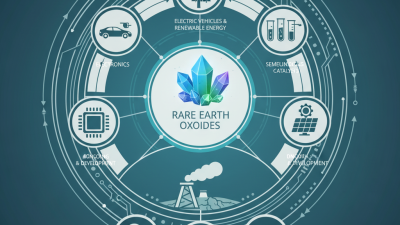
The metal's most notable uses include catalyst production and battery technology. For instance, lanthanum is a key component in nickel-metal hydride batteries, which are crucial for hybrid electric vehicles. Reports indicate that about 20% of lanthanum is utilized in this sector. Additionally, its role in industrial catalysts has become increasingly vital. Catalysts containing lanthanum improve efficiency in petroleum refining. However, reliance on lanthanum also poses challenges, such as supply chain volatility due to mining restrictions.
In optical applications, lanthanum-based glass enhances the quality of lenses. The optical properties of lanthanum lead to superior vision performance. Yet, the environmental impacts of harvesting lanthanum cannot be overlooked. As industries evolve, the balance between exploiting lanthanum's benefits and addressing sustainability concerns remains a significant challenge. This ongoing dialogue about ethical sourcing and resource management is essential as we advance into a tech-driven future.
Significant Applications of Lanthanum in Modern Electronics
Lanthanum metal, a key player in modern electronics, has gained importance due to its unique properties. It exhibits excellent conductivity and plays a significant role in the production of high-performance capacitors. The global market for lanthanum is projected to reach approximately $2.3 billion by 2026, driven by its increasing application in advanced electronics. This element is widely used in devices like smartphones and tablets, where it enhances battery efficiency and lifespan.
Moreover, lanthanum’s role in catalysts cannot be overlooked. It is used in catalytic converters, improving emissions control in vehicles. Data from industry reports indicate that the automotive sector consumes nearly 30% of the total lanthanum supply. This reflects a growing trend towards eco-friendly technologies. However, there are challenges in sourcing lanthanum sustainably, which compels ongoing research into alternative materials.
Though its applications are promising, reliance on lanthanum comes with a need for reflection. The mining and refining processes can be environmentally taxing. As demand continues to rise, balancing technological advancement with environmental sustainability remains crucial. Innovators must consider both efficiency and ecological impact in their designs to ensure a brighter future for lanthanum in electronics.
The Role of Lanthanum in Renewable Energy Technologies
Lanthanum metal plays a crucial role in renewable energy technologies. It is a key component in the development of advanced batteries. For instance, lanthanum nickel batteries are known for their high energy density. They are effective in hybrid and electric vehicles, contributing to greener transportation solutions. However, many overlook the challenges in sourcing lanthanum sustainably.
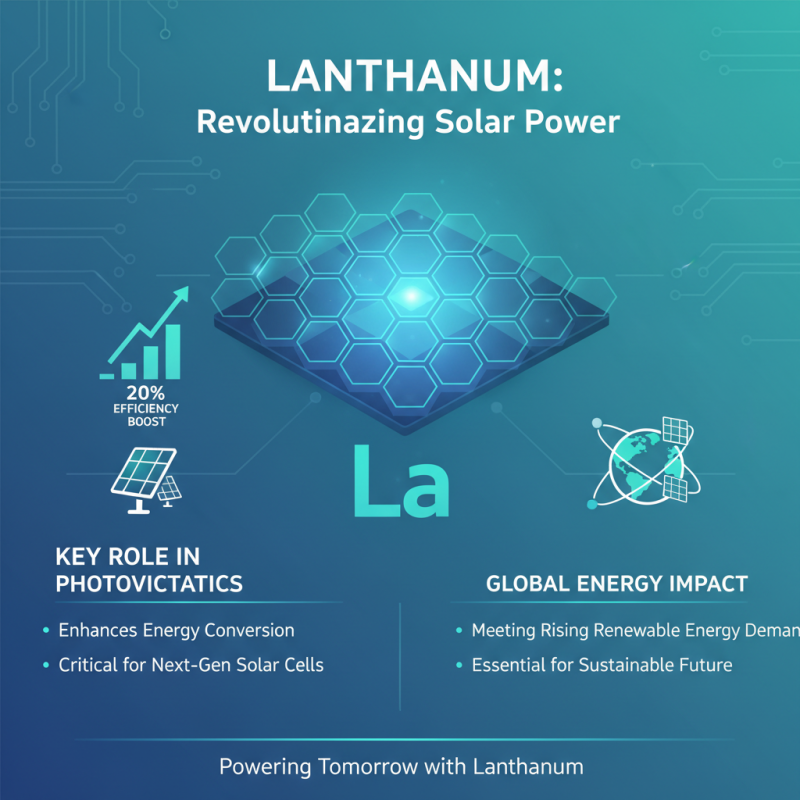
Solar panel technologies also benefit from lanthanum. It enhances the efficiency of certain materials used in photovoltaic cells. By improving light absorption, it increases the overall energy output. Nonetheless, the extraction process of lanthanum can have environmental impacts. That raises questions about long-term sustainability.
Moreover, lanthanum is utilized in hydrogen storage systems. These systems are vital for stored energy solutions. They help in utilizing excess renewable energy. Yet, issues remain with the density and performance of current storage methods. Ongoing research aims to address these limitations. The future of lanthanum in modern technology looks promising, yet requires careful consideration of its sourcing and application.
Advancements in Photovoltaics and Lanthanum's Contribution
Lanthanum metal plays a pivotal role in the advancements of photovoltaic technology. As solar energy becomes increasingly vital, materials like lanthanum are essential for enhancing efficiency. According to recent industry reports, incorporating lanthanum in solar cell production can boost energy conversion rates by up to 20%. This improvement is significant, given that the global demand for renewable energy sources continues to rise.
The unique properties of lanthanum contribute to its effectiveness in photovoltaic applications. It aids in the formation of high-quality thin films, which are crucial for maximizing sunlight absorption. Furthermore, lanthanum compounds help improve the durability and performance of solar cells. However, challenges remain. The extraction and processing of lanthanum pose environmental concerns that need addressing. Sustainable sourcing is critical. Researchers are still exploring ways to minimize waste and improve the recycling of this metal.
Despite its promise, reliance on lanthanum raises questions about material availability. Global reserves may not meet future demands for large-scale solar deployment. Collaboration among scientists, engineers, and policymakers is necessary. They must navigate these hurdles to ensure the progress of solar technology and embrace lanthanum's potential fully.
Future Trends in Lanthanum Utilization Across Industries
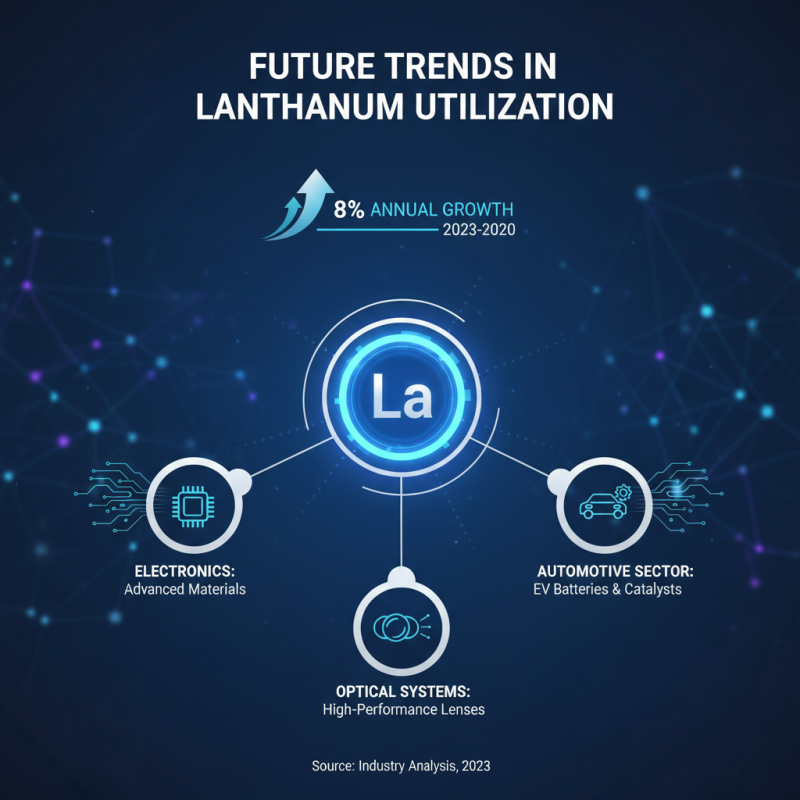
Lanthanum metal is gaining traction in modern technology, particularly in high-tech industries. With a projected annual growth rate of 8% in the lanthanum market between 2023 and 2030, its applications are expanding. This growth is driven by the demand for advanced materials in electronics, optical systems, and automotive sectors.
In electronics, lanthanum improves the performance of capacitors and batteries, enhancing energy storage capabilities. Reports indicate that using lanthanum in lithium-ion batteries could boost efficiency by up to 15%. Moreover, manufacturers are experimenting with lanthanum-doped materials to optimize the performance of next-generation displays. The material's unique properties allow for better energy absorption and signal transmission.
The automotive and renewable energy sectors increasingly depend on lanthanum. In catalytic converters, lanthanum aids in reducing harmful emissions, supporting environmental regulations. A recent study highlighted that lanthanum enhances hybrid vehicle efficiency by improving fuel combustion processes. However, challenges remain. Mining and processing lanthanum can be environmentally damaging. Responsible sourcing and recycling will be vital for sustainable growth in its utilization.