China remains a major production base for Erbium Oxide, serving optical fiber, laser, ceramic, and specialty glass industries. Global buyers often face a crowded supplier market. Product pages may look similar. Factory capabilities rarely are.
This guide examines China’s top 10 Erbium Oxide manufacturers through practical purchasing criteria. These include purity grades, production capacity, quality systems, packaging, export experience, and technical support. Certificates matter. So does batch consistency. A bright sample is not enough. Buyers should request recent test reports, trace-metal data, particle-size information, and shipping records before making decisions.
Jack Lifton, a respected rare-earths industry analyst, once observed, “The rare earths are not rare; economically viable deposits are rare.” His point also applies to sourcing. Reliable Erbium Oxide depends on controlled processing, stable feedstock, and disciplined quality management. The lowest quoted price may hide costly variations.
No supplier ranking is perfect. Public information can become outdated, and factory claims require verification. That limitation deserves attention. This overview therefore treats manufacturer selection as a risk assessment, not a popularity contest. It highlights companies with visible technical strengths while encouraging direct audits and sample testing.
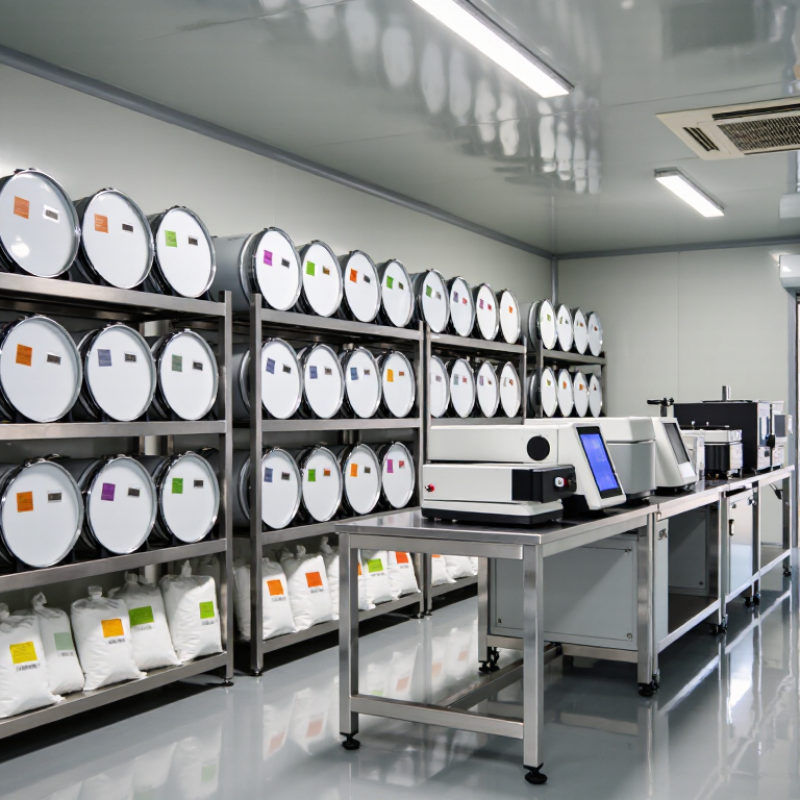
For global buyers, the details are tangible. Think sealed moisture-resistant bags, labeled drums, clean production areas, and traceable lot numbers. These small signs reveal operational maturity. Erbium Oxide is a specialized material. Choose evidence over polished marketing.
Erbium oxide, or Er2O3, is a fine pale-pink powder made from the rare-earth element erbium. Its color is distinctive. The material supports optical glass, fiber amplifiers, lasers, ceramics, and specialized electronic components. In glass production, small additions can create controlled pink or rose tones. In photonic equipment, erbium helps strengthen signals across long fiber networks.
Global buyers care about more than chemical identity. Purity, particle size, moisture content, packaging, and trace impurities can change processing results. A reliable manufacturer should provide batch-specific test reports, clear technical data, and consistent production records. Export experience also matters. Stable packaging protects the powder from humidity, contamination, and accidental loss during long-distance transport. These details often separate a useful shipment from an expensive delay.
China remains an important sourcing center, so buyers comparing the top ten erbium oxide manufacturers should examine evidence rather than rankings alone. Factory audits, sample testing, production capacity, and response quality offer stronger guidance. A low price may look attractive, but it can hide inconsistent purity or weak documentation. I would not approve a supplier from a website claim alone. Even a well-prepared checklist can miss practical issues, such as powder flow during filling. That is where careful sampling and honest technical discussions become essential.
Evaluating China’s top erbium oxide manufacturers requires more than comparing quoted prices. The U.S. Geological Survey’s Mineral Commodity Summaries 2025 estimates China produced about 270,000 metric tons of rare-earth-oxide equivalent in 2024, from roughly 390,000 tons globally. This scale supports strong processing capacity, but it does not guarantee consistent erbium oxide quality. Buyers should request recent batch records, not marketing claims. Check erbium content, total rare-earth purity, moisture, particle size, and trace impurities such as iron, calcium, and sodium. Ask for an independent laboratory report when the application is sensitive.
Supply-chain evidence matters. The International Energy Agency reported that China held around 90% of global rare-earth refining capacity in 2023. That concentration can improve availability, yet it also makes documentation and shipment planning essential. Verify the manufacturer’s production address, quality-system certification, export experience, packaging method, and realistic lead time. A useful trial order should include sealed inner bags, drum labels, a certificate of analysis, and matching lot numbers. Small details reveal discipline. Very small details.
Do not rely on one sample. Compare three production batches and test them under your own process conditions. Some suppliers may provide excellent samples but weaker routine output. That risk deserves discussion. Confirm payment terms, inspection rights, Incoterms, safety data, and applicable import requirements before signing. A low price can become expensive after retesting, delays, or rejected material. Supplier evaluation is never perfectly objective; recorded evidence is simply safer than confidence.
China’s top ten erbium oxide manufacturers stand out through different strengths, not identical scale. USGS Mineral Commodity Summaries 2025 reports China as the leading rare-earth producer, with about 270,000 metric tons of rare-earth-oxide equivalent output in 2024. Erbium oxide remains a smaller heavy rare-earth segment, so verified purity matters more than headline capacity.
Several leading producers offer 99.9% to 99.999% purity, supported by ICP-OES testing and batch certificates. Others specialize in controlled particle sizes for optical glass, laser components, and ceramic applications. Some provide kilogram laboratory packs, while stronger exporters handle palletized orders and moisture-resistant packaging. A few manufacturers integrate separation, calcination, milling, and inspection internally, reducing transfer risks. This structure can improve consistency.
Supply depth differs sharply.
Grand View Research projects continued growth in the global rare-earth market through the decade, driven by electronics, energy, and advanced materials. That outlook supports Chinese production, but it should not replace supplier audits. Buyers should compare impurity limits, lot-to-lot data, lead times, and traceability records. ISO 9001 certification is useful, though certification alone proves little about actual erbium oxide performance. Some published rankings also mix distributors with producers, which can mislead procurement teams. A factory visit, retained sample, and independent test remain sensible safeguards.
China Top 10 Erbium Oxide Manufacturers for Global Buyers?
Global buyers should compare erbium oxide suppliers through verified evidence, not attractive rankings alone. Request recent certificates of analysis showing purity, rare-earth oxide basis, moisture, particle size, and trace impurities. A 99.99% grade may suit optical materials, while industrial ceramics may require different specifications. Ask for batch numbers and matching test reports.
Production capacity needs practical checking. A supplier may advertise large annual output but hold limited inventory. Confirm monthly capacity, normal lead time, minimum order quantity, and backup production lines. Request photos of sealed 25-kilogram drums, moisture barriers, and warehouse labels. A factory audit or live video inspection can reveal whether testing equipment is actually available. Still, remote evidence has limits.
Pricing should include more than the product quotation. Compare Incoterms, packaging, testing fees, shipping schedules, customs documents, and payment conditions. Ask for prices at several volumes, such as 25 kilograms, 500 kilograms, and one metric ton. Very low pricing deserves closer review. It may reflect weaker purity control or unstable raw-material sourcing. I would not rely on one sample alone. Independent retesting is sensible, although it adds time and cost. Suppliers with clear corrective-action records often appear more reliable than those promising perfect results. Availability can change quickly. Recheck quotations before signing a purchase contract.
Before importing erbium oxide from China, verify the material, not only the supplier’s quotation. The USGS Mineral Commodity Summaries 2025 reports China’s 2024 rare-earth mine production at about 270,000 metric tons of rare-earth-oxide equivalent. This scale supports strong supply capacity, but it does not prove consistent erbium oxide quality. Request a recent certificate of analysis showing purity, ignition loss, moisture, particle size, and trace impurities such as iron, calcium, and other rare earths.
Ask for the CAS number, safety data sheet, technical data sheet, and batch-specific test results. A generic certificate is weak evidence. Prefer testing from an ISO/IEC 17025-accredited laboratory, then compare its method with your internal specification. Check whether “99.9%” means total rare-earth purity or actual erbium oxide content. Those figures are not always interchangeable.
The IEA’s Global Critical Minerals Outlook 2024 identifies China as a dominant force in rare-earth processing. Buyers should therefore examine production capacity, export experience, packaging controls, and supply continuity. Confirm the correct customs classification with a broker before shipment; tariff treatment can differ by destination. Use sealed moisture-resistant packaging, lot numbers, and photographs before loading. Payment terms also deserve attention. A low price can still be expensive after rejected batches, retesting, or port delays.
I would not rely on a polished website alone. One practical weakness is incomplete traceability. Ask for mine-to-batch documentation where available, while recognizing that smaller suppliers may not provide every record. Expect gaps, and test the material independently.
| Anonymous Supplier Profile | Product Form to Request | Typical Purity Range to Verify | Assay Basis | Core Chemical Identification | Impurity Data to Request | Particle-Size Information | Quality Documents | Packaging and Shipping Checks | Pre-Shipment Inspection | Buyer Risk Level |
|---|---|---|---|---|---|---|---|---|---|---|
| Manufacturer Profile 01 | Pink rare-earth oxide powder; industrial or high-purity grade | 99.9%–99.999% Er₂O₃ Verify by batch |
Rare-earth oxide basis; confirm whether the result is calculated on an ignited or as-received basis | Erbium oxide; formula Er₂O₃; CAS No. 12061-16-4 | Request complete rare-earth impurity profile, Fe, Ca, Si, Al, Cu, Ni, Pb, and moisture | Request D50, D90, sieve residue, morphology, and agglomeration data | COA, SDS, technical data sheet, ISO 9001 certificate if claimed | Confirm moisture-proof inner liner, net weight, palletization, shipping marks, and export carton strength | Independent laboratory test against the purchase specification | Medium |
| Manufacturer Profile 02 | High-purity powder for optical, ceramic, or laboratory applications | 99.99%–99.999% Er₂O₃ Verify trace impurities |
Confirm total rare-earth content, loss on ignition, and analytical method | Er₂O₃ powder; CAS No. 12061-16-4; pink solid appearance is commonly reported | Special attention to ytterbium, dysprosium, holmium, terbium, and other neighboring rare-earth elements | Request laser-diffraction results and whether the powder is milled or spray-dried | Lot-specific COA, SDS under applicable GHS rules, and test-method references | Check double-bagging, desiccant use, container cleanliness, and maximum storage period | Approve a retained sample before authorizing mass production | Low–Medium |
| Manufacturer Profile 03 | Standard industrial erbium oxide powder | 99.5%–99.9% Er₂O₃ Confirm application suitability |
Clarify whether purity is expressed as Er₂O₃ content or total rare-earth oxide content | Erbium(III) oxide; formula Er₂O₃; CAS No. 12061-16-4 | Request limits for chloride, sulfate, sodium, iron, calcium, and silicon | Confirm whether particle size is controlled or only reported as a typical value | COA and SDS required; verify certificate scope and issuing organization | Confirm 5 kg, 25 kg, or customized packing; inspect labeling and lot traceability | Visual inspection plus third-party assay for the first commercial shipment | Medium |
| Manufacturer Profile 04 | Fine powder with controlled particle-size distribution | 99.99% Er₂O₃ or higher Request guaranteed minimum |
Confirm ICP-OES, ICP-MS, or other analytical technique used for the assay | Rare-earth oxide compound identified as Er₂O₃; CAS No. 12061-16-4 | Request a quantitative impurity table rather than a general “high purity” statement | Specify target D50 and allowable D90 range in the purchase contract | Lot-specific COA, SDS, particle-size report, and change-control procedure | Use sealed moisture-barrier bags inside rigid outer packaging; confirm transport conditions | Pre-shipment sample approval and random lot sampling | Low–Medium |
| Manufacturer Profile 05 | Calcined or heat-treated erbium oxide powder | 99.9%–99.99% Er₂O₃ Confirm calcination history |
Request assay before and after ignition where loss on ignition is relevant | Erbium oxide, Er₂O₃; CAS No. 12061-16-4 | Check residual carbonate, nitrate, chloride, sulfate, and volatile matter | Ask for bulk density, tap density, particle size, and powder-flow information | COA, SDS, process description, and batch traceability records | Confirm packaging can prevent contamination and moisture uptake after calcination | Test moisture, ignition loss, purity, and particle size before release | Medium |
| Manufacturer Profile 06 | Custom-grade powder for ceramic or electronic-material formulations | Customer specification Do not rely on catalog range |
Define acceptance criteria, analytical method, sampling plan, and reporting units contractually | Er₂O₃; CAS No. 12061-16-4; confirm identity by the supplier’s test report | Set individual limits for all critical contaminants related to the final application | Define particle-size method, dispersion medium, ultrasonic treatment, and reporting percentiles | Approved sample, signed specification, COA, SDS, and technical change notification | Confirm packaging configuration, shelf life, storage temperature, and handling instructions | First-article approval followed by periodic independent verification | Medium |
| Manufacturer Profile 07 | Small-quantity laboratory or research grade | 99.9%–99.999% Confirm bottle-level lot number |
Request assay, trace-metal report, and uncertainty or detection-limit information where available | Erbium(III) oxide; Er₂O₃; CAS No. 12061-16-4 | Request trace metals, rare-earth separation profile, moisture, and insoluble matter | Confirm whether the material is micronized, sub-micron, or supplied as received | COA, SDS, certificate of analysis date, and lot-specific label | Check tamper-evident sealing, inner bottle or bag, outer cushioning, and customs documentation | Verify identity, purity, and net quantity on receipt | Low–Medium |
| Manufacturer Profile 08 | Bulk industrial material for repeat orders | 99.5%–99.99% Confirm lot-to-lot consistency |
Require a consistent assay method across all production lots | Er₂O₃ powder; CAS No. 12061-16-4; confirm product identity on shipping documents | Review historical impurity trends, not only one representative COA | Establish an agreed particle-size window and tolerance for production lots | COA per lot, SDS, quality agreement, and documented corrective-action process | Confirm container loading, pallet condition, gross/net weight, and moisture protection | Use an inspection plan based on lot size and shipment frequency | Medium |
| Manufacturer Profile 09 | High-purity material with customer-specific impurity limits | 99.99%–99.999% Check guaranteed values |
Specify whether results are reported on a dry basis, oxide basis, or as received | Erbium oxide, Er₂O₃; CAS No. 12061-16-4 | Require individual numerical limits for all relevant rare-earth and metallic impurities | Request particle-size distribution together with agglomerate and foreign-particle controls | COA, SDS, specification sheet, sample retention, and change-control records | Confirm export invoice, packing list, certificate of origin, and applicable customs data | Pre-shipment document review plus independent laboratory release testing | Low–Medium |
| Manufacturer Profile 10 | Custom packaging and private-label-free bulk supply | As specified in contract Set a minimum acceptance level |
Include sampling frequency, test method, retest procedure, and nonconformance terms | Er₂O₃; CAS No. 12061-16-4; confirm identity and grade on every COA | Define critical, major, and minor impurity categories before quotation | Specify powder flow, bulk density, D10/D50/D90, and maximum oversize particles if needed | Signed technical agreement, COA, SDS, packing specification, and traceability system | Confirm packaging material compatibility, storage conditions, and transport insurance | Pre-shipment inspection, retained reference sample, and arrival-condition check | Medium |
| Importer reminder: Erbium oxide is generally handled as a fine inorganic powder. Confirm the latest SDS, applicable transport and customs requirements, tariff classification with a licensed customs professional, and destination-country chemical regulations before importing. | ||||||||||