10 Essential Tips for Understanding Rare Earth Oxides in Modern Technology?
In today's technology-driven world, Rare Earth Oxides play a vital role in numerous applications. Dr. Alice Mercer, a leading expert in materials science, emphasizes the importance of these compounds. She states, "Without Rare Earth Oxides, modern electronics and renewable energy technologies would struggle to exist."
Rare Earth Oxides are crucial in making powerful magnets, catalysts, and phosphors. They enhance the efficiency of batteries and improve the performance of electronic devices. Industries rely on these materials for innovations, from smartphones to electric vehicles. The demand for Rare Earth Oxides continues to rise, pushing the need for sustainable sourcing and recycling.
However, understanding Rare Earth Oxides can be challenging. Misconceptions abound regarding their rarity and availability. Often, people overlook their environmental impact and supply chain vulnerabilities. A deeper exploration of this data is essential. By addressing these complexities, we can appreciate their significance in shaping future technologies. Awareness and responsible practices will lead to a more sustainable future.

The Role of Rare Earth Oxides in Modern Industrial Applications
Rare earth oxides play a critical role in modern industrial applications. These materials enhance the performance of various technologies. From smartphones to renewable energy solutions, their impact is significant. Manufacturers rely on these compounds for their unique properties. They boost magnetism, improve conductivity, and contribute to optical functions.
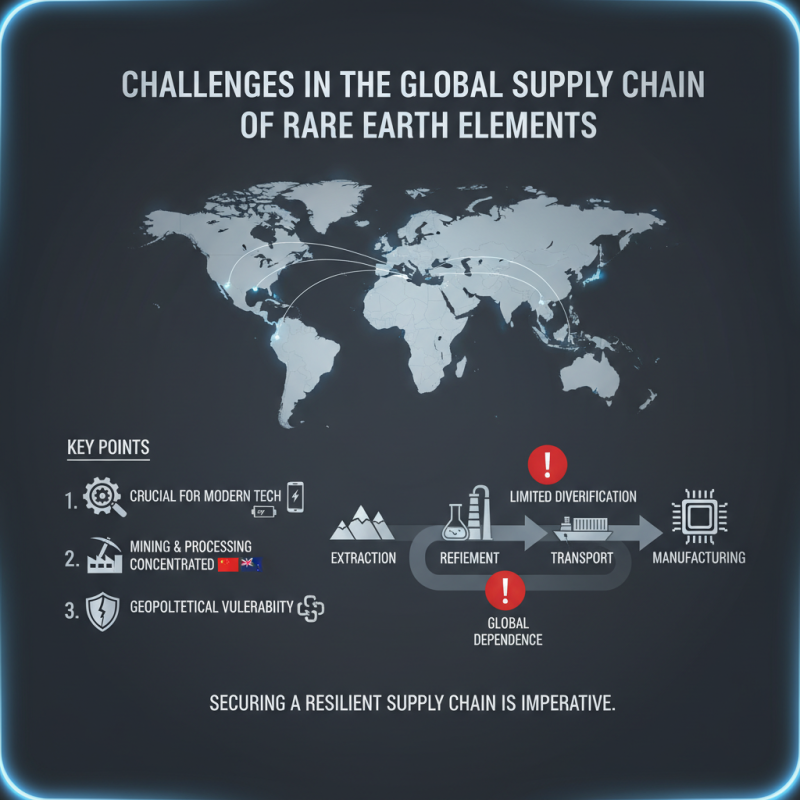
One tip for understanding their importance is to consider the supply chain. Rare earth elements are not evenly distributed globally. This makes sourcing them challenging. Also, environmental concerns surround their extraction and processing. Understanding these aspects can provide insight into their value.
Another point to consider is their diverse applications. In electric vehicles, they enhance battery performance. In wind turbines, they improve efficiency. Understanding these functions will deepen your appreciation of modern technology. Rare earth oxides might seem obscure, but their influence is far-reaching, impacting everyday life and industry alike.
Key Properties of Rare Earth Oxides and Their Importance in Technology
Rare earth oxides (REOs) play a critical role in modern technology due to their unique properties. These compounds exhibit significant optical and magnetic characteristics. For instance, cerium oxide is widely used in catalysts, boosting fuel efficiency in vehicles. According to a study from the International Energy Agency, about 70% of all automotive catalysts contain REOs.
Moreover, neodymium and dysprosium oxides are essential for the production of high-performance magnets. These magnets are pivotal in electric motors, which are set to dominate the automotive industry as electric vehicle demand rises. Research estimates that by 2030, 70 million electric vehicles will be in operation, increasing the reliance on REOs for efficient motor performance.
However, the environmental impact of mining and refining these materials raises concerns. Inefficient extraction processes can lead to harmful waste and habitat degradation. Industry reports suggest that improving sustainable practices is crucial. As technology progresses, a balance between resource extraction and environmental stewardship remains vital.
10 Essential Tips for Understanding Rare Earth Oxides in Modern Technology
| Oxide |
Key Properties |
Applications |
Importance in Technology |
| Cerium Oxide (CeO2) |
Catalytic properties, high thermal stability |
Catalysts, glass polishing |
Used in catalytic converters and as a UV filter |
| Lanthanum Oxide (La2O3) |
High refractive index, excellent dielectric properties |
Optics, phosphors |
Critical in the development of efficient lighting |
| Neodymium Oxide (Nd2O3) |
Strong magnetic properties, stability |
Permanent magnets, laser technology |
Key in high-performance motors and electronic components |
| Praseodymium Oxide (Pr2O3) |
Enhances color and brightness |
Glass, ceramics |
Important for colorants in displays and lighting |
| Yttrium Oxide (Y2O3) |
High thermal stability, conductivity |
Phosphors, ceramics |
Crucial in LED technology and phosphorescent materials |
Extraction and Processing Techniques for Rare Earth Oxides
The extraction of rare earth oxides (REOs) is a complex process. It often begins with mining specific ores that contain these elements. Common methods include flotation, hydrometallurgy, and pyrometallurgy. Each method has its advantages and challenges. For instance, flotation is effective but may not recover all valuable materials.
Processing REOs requires careful handling. Impurities can affect the quality of the final product. Therefore, purification steps are vital. Techniques like solvent extraction and ion exchange are commonly used. However, these techniques may generate environmental waste. Managing this waste is a growing concern in the industry.
Moreover, regional differences in resource availability impact extraction techniques. Some areas may lack technology or investment. This leads to inconsistent quality and supply. Understanding these nuances is essential for anyone interested in modern technology. The importance of sustainable practices is becoming increasingly clear, urging workshops to rethink traditional methods.
Future Trends and Innovations in Rare Earth Oxide Applications
Rare earth oxides play a pivotal role in modern technology, powering advancements across various sectors. These materials are critical for innovations in electronics, renewable energy, and defense. With their unique properties, they enhance the performance of many devices. However, understanding their applications and implications is vital for future trends.
To optimize your understanding, explore different rare earth oxides. Each oxide offers unique characteristics that suit specific applications. Familiarize yourself with their capabilities, like magnetism and fluorescence. A solid grasp of these features can guide you in making informed decisions about technology implementations.
Engage in discussions on forums or seminars focused on rare earths. Networking with experts can uncover insights that enhance your knowledge. Also, consider sustainability practices in oxide extraction and utilization. Investigating responsible sourcing can lead to better technology development. These steps will deepen your comprehension of how rare earth oxides will shape future innovations.