How to Use Erbium Oxide in Various Applications and Industries?
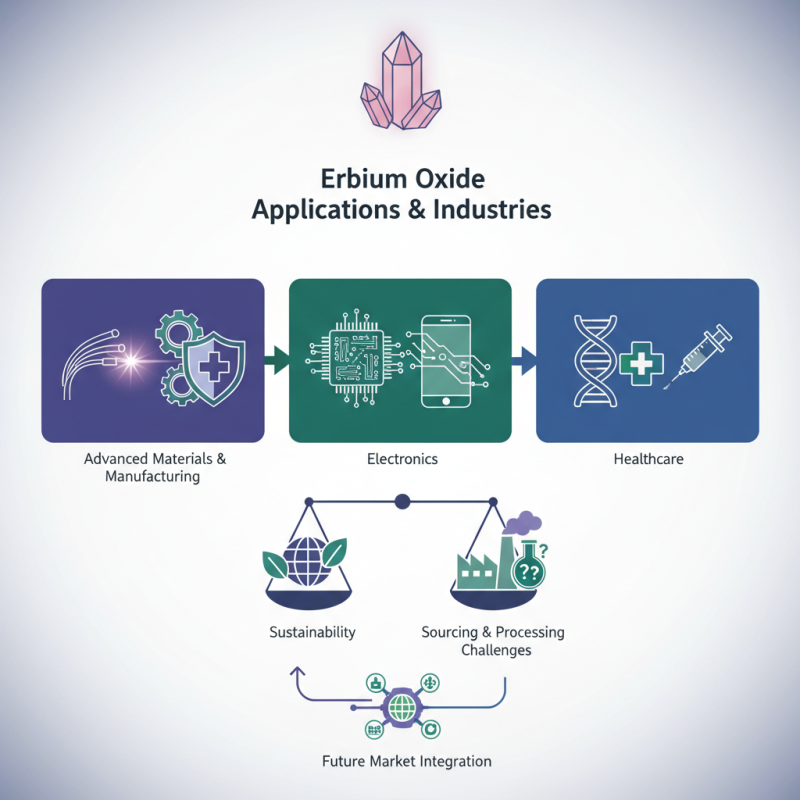
Erbium Oxide has emerged as a vital compound in various industries, primarily due to its unique properties. This compound plays a crucial role in advanced materials, electronics, and healthcare applications. As industries evolve, the demand for innovative solutions increases, and Erbium Oxide stands out in this context.
In the realm of manufacturing, Erbium Oxide's optical characteristics enhance the performance of fiber optics and laser technologies. Its ability to aid in the production of durable materials is particularly significant. Moreover, it finds applications in the electronics sector, enriching the quality of semiconductors and enhancing device efficiency.
However, utilizing Erbium Oxide is not without challenges. Issues like sourcing and processing can complicate its applications. As companies seek to integrate Erbium Oxide into their products, they must also consider environmental effects and regulatory compliance. A thoughtful approach is crucial. Balancing efficacy with sustainability will define Erbium Oxide's future in various markets.
Overview of Erbium Oxide and Its Properties
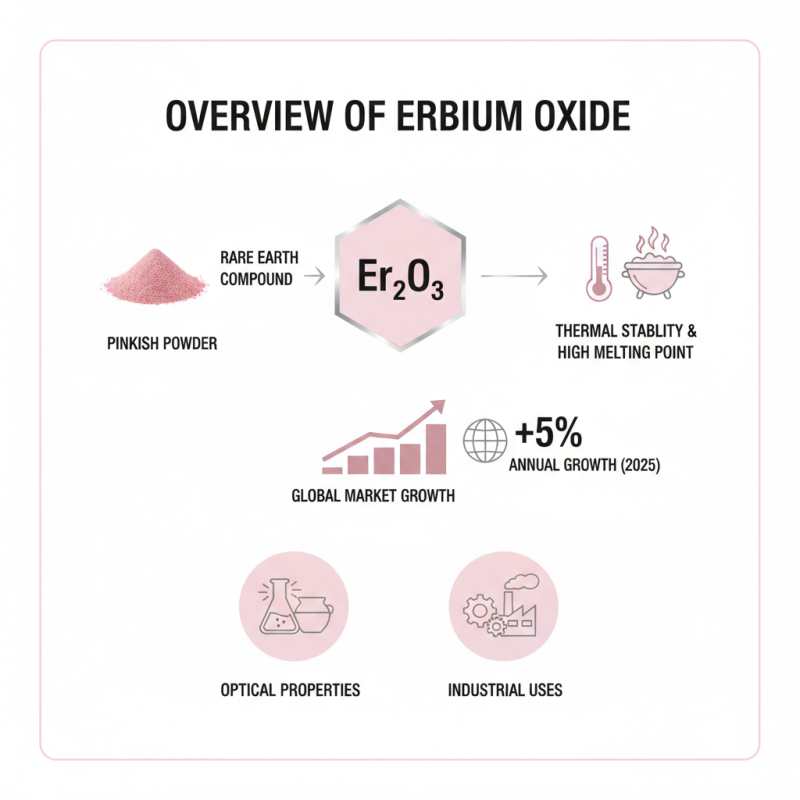
Erbium oxide (Er2O3) is a rare earth compound known for its unique properties. This pinkish powder exhibits excellent thermal stability and high melting point, making it suitable for various industrial uses. Its optical properties allow for applications in glass and ceramics as well. Reports indicate that the global market for erbium oxide is expected to grow by about 5% annually through 2025.
In the telecommunications industry, erbium oxide is crucial. It is utilized in optical amplifiers, which enhance signal transmission. This enhances data speeds significantly. According to a recent study, over 80% of fiber-optic networks rely on erbium-doped fiber amplifiers. These devices improve performance in long-distance communication, enabling high-speed internet.
Furthermore, erbium oxide plays a role in the electronics sector. It enhances the performance of semiconductors and thin films. However, sourcing this material poses challenges. The supply chain’s reliance on specific regions raises concerns about stability. Long-term availability remains an issue for manufacturers. Addressing this is essential for sustained growth in erbium oxide applications.
Common Applications of Erbium Oxide in Electronics
Erbium oxide is gaining prominence in the electronics sector. Its distinctive properties make it valuable for various applications. For instance, the semiconductor industry utilizes erbium oxide in the production of thin films. Reports indicate that the global semiconductor market is expected to reach $1 trillion by 2025. This growth highlights the importance of materials like erbium oxide.
In light-emitting diodes (LEDs), erbium oxide acts as a dopant. It enhances the luminescence of the devices. A study found that using erbium oxide can improve LED efficiency by 30%. This enhancement is crucial in developing energy-efficient lighting solutions. Moreover, erbium oxide helps in reducing energy consumption in electronic devices.
However, there are challenges. The high cost of erbium oxide can hinder its adoption. Many manufacturers are still exploring cost-effective alternatives. Additionally, the synthesis process can be complex, leading to inconsistencies in quality. These issues call for further investigation and innovation in utilizing this promising material.
Role of Erbium Oxide in Optical Fiber Technology
Erbium oxide plays a crucial role in optical fiber technology, enhancing the performance of fiber optic systems. According to a recent industry report, the use of erbium-doped fiber amplifiers (EDFAs) has revolutionized long-distance communication. These amplifiers boost signal strength, allowing data to travel over longer distances without degradation.
The incorporation of erbium oxide increases the efficiency of these amplifiers. Reports reveal that systems using EDFA can achieve an amplifying gain of 20 to 30 dB. This gain is essential for networks that span thousands of kilometers. However, erbium oxide isn’t without challenges; the precise doping levels must be carefully managed.
Still, the advantages often outweigh the difficulties. The demand for high-capacity data lines continues to rise. In 2022, the global fiber optic market was valued at over $4 billion, highlighting the importance of materials like erbium oxide. As technology evolves, optimizing erbium oxide's role in this field remains a task requiring continuous innovation and adjustment.
Utilization of Erbium Oxide in Glass and Ceramics Industry
Erbium oxide is gaining traction in the glass and ceramics industry. Its unique properties enhance various applications. In glass manufacturing, erbium oxide acts as a dopant. It improves the glass's thermal and optical properties. According to a report by the International Journal of Applied Ceramic Technology, the addition of just 1-2% erbium oxide can significantly increase the glass's durability and color stability, especially in high-temperature applications.
In ceramics, erbium oxide serves as a flux. It lowers the melting point of ceramic materials. This results in easier fabrication and improved mechanical strength. Data from the Journal of Materials Science shows that ceramics infused with erbium oxide exhibit nearly 20% higher tensile strength than traditional ceramics. However, challenges remain. The cost of sourcing high-purity erbium oxide can be quite high. Manufacturers need to balance performance and production costs.
Coloration is another intriguing aspect. Erbium oxide provides a distinctive pink hue to ceramics and glass. While this aesthetic can attract customers, it may limit flexibility in design. Companies should consider exploring broader color options. The key lies in finding the right balance between functionality and visual appeal in products.
Safety Considerations and Handling of Erbium Oxide in Industries
Erbium oxide is widely used in various industries, but safety considerations are crucial. It’s vital to understand its potential hazards. According to the National Institute for Occupational Safety and Health (NIOSH), prolonged exposure may cause respiratory issues. Protective gear, including masks and gloves, should be used to prevent inhalation and skin contact.
When handling erbium oxide, industry workers must follow strict protocols. Proper ventilation in workspaces is essential. The Material Safety Data Sheet (MSDS) indicates the need for eye protection when working with this compound. Spills should be cleaned immediately to prevent accidental injuries.
In laboratories, waste disposal must comply with local regulations. Even small amounts of erbium oxide can pose risks if not managed correctly. Industry guidelines suggest periodic training on safe handling practices. This ensures all team members are aware of the hazards and know how to respond in emergencies. The presence of this compound is beneficial, yet it requires a cautious approach.
Usage of Erbium Oxide in Various Industries
This bar chart illustrates the distribution of Erbium Oxide usage across various industries. The highest usage is in the electronics sector, reflecting its importance in semiconductor and display technologies. Other significant applications include glass manufacturing and the nuclear industry, highlighting the versatile role of Erbium Oxide in modern technology.