2026 How to Use Dysprosium Oxide in Sustainable Technologies?
Dysprosium Oxide is a rare earth element with unique properties. It plays a crucial role in sustainable technologies. The demand for Dysprosium Oxide is rising significantly. According to a recent report by Research and Markets, the global Dysprosium market is projected to grow at a CAGR of 6.5% from 2021 to 2026.
Experts emphasize the importance of this compound. Dr. Emily Carter, a renowned materials scientist, states, "Dysprosium Oxide is essential for future green technologies." Its applications are diverse, including electric vehicles and renewable energy systems. Yet, challenges remain regarding supply security and environmental impact.
The extraction process can be environmentally taxing. Striking a balance between innovation and sustainability is vital. As industries rely more on Dysprosium Oxide, they must address these critical concerns. Companies must reassess their practices to adopt eco-friendlier methods.
Applications of Dysprosium Oxide in Renewable Energy Systems
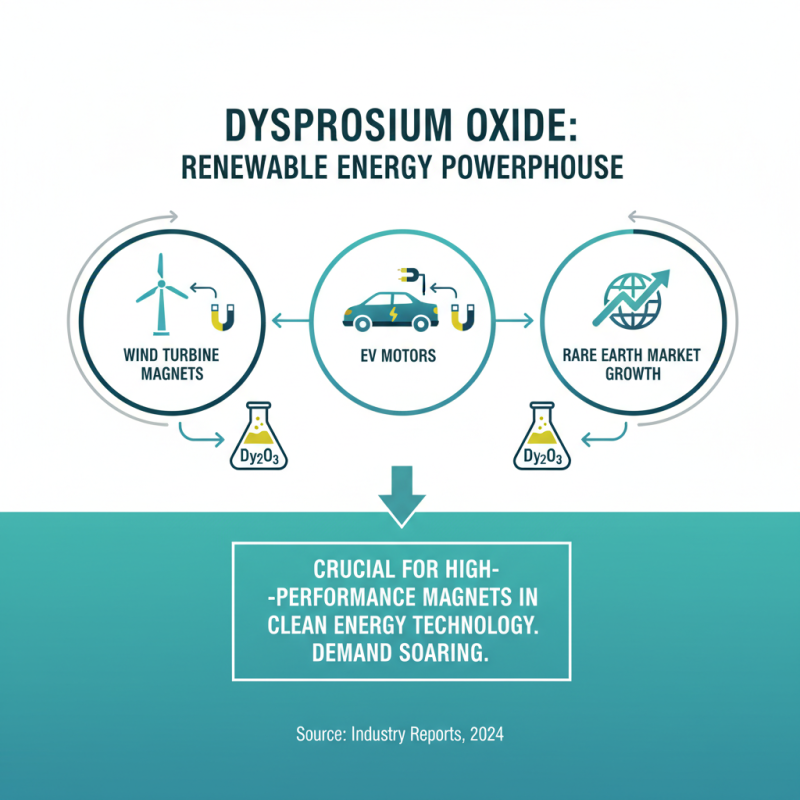
Dysprosium oxide plays a crucial role in renewable energy systems, particularly in the production of high-performance magnets. These magnets are essential for wind turbines and electric vehicles. According to recent data, the market for rare earth elements in the renewable sector is projected to grow significantly, driven by increased demand for sustainable energy solutions.
The unique magnetic properties of dysprosium improve the efficiency and durability of these applications. In wind turbines, the addition of dysprosium enhances magnet performance, allowing for smaller and lighter designs. This can increase energy output while reducing material costs. However, sourcing dysprosium poses challenges. It is primarily obtained from a limited number of mines, which creates potential supply risks.
Moreover, recycling practices for dysprosium oxide are still developing. Currently, only a small fraction gets reclaimed from spent products. Improvement in recycling technologies is necessary for sustainability. This not only addresses supply issues but also reduces environmental impacts. As the industry evolves, better practices must emerge to fully harness dysprosium oxide's capabilities in renewable energy.
Impact of Dysprosium Oxide on Magnetic Materials and Technologies
Dysprosium oxide plays a crucial role in enhancing magnetic materials. This compound significantly improves the performance of permanent magnets. According to industry reports, dysprosium is essential for high-temperature applications. These magnets are vital in many renewable energy technologies, including wind turbines and electric vehicles.
Research indicates that as permanent magnet demand rises, dysprosium supply remains a concern. A 2021 report highlighted a potential shortage of dysprosium by 2030, which could hinder advancements. Companies may need to rethink supply chains and sourcing strategies. The reliance on this rare earth element raises sustainability questions.
While dysprosium oxide is effective, its extraction and processing impact the environment. Industry practices must evolve to reduce ecological footprints. Innovations in recycling and alternative materials could mitigate some of these issues. The journey toward sustainable technological solutions reflects the complexities of using dysprosium oxide.
Role of Dysprosium Oxide in Electric Vehicle Battery Advancements
Dysprosium oxide plays a pivotal role in the development of electric vehicle (EV) batteries. This compound is essential for creating high-performance magnets used in electric motors. These motors are at the heart of EV technology, providing efficiency and reliability. Without dysprosium, the performance of these motors could significantly decline. This could hinder the overall advancement of electric vehicles.
Researchers are exploring ways to reduce dysprosium usage. While it enhances battery performance, its supply is limited. Finding alternatives could be tough. Some scientists are testing different materials, but results vary. It's important to remember that transitioning away from dysprosium might not yield immediate benefits. Testing these alternatives requires time and investment.
Moreover, environmental concerns exist. Mining dysprosium can have negative impacts. Responsible sourcing is crucial in sustainable technologies. Yet, the focus must remain on balancing performance with sustainability. The journey to utilize dysprosium oxide effectively is far from simple. It demands innovation and careful consideration. In the end, achieving breakthroughs in EV technology will rely on both advancements and sustainable practices.
Usage of Dysprosium Oxide in Electric Vehicle Batteries (2026)
The chart above illustrates the expected increase in the usage of dysprosium oxide in electric vehicle batteries from 2019 to 2026. As electric vehicle technology advances, the demand for dysprosium oxide, a critical element for improving battery performance, is projected to rise significantly.
Sustainable Mining Practices for Extracting Dysprosium Oxide
Dysprosium oxide is crucial for advancing sustainable technologies. Its role in permanent magnets makes it valuable for wind turbines and electric vehicles. However, sourcing dysprosium oxide must align with sustainable practices.
Sustainable mining methods are essential. Traditional mining can harm ecosystems and local communities. Responsible extraction focuses on minimizing environmental impact. Techniques like in-situ leaching are gaining traction. This method reduces land disruption and conserves water. Community engagement is vital. Local perspectives can guide better practices.
Challenges remain. The demand for dysprosium oxide is increasing. This puts pressure on sustainable mining efforts. Striking a balance between supply and sustainability is complex. Continuous reflection on methods is needed. The future requires innovative approaches to mining, ensuring minimal ecological damage.
Future Prospects and Innovations in Dysprosium Oxide Usage
Dysprosium oxide is gaining attention in sustainable technologies. It is a crucial element in high-performance magnets. These magnets are essential for electric vehicles and renewable energy systems. As demands for greener technologies rise, so does the need for dysprosium oxide.
Innovations are emerging in its applications. Researchers are exploring how to recycle dysprosium from old electronics. This process could reduce mining impacts and lower production costs. However, there are challenges. Efficient recycling methods are still in development. The technology needs refinement to become widely applicable.
Another area of focus is energy storage. Dysprosium oxide could enhance the performance of batteries. This improvement may lead to longer-lasting and more efficient energy solutions. Yet, the reliance on rare earth elements raises questions. Are there sustainable alternatives? Exploring different materials might be necessary. As we innovate, reflecting on the sustainability of materials is crucial. There’s much potential, but it requires careful consideration.