Top 10 Rare Metal Materials You Should Know About?
The world of Rare Metal Materials is fascinating yet often overlooked. Rare metals, such as tantalum, indium, and rhodium, play critical roles in technology and manufacturing. According to a 2022 report from the International Energy Agency, the demand for rare metals has surged by over 30% in the last decade, driven by advancements in electronics and renewable energy.
These materials possess unique properties, which make them invaluable. Tantalum, for example, is essential in capacitors for smartphones. Rhodium is highly sought for catalytic converters in vehicles, driving its price to record highs. However, the sourcing of Rare Metal Materials often raises concerns. Ethical mining practices and environmental impacts are increasingly under scrutiny.
The supply chain for these materials is complex and vulnerable. A report from the US Geological Survey mentioned that over 90% of some rare metals are sourced from just a few countries. This concentration makes the global supply susceptible to geopolitical tensions. As industries evolve, the importance of understanding and responsibly sourcing Rare Metal Materials cannot be overstated.

Overview of Rare Metals: Definition and Importance
Rare metals are often overlooked, yet they play a crucial role in modern technology. These elements, such as lithium and cobalt, are vital for manufacturing electronics, batteries, and renewable energy solutions. According to the U.S. Geological Survey, the demand for these metals is expected to rise significantly in the coming years, driven by advancements in electric vehicles and clean energy initiatives.
Understanding rare metals is essential. They are defined as metals that are uncommon in the Earth’s crust. Their scarcity makes them valuable. For instance, neodymium is a rare earth metal used in powerful magnets. This metal is critical for wind turbines and electric motors. In 2021, the price of neodymium surged by over 200%. This highlights the volatility and importance of rare metals in our economy.
Tips: Consider investing in knowledge about these materials. Stay informed about market trends and reports. Investing in companies that focus on rare metals can be a risky but rewarding venture. Reflect on the environmental impacts of mining these resources. Sustainable practices are necessary as demand rises.
Top 10 Rare Metals and Their Unique Properties
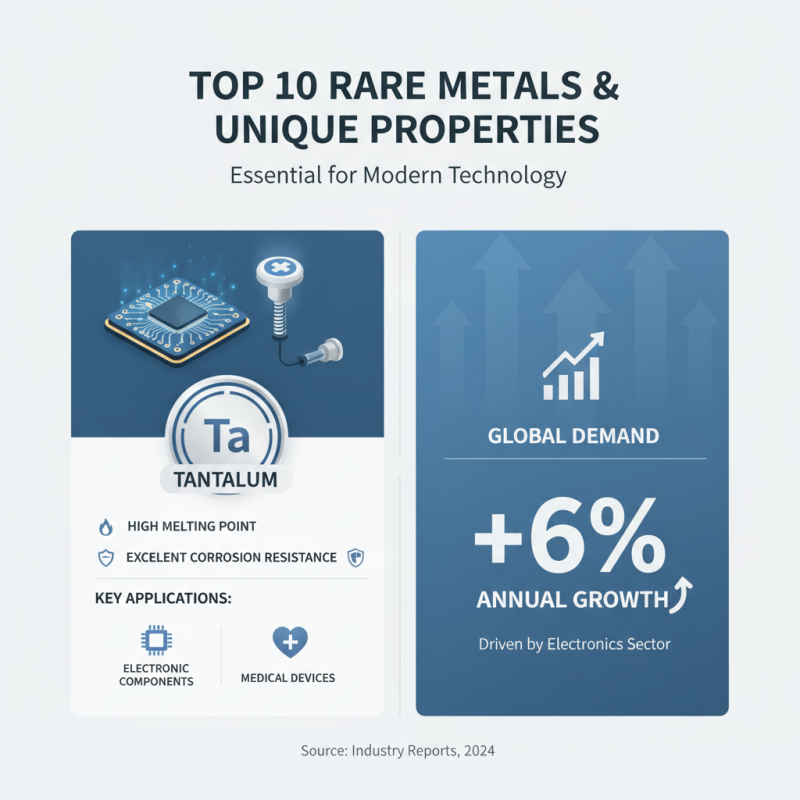
Rare metals play a crucial role in modern technology. They have unique properties that make them valuable across various industries. For instance, tantalum is known for its high melting point and excellent corrosion resistance. This makes it essential for electronic components and medical devices. Reports show that the global demand for tantalum is expected to grow by 6% annually, driven primarily by the electronics sector.
Another fascinating metal is gallium. This metal can remain in a liquid state at slightly above room temperature. Gallium is critical for solar panels and LEDs, contributing to a greener future. Industry analyses indicate that the gallium market was valued at approximately $1.1 billion in 2022 and is projected to continue expanding.
However, rare metals often present challenges. Extraction can be complex and environmentally damaging. Many countries have limited sources, making these metals expensive and difficult to obtain. For example, the mining process for lithium raises sustainability concerns. As demand for lithium increases, the environmental impact cannot be ignored. Balancing need and responsibility remains a significant concern for the industry.
Applications of Rare Metals in Various Industries
Rare metals play a critical role in a variety of industries. Their unique properties contribute to advancements in technology and manufacturing. For instance, lithium is essential in the production of batteries. Statistics reveal that the global lithium market is expected to reach $40 billion by 2025, driven by the rise of electric vehicles. However, sourcing lithium raises questions about sustainability and environmental impact.
Tantalum is another rare metal with unique applications. It is widely used in electronics due to its ability to withstand high temperatures and corrosion. According to industry reports, the tantalum market size was valued at $500 million in 2022. Yet, the mining of tantalum can be ethically problematic. Many mines produce under conditions that provoke concern for human rights and environmental sustainability.
Cobalt, often found alongside lithium, is crucial for battery production as well. The cobalt market is projected to grow significantly, yet it faces similar challenges. A considerable percentage of cobalt is mined under questionable conditions. These issues highlight the need for more responsible sourcing practices in rare metal extraction. The industry must find a balance between innovation and ethical responsibility.
Top 10 Rare Metal Materials You Should Know About
| Metal |
Symbol |
Applications |
Unique Properties |
| Lithium |
Li |
Batteries, Pharmaceuticals |
Lightweight, Low Density |
| Tantalum |
Ta |
Electronics, Aerospace |
Corrosion Resistant, Highly Ductile |
| Rhenium |
Re |
Aerospace, Catalysts |
High Melting Point, Excellent Heat Resistance |
| Indium |
In |
Displays, Solders |
Low Melting Point, Soft |
| Gallium |
Ga |
LEDs, Solar Cells |
Low Melting Point, Semi-Conductor |
| Osmium |
Os |
Specialized Equipment, Pen Tips |
Dense, Hardest Metal |
| Ruthenium |
Ru |
Electronics, Solar Cells |
Catalytic Properties, Corrosion Resistant |
| Hafnium |
Hf |
Nuclear Reactors, Aerospace |
High Boiling Point, Excellent Neutron Absorption |
| Scandium |
Sc |
Alloys, Lighting |
Lightweight, High Strength |
| Yttrium |
Y |
LEDs, Phosphors |
High Melting Point, Conductor |
Challenges in Mining and Processing Rare Metals
Mining and processing rare metals pose significant challenges. These metals, crucial for technology and industry, are often found in remote locations. These areas have difficult terrain and harsh climates. Accessibility is a major issue, making exploration costly. According to the U.S. Geological Survey, around 60% of rare earth minerals are produced in just one country. This reliance creates vulnerabilities in supply chains.
Environmental concerns also play a crucial role. Mining operations can lead to severe ecological damage. Waste management in mining is often inadequate. For example, the mining industry generates billions of tons of waste annually. This figure underscores the need for better practices. Regulations are often outdated, unable to address modern challenges. The push for sustainable mining methods is growing but remains limited.
Processing these metals further complicates matters. High energy consumption is a significant concern. Some processes can emit harmful gases, affecting air quality. Reports indicate that refining these metals can take up to 1,000 times more energy than common metals. This inefficiency raises questions about long-term sustainability. The industry must innovate to reduce energy use and improve efficiency. These challenges highlight the need for focused efforts in mining and processing rare metals.
Future Trends in Rare Metal Technologies and Sustainability
The future of rare metals is shaped by innovation and sustainability.
These materials are critical for technology, energy, and healthcare. A shift toward eco-friendly extraction methods is necessary.
Traditional mining has a high environmental cost. This must change as demand increases.
Recycling rare metals is gaining traction. Urban mining, also known as e-waste recycling, recovers these valuable materials from discarded electronics.
It reduces the need for new mining. However, the technology and infrastructure for large-scale recycling are still developing.
Challenges remain in making this process efficient and profitable.
Emerging technologies show promise. Advances in material science are uncovering new ways to use rare metals.
Biodegradable materials and substitutes are being explored, offering alternatives.
The competition for resources can lead to geopolitical tensions.
We must reflect on the ethical implications of mining and material use. Sustainability needs to be the guiding principle in the journey ahead.