Top Types of Rare Earth Salts You Should Know About?
Rare Earth Salts are essential in many industries today. These unique compounds consist of various elements, each playing a crucial role in modern technology. Understanding their types and applications is vital.
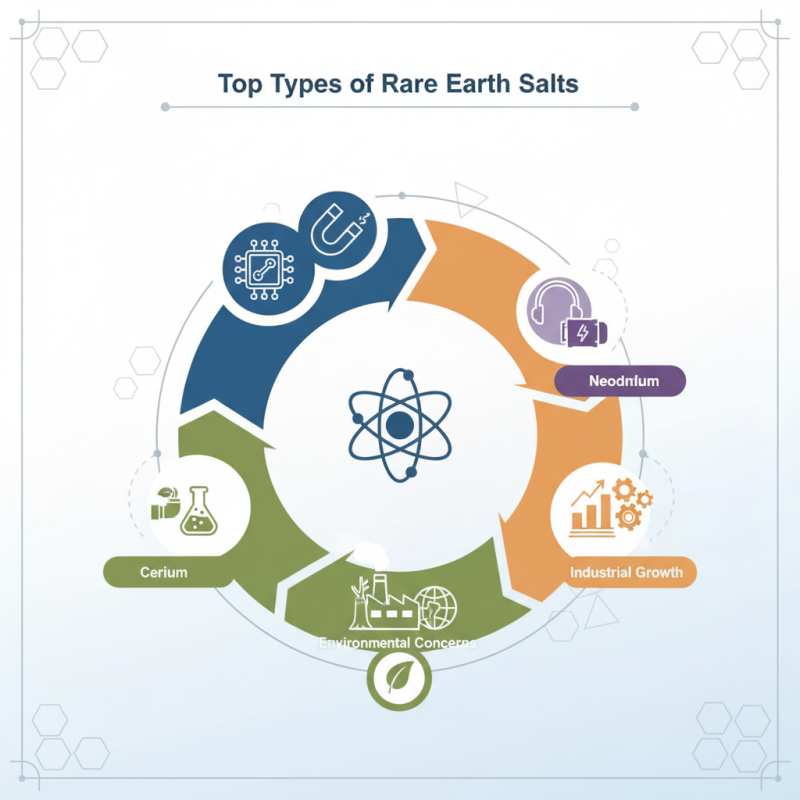
In electronics, Rare Earth Salts are used in magnets and displays. Cerium, for instance, is found in catalytic converters. This usage helps reduce harmful emissions. Meanwhile, Neodymium salts are critical for making strong magnets. They are indispensable in headphones and motors.
However, the extraction and processing of Rare Earth Salts often raise environmental concerns. Mining practices can lead to pollution and habitat destruction. There are ongoing discussions about sustainability and responsible sourcing. As industries grow, so does the need for these salts. It’s a complex relationship that needs careful consideration.
Introduction to Rare Earth Salts
Rare earth salts are a critical component of modern technology. They are used in various applications, from electronics to renewable energy. Understanding these substances is essential for appreciating their role in advanced materials.
In 2022, the global rare earth materials market was valued at over $5 billion, according to industry reports. This market is projected to grow significantly. Demand for rare earth metals like neodymium and dysprosium is soaring. These elements are crucial for making high-performance magnets used in electric vehicles and wind turbines.
Tip: Keep an eye on emerging research, as new rare earth salts may soon come to light. For example, researchers are exploring alternatives to traditional extraction methods. This could lead to more sustainable and efficient processes.
While rare earth salts have great potential, there are challenges. Extraction often involves environmentally harmful practices. The mining process can lead to significant land degradation. This raises ethical questions about sustainability. Addressing these issues requires a commitment to innovation and responsibility in the industry.
The Importance of Rare Earth Salts in Modern Technology
Rare earth salts play a crucial role in modern technology. These compounds are essential for the production of high-performance magnets, batteries, and electronic devices. They enhance the efficiency of various technologies we use daily. For instance, they improve the performance of smartphones and electric vehicles. Every time you use these gadgets, you benefit from rare earth elements.
When exploring rare earth salts, it’s essential to understand their applications. They are utilized in catalysts, phosphors, and glass additives. The intricate nature of these salts often leads to complexities in sourcing and production. This can pose challenges, such as supply chain disruptions. Awareness of this can help in planning for future technology needs.
**Tips:** When considering the use of rare earth salts, think about recycling and sustainability. Reducing dependency on mining can lead to more environmentally-friendly practices. Always look for ways to minimize waste in technology. Stay informed about the evolving landscape of rare earth materials, as it may affect technology prices and availability.
Top Types of Rare Earth Salts You Should Know About
Types of Rare Earth Salts and Their Unique Properties
When exploring rare earth salts, each type has distinctive characteristics. These salts contain various rare earth elements. For example, cerium salts are known for their catalytic properties. They often find use in automotive catalysts and polishing agents. Their ability to enhance reactions is remarkable.
Another important salt is lanthanum carbonate. It has unique properties that allow it to interact with other compounds effectively. This trait makes it useful in medical applications, especially in pharmaceuticals. On the other hand, neodymium salts are famous for their magnetic abilities. They play a vital role in making powerful magnets used in electronics.
In the realm of rare earth salts, it’s intriguing to see how some elements remain less understood. The applications are promising, yet there are challenges in extraction and processing. Many researchers are still uncovering their full potential. It raises questions about sustainability and environmental impact. The journey to mastering these materials is ongoing and filled with uncertainty.
Top Types of Rare Earth Salts You Should Know About
| Salt Name |
Chemical Formula |
Primary Uses |
Unique Properties |
| Lanthanum Chloride |
LaCl₃ |
Catalysts, Glass polishing |
High solubility |
| Neodymium Nitrate |
Nd(NO₃)₃ |
Permanent magnets |
Vivid color in glass |
| Samarium Oxalate |
Sm₂(C₂O₄)₃ |
Optics, lasers |
Strong magnetization |
| Europium Sulfate |
Eu₂(SO₄)₃ |
Fluorescent screens |
Red phosphorescence |
| Terbium Acetate |
Tb(C₂H₃O₂)₃ |
Electronics, phosphors |
High thermal stability |
Applications of Rare Earth Salts in Industry and Research
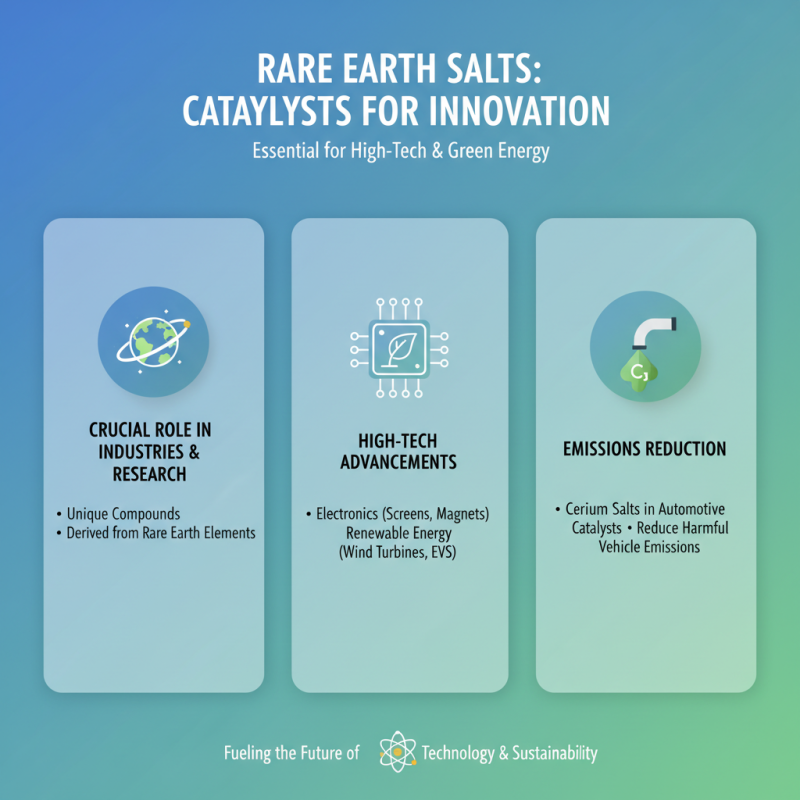
Rare earth salts play a crucial role in various industries and research sectors. They are unique compounds derived from rare earth elements. These salts are essential for high-tech advancements, including electronics and renewable energy technologies. For instance, cerium salts are often used in catalysts for automotive applications. They help reduce harmful emissions from vehicles.
In the field of research, rare earth salts are employed in innovative areas. They enhance the performance of phosphors in LED lighting. This improvement is vital in achieving better energy efficiency. Furthermore, these compounds find applications in medical technology. They are explored for use in targeted drug delivery systems. However, the supply chain for rare earth salts poses challenges. Dependence on specific regions for production raises concerns about stability. Efforts to recycle and find alternatives are ongoing but not yet fully realized.
Future Trends in Rare Earth Salt Utilization and Sustainability
The future of rare earth salts is captivating yet complex. As technology advances, the demand for these materials is rising rapidly. Industries rely on rare earth salts for various applications. These include electronics, renewable energy, and advanced manufacturing. However, this growth brings challenges.
Sustainability is critical in the utilization of rare earth salts. Mining these materials impacts the environment. Contamination and habitat destruction are serious concerns. New methods focus on recycling and reusing existing materials. This approach could lessen the negative effects on our planet. Innovations must address both efficiency and eco-friendliness.
The market is evolving. Growing awareness of sustainability shapes consumer preferences. Companies that prioritize eco-friendly practices may lead the market. Yet, the path isn’t clear. Balancing economic gain and environmental responsibility is essential. Stakeholders must engage in dialogue about sustainable practices. A collaborative effort is necessary for a healthier future.