Top 10 Facts About Neodymium Hydroxide You Should Know?
Neodymium Hydroxide is a fascinating compound with numerous applications. It plays a vital role in modern technology. Understanding its properties can unlock potential advancements in various fields.
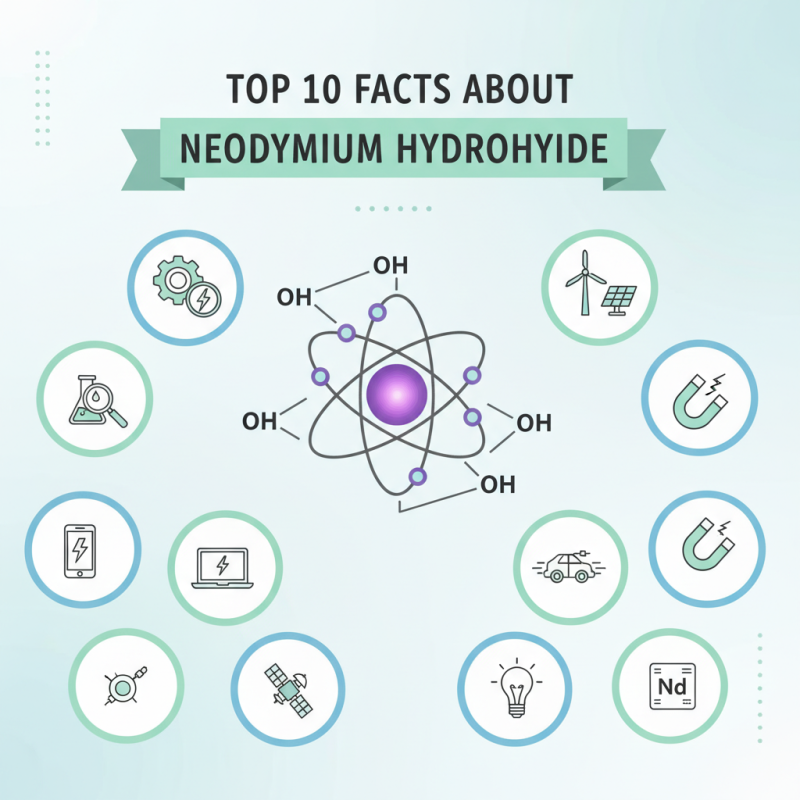
This compound is derived from neodymium, a rare earth element. Neodymium Hydroxide is crucial in making strong magnets. These magnets are essential in electric motors and generators. Their efficiency contributes to renewable energy solutions.
Many people may not know that Neodymium Hydroxide has limited solubility in water. This property makes it intriguing for researchers. However, it poses challenges in certain applications. Not everyone realizes its importance. This article explores ten essential facts about Neodymium Hydroxide. These insights reveal its significance in today's world.
Properties and Characteristics of Neodymium Hydroxide
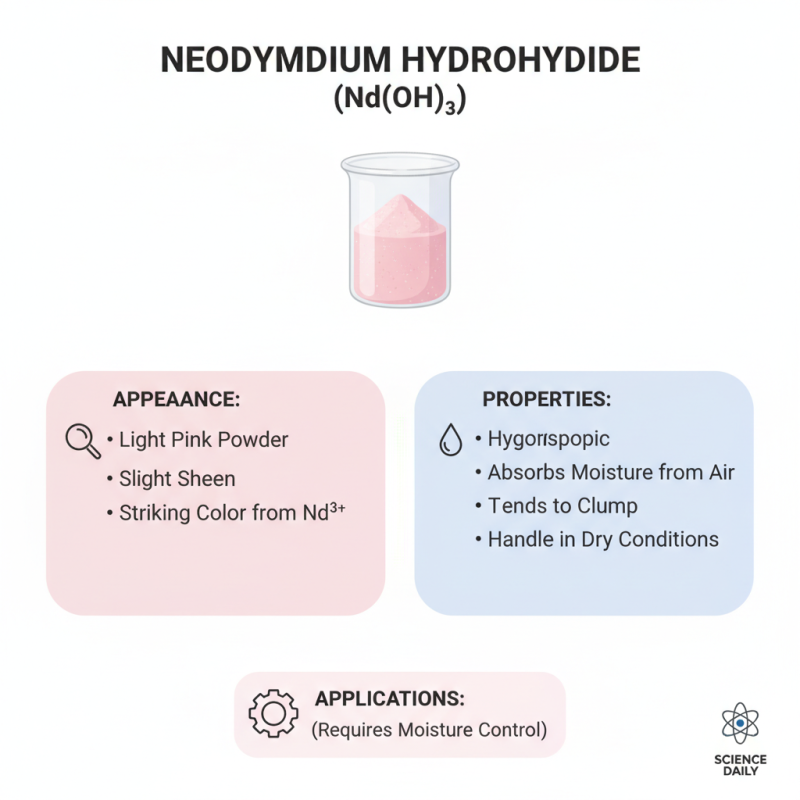
Neodymium hydroxide is an intriguing compound with unique properties. It appears as a light pink powder, often with a slight sheen. This striking color stems from its neodymium content. When exposed to air, neodymium hydroxide can absorb moisture, leading to clumping. Its hygroscopic nature may pose challenges in certain applications.
This compound is primarily soluble in acids, like nitric acid, but shows limited solubility in water. Such behavior can complicate its use in various chemical processes. Neodymium hydroxide can be utilized as a precursor in manufacturing neodymium-based materials. However, careful handling is essential due to its potential reactivity. The compound is not as commonly discussed compared to other rare earth hydroxides. This often leads to misunderstandings about its applications and properties.
While its uses are growing, limitations exist. For instance, the extraction process can be costly. Environmental concerns also arise from mining operations for rare earth elements. These factors can lead to difficult ethical discussions within the industry. Understanding neodymium hydroxide requires more research and reflection on its broader impact.
Applications of Neodymium Hydroxide in Industry
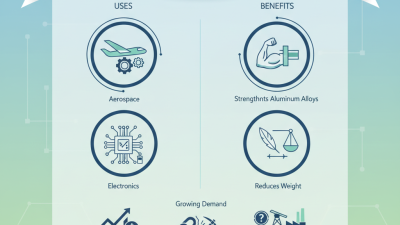
Neodymium hydroxide plays a key role in various industries, especially in the production of neodymium magnets. These magnets are essential for electric vehicles, wind turbines, and other green technologies. According to a recent market report, the demand for neodymium magnets is projected to grow by over 10% annually through 2025. This surge reflects the increasing shift towards renewable energy and electric mobility solutions.
In addition to its magnetic applications, neodymium hydroxide is also important in the glass and ceramics industries. It is used to create vibrant colors and improve the durability of products. Moreover, its role in catalytic converters helps reduce harmful emissions from vehicles. However, the extraction and processing of neodymium can have environmental impacts. Companies must address these issues through sustainable practices.
**Tip:** Always consider suppliers who prioritize eco-friendly mining and processing techniques.
Research shows that the global neodymium market will reach nearly $4 billion by 2026. This growth, however, calls for scrutiny. Not all extraction methods are environmentally safe. It's crucial for industries to balance demand with responsible sourcing.
**Tip:** Regularly assess your supply chain for sustainability to meet consumer expectations.
Top 10 Facts About Neodymium Hydroxide You Should Know - Applications of Neodymium Hydroxide in Industry
| Fact |
Description |
Applications |
| 1 |
Neodymium hydroxide is a rare earth metal compound. |
Used in production of neodymium magnets. |
| 2 |
It has a high degree of thermal stability. |
Used in high-temperature applications. |
| 3 |
Neodymium hydroxide is often produced from mining processes. |
Utilized in mining industries. |
| 4 |
It can be used in glass manufacturing. |
Enhances coloration in glass products. |
| 5 |
It is also applied in catalysts for chemical reactions. |
Improves efficiency in catalysis. |
| 6 |
Neodymium hydroxide appears as a greenish powder. |
Used in pigment applications. |
| 7 |
It is non-toxic and environmentally friendly. |
Preferred for sustainable applications. |
| 8 |
Neodymium hydroxide is soluble in acids. |
Used in separation processes. |
| 9 |
It plays a role in the development of superconductors. |
Enhances performance in electronic applications. |
| 10 |
Finding new applications in energy storage technologies. |
Utilized in advanced batteries. |
Production Methods of Neodymium Hydroxide
Neodymium hydroxide is essential in various industries. Its production methods significantly impact its quality and applications. Typically, neodymium hydroxide is extracted from minerals through complex processes that involve both physical and chemical methods. The primary raw materials include bastnasite and monazite ores, which are rich in rare earth elements.
One common approach is solvent extraction. This method efficiently separates neodymium from other rare earth elements. According to a report by the International Energy Agency, the yield efficiency of solvent extraction can reach up to 95%. However, this process raises environmental concerns. The use of solvents can lead to pollution if not managed properly.
Another technique involves precipitation. In this method, neodymium is precipitated as hydroxide from aqueous solutions using ammonia. While simpler and less toxic, this method may result in lower purity levels. Some studies suggest that impurities can significantly affect the properties of neodymium hydroxide, especially in high-performance applications. Thus, achieving a balance between efficiency and environmental impact remains a challenge in production processes.
Neodymium Hydroxide Production Methods
This bar chart illustrates the production volumes of neodymium hydroxide using different methods. The sulfate method leads in production volume, followed by the nitrate and chloride methods, while the oxalate method has the least production volume.
Health and Safety Considerations for Neodymium Hydroxide
Neodymium hydroxide is an intriguing compound with various applications. However, its health and safety considerations cannot be overlooked. This material can pose risks if not handled appropriately. Dust from neodymium hydroxide can irritate the respiratory system. Inhalation may lead to coughing or even shortness of breath. Wearing suitable masks when working with it is crucial.
Skin contact can also cause irritation. Protective gloves should be worn to prevent adverse effects. It's important to wash skin thoroughly if it comes into contact with this substance. Safe disposal methods are essential as well. Neodymium hydroxide must not be released into the environment carelessly. This could lead to contamination of water sources and soil.
Overall, the use of neodymium hydroxide requires caution. Though it's valuable in many industries, safety should always come first. It’s important to conduct regular safety audits when dealing with this compound. Training workers on proper handling is necessary. Reflection on these practices can help improve safety in the workplace.
Environmental Impact of Neodymium Hydroxide Usage
Neodymium hydroxide is essential for various applications, especially in green technologies. However, its environmental impact is a concern. The extraction and processing of neodymium often lead to significant ecological disruption. Mining activities can devastate local ecosystems. Due to the chemicals involved, there is a risk of water contamination, affecting both wildlife and human populations.
Reports indicate that the carbon footprint of neodymium production is notably high. For every ton of neodymium, approximately 8 tons of carbon dioxide are released. Hence, the pursuit of neodymium must balance industrial needs with environmental responsibility. Recycling neodymium from old products is one approach to mitigate impact. Even so, the recycling process is not yet optimal in many regions.
The waste generated during neodymium hydroxide production raises additional concerns. Poor waste management can lead to soil degradation and air pollution. Some facilities lack adequate protocols for managing hazardous waste. This situation demands attention from regulators and industry leaders, as long-term strategies are necessary for sustainable neodymium usage.