Leave Your Message

Top 10 Neodymium Hydroxide Suppliers Worldwide

Neodymium Hydroxide sits at an important but often overlooked stage of the rare-earth supply chain. It supports the production of neodymium-praseodymium materials used in high-performance permanent magnets, electric motors, wind turbines, and industrial automation. The U.S. Geological Survey reported approximately 350,000 metric tons of global rare-earth mine production in 2023, measured as rare-earth oxide equivalent. China accounted for about 240,000 metric tons. These figures describe the wider rare-earth market, not Neodymium Hydroxide alone.

That distinction matters. Public companies rarely disclose hydroxide output separately. Supplier rankings therefore require careful comparison of refining capacity, product purity, feedstock access, export capability, and customer approvals. The International Energy Agency has also warned that critical-mineral processing remains highly concentrated geographically. A supply interruption can affect costs, lead times, and magnet production within weeks.

Jack Lifton’s widely cited reminder remains relevant: “The rare earths are neither rare nor earths.” Availability is not the same as secure supply. This list examines ten notable Neodymium Hydroxide suppliers worldwide, using publicly available company information, industry reports, and market evidence. Some suppliers are vertically integrated. Others depend on external separation plants or regional distributors. That weakness should not be ignored. Rankings can change as new refining projects start, regulations evolve, or customers qualify alternative sources. Readers should treat this overview as a practical screening tool, not a final purchasing decision. Supplier audits, laboratory certificates, impurity limits, and delivery records still deserve direct verification.
Top 10 Neodymium Hydroxide Suppliers Worldwide

Neodymium Hydroxide: Composition, Properties, and Industrial Uses

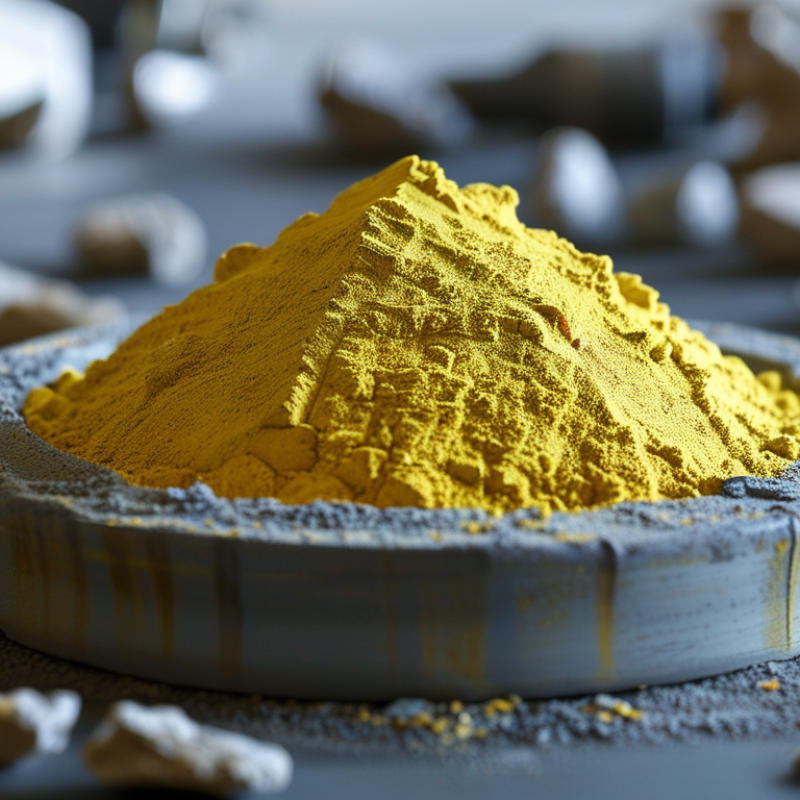
Neodymium hydroxide is an inorganic rare-earth compound with the formula Nd(OH)3. It usually appears as a pale purple or pink powder. Its color can vary with purity, particle size, and moisture content. The material has low solubility in water but reacts readily with mineral acids. Heating converts it into neodymium oxide and releases water.

In industrial practice, this hydroxide often serves as an intermediate rather than a final product. Manufacturers process it into neodymium oxide, salts, or other specialty compounds. These materials support permanent magnet production, advanced ceramics, glass coloring, and selected catalyst systems. Some laboratories also use it when preparing controlled rare-earth formulations. Performance depends heavily on assay, trace-metal levels, particle distribution, and drying conditions.

A careful supplier evaluation should include a recent certificate of analysis, safety data, moisture results, and packaging details. Stable packaging matters because absorbed water can change the measured composition. I would not judge quality by color alone. That shortcut can be misleading. Inconsistent particle size may also affect mixing and calcination. Buyers should confirm the required neodymium content, impurity limits, batch uniformity, and intended processing temperature before comparing worldwide suppliers. Supplier claims still need independent verification.


Criteria for Selecting the Top Global Neodymium Hydroxide Suppliers

Top 10 Neodymium Hydroxide Suppliers Worldwide

Selecting leading global neodymium hydroxide suppliers requires more than comparing quoted prices. Buyers should verify chemical purity, neodymium content, moisture levels, and trace impurity limits. A reliable supplier provides recent certificates of analysis for each production lot. The certificate should match independent laboratory results, not only marketing specifications. Ask for sample material before approving long-term supply. Small differences in particle size can affect filtration, blending, and downstream recovery.

Production consistency matters greatly. Review the supplier’s manufacturing capacity, batch records, quality-control procedures, and equipment maintenance practices. Traceability should connect each container to raw materials, test data, and shipping records. Packaging also deserves attention. Moisture-resistant inner bags, sealed drums, and clear lot labels reduce contamination risks during transport. Request realistic lead times, minimum order quantities, and storage guidance. Vague answers are warning signs.

Technical support can separate a capable supplier from a merely available one. Experienced teams should explain handling, slurry behavior, and testing methods without exaggerating performance. Independent audits, recognized quality systems, and documented corrective actions strengthen credibility. Still, no supplier is perfect. A clean audit may not predict every delayed shipment or variable batch. Buyers should keep a second qualified source and review performance quarterly. Trial results, delivery records, and communication quality often reveal more than a polished sales presentation.

Profiles of the Top 10 Neodymium Hydroxide Suppliers Worldwide

Top 10 Neodymium Hydroxide Suppliers Worldwide

Profiles of the Top 10 Neodymium Hydroxide Suppliers Worldwide

The leading profile is an integrated rare-earth producer with stable ore-to-powder control. Another focuses on high-purity material for magnets and laboratory research. A third supplier offers customized particle sizes, helping manufacturers manage mixing and calcination. Regional refiners often provide flexible volumes and faster delivery. Their strength is responsiveness, not always the lowest price.

Specialized powder processors usually provide detailed certificates of analysis, moisture data, and lot traceability. Large-volume exporters support regular contracts, while smaller suppliers handle trial orders with greater attention. Some distributors maintain broad inventories across several warehouses. Application-focused suppliers may advise on slurry behavior and thermal processing. Laboratory-oriented vendors serve small research quantities, often with tighter packaging controls. The tenth profile is a technical trading company connecting buyers with qualified processors, although quality may depend on its upstream partners.

Tips: Request a recent COA, safety data sheet, particle-size report, and representative sample. Verify neodymium content through independent testing when the application is sensitive. Ask about packaging, storage humidity, lead time, and rejected-batch procedures. Price alone can mislead. A low quote may hide inconsistent moisture or limited traceability.

No supplier is perfect. Even a convincing document deserves practical checking. Experienced buyers compare several batches before approving long-term supply. Something may still be overlooked.

Product Grades, Quality Standards, and Supply Capabilities

Top 10 Neodymium Hydroxide Suppliers Worldwide

Neodymium hydroxide suppliers should be assessed by grade control, not catalog breadth. Industrial grades commonly specify neodymium content on an REO basis, moisture, particle size, and impurities such as iron, calcium, chloride, and heavy rare earths. High-purity material may require tighter limits for electronic, catalyst, or magnet-related processing. However, “99.9% purity” can hide different testing methods.

The U.S. Geological Survey reported approximately 350,000 metric tons of global rare-earth mine production in 2023, measured as rare-earth-oxide equivalent. Refining remains concentrated. The International Energy Agency noted that one country represented about 91% of refined magnet rare-earth output and 94% of sintered permanent magnet production in 2023. This concentration makes supply continuity, secondary sourcing, and realistic lead times essential when comparing the top ten suppliers. Ask for recent production capacity, minimum order quantities, packaging controls, and emergency allocation policies.

Reliable suppliers usually provide batch-specific certificates of analysis, ICP-OES results, moisture data, and traceability from feedstock to shipment. ISO 9001 systems support process consistency, while ISO 14001 can indicate stronger environmental management. Yet certification alone is insufficient. I would request retained samples and independent testing before approval. Some specifications look precise but omit particle morphology or storage stability. That omission matters. A supplier’s quality record, communication speed, and ability to repeat the same grade may reveal more than a polished brochure.

Pricing, Sourcing Regions, and Key Buyer Considerations

Top 10 Neodymium Hydroxide Suppliers Worldwide

Pricing varies with neodymium content, purity, order volume, and shipping terms. Spot quotations can change quickly because feedstock costs and separation capacity remain unstable. A buyer should compare delivered cost, not only the quoted price per kilogram. Packaging, export documents, testing, and hazardous-material handling may add unexpected charges.

Sourcing is concentrated in Asia, especially China, while refining and distribution networks also operate across Southeast Asia, Europe, and North America. Regional availability does not always mean reliable supply. Ask for the production location, batch history, and realistic monthly capacity. A clear certificate of analysis should state neodymium content, moisture, impurities, particle size, and test methods. Independent laboratory confirmation is useful for larger contracts.

Quality needs depend on the final application. Technical-grade material may suit some ceramic or chemical processes, while advanced manufacturing may require tighter impurity limits. Request a representative sample before signing a long-term agreement. Check traceability, lead times, minimum order quantities, insurance, and agreed Incoterms. Payment conditions also deserve attention. A low offer can hide weak documentation or inconsistent batches. No checklist catches every risk. One practical weakness is relying too heavily on a single sample; production consistency must be verified across multiple lots.

Top 10 Neodymium Hydroxide Suppliers Worldwide - Pricing, Sourcing Regions, and Key Buyer Considerations
Rank Anonymous Supplier Profile Primary Sourcing Region Typical Product Grade Indicative Price Range
(USD/kg)
Common Packaging Typical MOQ Indicative Lead Time Best Fit for Buyers Key Buyer Considerations
1 Integrated rare-earth producer with separation and hydroxide conversion Jiangxi, China Nd(OH)3, 99.9%–99.99% purity; low heavy-rare-earth profile available $48–$78 25 kg lined bags or 500–1,000 kg big bags 100–500 kg 3–6 weeks Large-volume industrial procurement Confirm Nd content, moisture, chloride, sulfate, iron, calcium, and heavy rare-earth limits. Request recent batch analysis and export documentation.
2 Large-scale producer serving magnet-material and chemical-processing customers Sichuan, China Nd(OH)3, 99.9%–99.95% purity; standard industrial specification $46–$74 25 kg moisture-resistant bags or palletized cartons 100 kg 3–5 weeks Cost-sensitive recurring orders Compare the quoted price on an equivalent NdO basis and clarify whether freight, export clearance, taxes, and inspection fees are included.
3 High-volume supplier with vertically linked mineral processing and separation Inner Mongolia, China Nd(OH)3, 99.5%–99.9% purity; technical and industrial grades $42–$68 25 kg bags, 500 kg big bags, or customized export packaging 500 kg 4–7 weeks Bulk users with flexible impurity limits Evaluate consistency between lots, particle-size distribution, filtration residue, and the supplier’s ability to maintain monthly allocation during price volatility.
4 Specialty inorganic-chemical manufacturer focused on laboratory and advanced-material grades Guangdong, China Nd(OH)3, 99.99% purity; fine-powder and research grades $82–$135 1 kg, 5 kg, or 25 kg sealed containers 5–25 kg 2–5 weeks R&D, ceramics, coatings, and small-batch applications Higher prices generally reflect smaller production lots and tighter specifications. Verify lot traceability, particle morphology, and certificate-of-analysis format.
5 Export-oriented rare-earth chemical supplier using third-party or regional separation capacity Fujian, China Nd(OH)3, 99.9% purity; custom impurity limits by contract $50–$82 20–25 kg lined bags or fiber drums 50–100 kg 3–6 weeks International buyers requiring flexible order sizes Check whether the supplier is the actual manufacturer or a trading intermediary. Confirm origin, production site, payment terms, and responsibility for quality claims.
6 Japanese specialty-materials channel supplying high-purity products through controlled distribution Japan Nd(OH)3, typically 99.9%–99.99% purity $95–$165 1–20 kg sealed containers; larger quantities by contract 1–20 kg 4–10 weeks High-specification research and electronics-related applications Expect stronger documentation and packaging controls but higher pricing. Confirm availability, non-stock status, and whether the quoted product is hydroxide rather than oxide or carbonate.
7 European specialty-chemical distributor with imported rare-earth inventory Western Europe Nd(OH)3, 99.9%–99.99% purity; application-specific supply $110–$190 1 kg, 5 kg, or 25 kg UN-compatible outer packaging where required 1–25 kg 2–8 weeks European laboratories and small industrial users Pricing usually includes regional inventory, compliance support, and distribution costs. Review REACH status, safety data, customs classification, and delivery terms.
8 South Korean advanced-materials supplier or importer serving electronics and functional-material customers South Korea Nd(OH)3, 99.9%–99.99% purity; controlled low-metal impurities $90–$155 1–25 kg sealed bags, bottles, or drums 10–50 kg 4–8 weeks Electronics, catalysts, and specialty formulations Request data for sodium, potassium, iron, silicon, calcium, and transition-metal contaminants. Confirm whether local stock or import replenishment is being quoted.
9 North American specialty-chemical distributor with sourcing from Asian production hubs United States and Canada Nd(OH)3, 99.9% purity; research and pilot-scale grades $125–$220 1–25 kg containers; bulk packaging subject to contract 1–25 kg 3–10 weeks North American buyers prioritizing local support Compare distributor pricing with direct-import options. Verify country of origin, tariff treatment, SDS language, shelf life, and domestic replenishment capability.
10 Regional laboratory-reagent supplier offering small quantities through international distribution India and Southeast Asia Nd(OH)3, 99.5%–99.9% purity; laboratory or pilot grade $75–$150 100 g, 500 g, 1 kg, or 5 kg sealed containers 0.1–5 kg 2–8 weeks Sampling, laboratory trials, and low-volume procurement Small-pack pricing can be substantially higher per kilogram. Before scale-up, qualify the upstream manufacturer and compare production-batch consistency with bulk suppliers.
Pricing and sourcing note: The prices shown are indicative market benchmarks for neodymium hydroxide, Nd(OH)3, and are not firm quotations. Actual prices vary with neodymium content, purity, moisture, particle size, order volume, Incoterms, freight, duties, exchange rates, and rare-earth market conditions. Buyers should obtain a current quotation, technical data sheet, safety data sheet, certificate of analysis, country-of-origin statement, and independent pre-shipment inspection where appropriate.