Essential Tips for Using Praseodymium Oxide Effectively?
Praseodymium Oxide is a valuable chemical compound with unique properties. It is widely used in various industries, such as ceramics, glass, and catalysts. However, effective use of Praseodymium Oxide involves understanding its characteristics and applications.
One must consider the proper handling techniques to ensure safety and efficiency. For instance, the compound must be stored in a cool, dry place. Be aware that Praseodymium Oxide can react with moisture. This interaction can alter its efficacy. Using the right protective gear during handling is also crucial.
Furthermore, dosing is key when integrating Praseodymium Oxide into products. Too little may not yield desired results, while too much could be counterproductive. Experimentation is often required to achieve optimal levels. Manufacturers must be open to adjusting their methods as needed. Each application may demand a unique approach. Balancing precision and creativity is essential for successful use.
Understanding Praseodymium Oxide: Properties and Applications
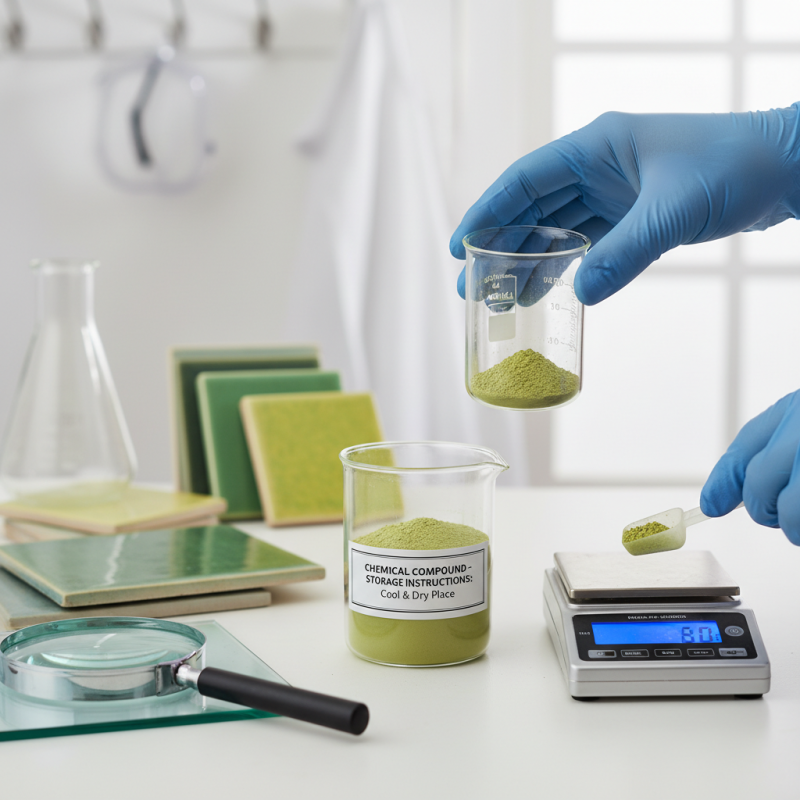
Praseodymium oxide is a unique compound with various applications. It has distinct properties that make it valuable in different fields. This oxide is typically used in ceramics, glass, and as a coloring agent. Its bright yellow-green hue adds vibrancy to products. Moreover, praseodymium oxide serves in catalysts and as an important material in lasers.
When using praseodymium oxide, ensure proper safety measures. Always wear gloves and a mask when handling the compound. Avoid direct sunlight exposure to maintain its properties. This can seem tedious, but it is essential for safe usage.
It’s crucial to store praseodymium oxide in a cool, dry place. This helps maintain its effectiveness. Check the storage conditions regularly. Ensure that containers are tightly sealed. Small oversights can lead to contamination, influencing performance. Take time to review your procedures; reflection is key to improving your approach to handling this substance.
Praseodymium Oxide Applications and Their Effectiveness
Key Safety Precautions When Handling Praseodymium Oxide
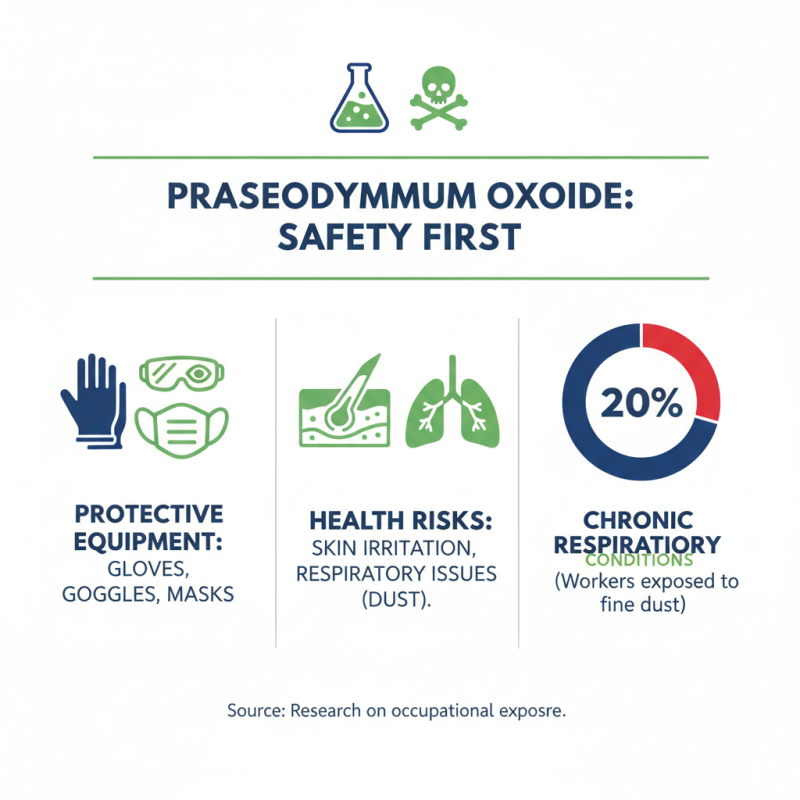
When handling praseodymium oxide, safety is paramount. This compound can pose several health risks if not managed properly. Protective equipment like gloves, goggles, and masks are essential. Skin contact can lead to irritation, while inhalation of dust may cause respiratory issues. According to research, 20% of workers exposed to fine dust particles report symptoms of chronic respiratory conditions.
Ventilation is crucial in any workspace involving praseodymium oxide. A well-ventilated area reduces inhalation risks significantly. Studies show that workplaces with adequate airflow see a 30% decrease in respiratory-related health complaints. Storing praseodymium oxide in tightly sealed containers minimizes dust generation during handling. Contaminated surfaces should be cleaned immediately to prevent exposure.
Training workers on the correct handling of this material enhances safety protocols. Regular safety drills can be beneficial. An alarming statistic indicates that 40% of accidents arise from improper handling techniques. Awareness of potential hazards can reduce these incidents. Each team member's responsibility includes following safety guidelines, ensuring a safer work environment for everyone involved.
Effective Methods for Storing and Preserving Praseodymium Oxide
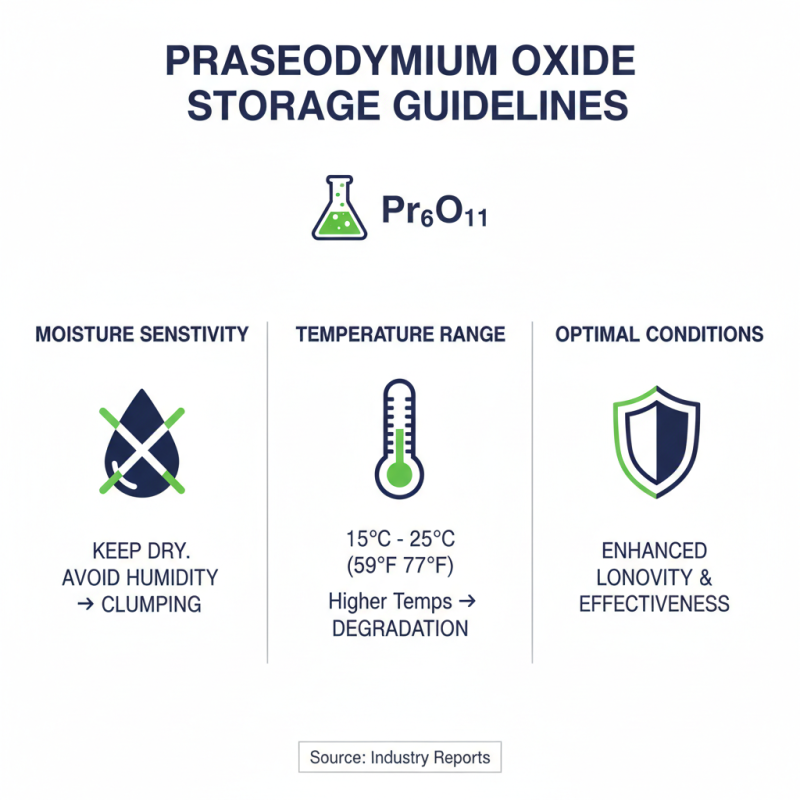
When storing praseodymium oxide, it is crucial to consider the environmental conditions. This compound is sensitive to moisture and should be kept in dry places. The ideal storage temperature is between 15°C and 25°C. Higher temperatures can make the compound degrade, while excessive humidity can lead to clumping. According to industry reports, maintaining these conditions can enhance the longevity and effectiveness of praseodymium oxide.
Tips: Use airtight containers for storage. This prevents moisture from seeping in and protects the compound’s integrity. Make sure the containers are marked clearly. This practice reduces the chances of mixing up different materials, which is vital in a laboratory setting.
It's important to regularly check the condition of stored praseodymium oxide. Even slight changes can affect its performance in applications. Proper labeling will help in tracking usage and inventory levels. Industrial data reveals that facilities with organized storage have seen a decrease in waste by up to 30%. However, any oversight in storage can lead to significant issues, highlighting the need for meticulous management.
Techniques for Incorporating Praseodymium Oxide in Industrial Processes
Praseodymium oxide is a valuable compound in various industrial applications. To use it effectively, proper techniques during incorporation are essential. This compound is used in ceramics, glass, and catalysts. Each application requires specific considerations. Adjusting the particle size can influence the end product’s properties significantly. Fine particles can enhance reactivity.
Incorporating praseodymium oxide into glass production can lead to vibrant colors. However, achieving the right consistency can be a challenge. Sometimes, the color results fall short of expectations. Regular quality checks can help. Mixing techniques also play a crucial role. Homogeneous mixing ensures better dispersion in the final product.
In catalysts, praseodymium oxide acts as an excellent support material. However, its effectiveness depends on the activation process. If activation is inadequate, the catalytic activity may decrease. Monitoring temperature and time during activation is critical. These factors should not be overlooked. Careful attention can yield better results in production processes.
How to Dispose of Praseodymium Oxide Responsibly and Safely
Praseodymium oxide is widely used in various applications. However, proper disposal is crucial to ensure safety and environmental protection. Industry reports indicate that improper disposal can lead to soil and water contamination. Over 30% of rare earth elements can accumulate in ecosystems if not managed correctly.
Disposing of praseodymium oxide involves multiple steps. First, ensure the material is securely contained. Use appropriate labeling to indicate the content is hazardous. Always follow local regulations for hazardous waste disposal. In many regions, specialized facilities handle rare earth materials. Contacting these facilities can provide safe and compliant disposal methods.
It’s also important to consider the potential for recycling. Some studies suggest that up to 70% of praseodymium oxide can be recovered from waste. This approach not only reduces waste but also conserves natural resources. Recognizing the impact of our waste management practices is critical. Effective disposal of praseodymium oxide can minimize risks and contribute to a sustainable future.