Leave Your Message

How to Source Thulium Metal from Reliable Suppliers?

Sourcing Thulium Metal takes more than comparing prices. Buyers need to confirm the material’s form, purity, quantity, and intended use before requesting quotations. Thulium may be offered as pieces, ingots, or other forms, and these are not automatically interchangeable. Small details matter. A clear specification helps suppliers quote accurately and reduces the risk of receiving material that does not fit a process.

A reliable supplier should provide a current specification and a lot-specific certificate of analysis, with test methods and reported impurity levels where available. Ask how the material is packaged, stored, and protected from air or moisture during shipment. Request photos or a sample when practical, and check whether the quoted lead time includes production, inspection, and dispatch. Traceable batch records and responsive technical answers are useful signs, but neither guarantees every shipment will meet expectations. No checklist catches everything.

Compare suppliers on documentation, communication, consistency, and total delivered cost—not price alone. Confirm payment terms, shipping arrangements, and what happens if inspection reveals a discrepancy. For specialized requirements, have a qualified materials professional review the specification before placing an order. Even experienced buyers can overlook a detail, such as particle size or packaging atmosphere; that is worth admitting and checking early. A careful sourcing process cannot remove all uncertainty, but it can make purchasing decisions more transparent and help buyers build dependable supply relationships.
How to Source Thulium Metal from Reliable Suppliers?

Understand Thulium Metal Grades, Forms, and Applications

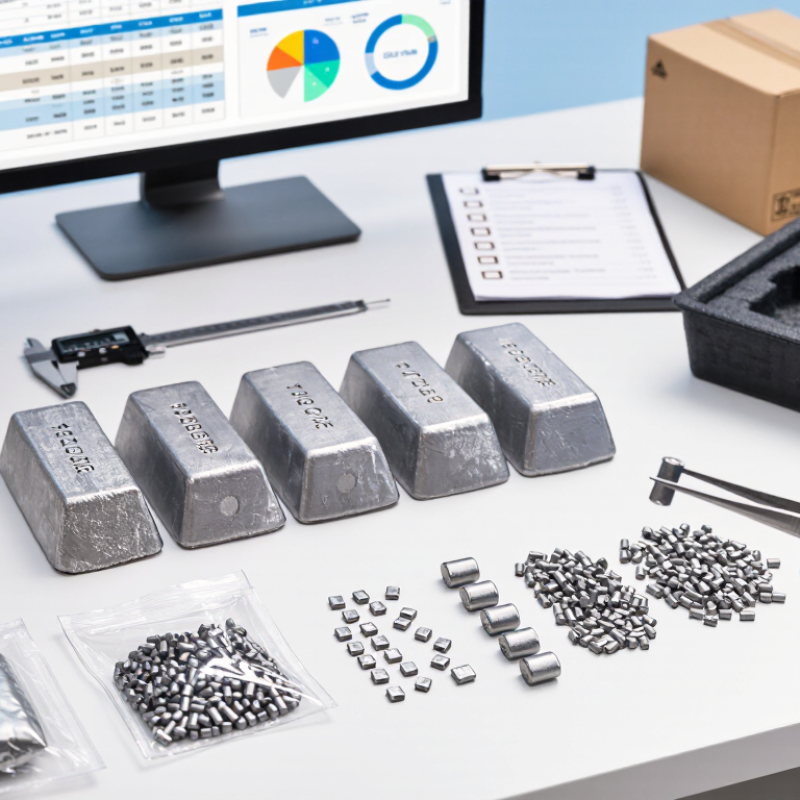
Thulium metal is sold in different purities and physical forms, and the right choice depends on the process. Suppliers may offer pieces, chips, ingots, or powder. Each form handles differently. Powder has greater exposed surface area, so packaging and storage conditions matter. Ask for a certificate of analysis that lists thulium content and relevant impurities, not just a headline purity percentage. For demanding work, confirm the analytical method and whether the reported values apply to the supplied batch.

Applications can require very different materials. Thulium is used in research and as a starting material for thulium-containing laser components; the finished laser material is often a crystal or fiber, not pure metal. Thulium-170 is also used in specialized portable X-ray sources, but this is an isotope application, not a general use for ordinary metal stock. Check that the supplier is quoting metal rather than thulium oxide or a prepared compound. That distinction is easy to miss in brief product descriptions. A small sample can help assess handling and compatibility before a larger order. Specifications sometimes look precise but omit practical details, such as piece size, packaging atmosphere, or batch traceability. Ask directly.


Define Required Purity, Quantity, and Material Specifications

Before requesting quotes, define what “purity” means for your application. State thulium content as a minimum percentage by weight. Clarify whether this applies to the metal or the complete sample. For demanding work, list controlled impurities, such as oxygen, iron, or other rare-earth elements, with maximum limits. Name the acceptable test method, if known, and request a batch-specific certificate of analysis. A certificate without traceable lot data is less useful.

Set the required net mass per shipment, expected order frequency, and any acceptable weight tolerance. Specify the material form, such as pieces or an ingot, plus size limits if they affect processing. Ask how the metal is sealed and protected from air and moisture during storage and transit. Small details matter.

If your impurity limits or form requirements are still uncertain, label them as provisional rather than presenting estimates as fixed specifications.

Request a representative sample and assay details before approving a larger order. Compare suppliers against the same written specification; otherwise, differences in quoted purity or test methods can make prices misleading.

Find Suppliers with Verifiable Credentials and Traceability

Reliable thulium sourcing starts with evidence, not a polished sales sheet. The USGS Mineral Commodity Summaries 2024 reports 350,000 metric tons of rare-earth mine production worldwide in 2023, including 240,000 metric tons in China. These figures cover rare earths overall, not thulium specifically, but they show why origin claims deserve careful checking.

Ask suppliers for a batch-specific certificate of analysis, country-of-origin statement, and documented chain of custody. Match the lot number on each document to the label on the sealed container. Check assay results, key impurities, production date, and storage conditions. Keep the original records. Paper trails are not proof by themselves. Where the material’s value or risk warrants it, commission an independent laboratory to test a retained sample against the supplier’s results.

The OECD Due Diligence Guidance for Responsible Supply Chains of Minerals recommends risk-based checks and traceable records throughout the supply chain. Request written answers about upstream processors and how discrepancies are handled. Vague answers are a warning sign. So are certificates that cannot be linked to a specific batch. Do not assume a familiar-looking document confirms the metal’s origin. Verify its issuer and scope. Small suppliers may have limited public disclosures; that is not automatically a failure, but it calls for clearer records and follow-up. Keep the lot intact.

Compare Pricing, Availability, and Delivery Terms

Comparing thulium metal suppliers starts with matching the quotation to the material you actually need. Check the stated purity, form, particle size, and available test documentation. A low price per gram may exclude analysis, cutting, or protective packaging. Ask whether the quote covers these items, and compare the total delivered cost rather than the headline figure. Small differences matter.

Check availability in writing. “In stock” can mean material is ready to ship, or merely expected from another facility. Ask for the available quantity, production status, and how long the offer remains valid. For a powder or small pieces, request details about the container and moisture protection. Confirm that the packing suits your handling and storage conditions. It sounds fussy, but vague answers can cause delays.

Delivery terms deserve equal attention. Compare the dispatch date, estimated transit time, shipping cost, insurance, and responsibility for import charges. Clarify whether the supplier provides a certificate of analysis and tracking details before shipment. For urgent work, a slightly higher quote may be worthwhile if stock is verified and the delivery window is credible. I would still leave a buffer; estimates are not guarantees, and schedules sometimes slip. Keep the written quote and specifications together so competing offers can be checked fairly.

How to Source Thulium Metal from Reliable Suppliers? - Compare Pricing, Availability, and Delivery Terms

Sourcing Channel Typical Product and Specification Pricing Comparison Availability Delivery Terms to Compare Checks Before Ordering
Specialized rare-earth materials distributor May offer thulium metal in pieces, chunks, or other listed forms, with a stated purity and package size. Usually quotation-based. Compare the price per gram or kilogram at the same purity, form, and order quantity; small packages may have a higher unit cost. Stock and quantity vary. Ask whether the material is physically in stock or must be sourced after ordering. Confirm the named Incoterm, shipping origin, dispatch estimate, freight charges, insurance, and whether import duties are excluded. Request a certificate of analysis (CoA), lot identification, stated purity basis, and packaging details.
Direct refiner or producer May be able to discuss larger quantities or a specified form and purity; the available specification depends on the producer. Request a formal quote. Larger quantities may change the unit price, but minimum order quantities, processing, and packaging can affect the total cost. Production schedules and minimum order quantities can apply. Confirm the production or allocation schedule in writing. Compare pickup or named-place delivery terms, lead time, export documentation, and responsibility for transport and risk. Verify the exact specification, production lot, inspection documents, and whether the quoted quantity is available for the requested delivery date.
Laboratory-materials reseller Often suited to research-scale quantities and smaller package sizes when listed; check whether the item is metal rather than a compound. Compare the package price and net metal quantity. Small-quantity packaging and handling can make the unit price higher. Catalog listings do not necessarily confirm current stock. Check availability and the dispatch estimate before payment. Review the seller’s shipping options, handling requirements, destination restrictions, and return policy for specialty materials. Check the product specification, CoA availability, package size, and whether purity refers to metals basis or another stated basis.
Materials broker or trading intermediary May source a requested grade or quantity through third parties; the actual product and documentation depend on the supplying party. Obtain a written, itemized quote and compare it with other channels on an equivalent specification, quantity, and delivery basis. Availability is dependent on upstream stock and should be confirmed with a named lot or documented allocation. Identify the seller of record, shipment origin, delivery point, Incoterm, transit estimate, and party responsible for customs clearance. Confirm traceability to the producing or supplying party, lot-specific documentation, payment terms, and remedies for nonconforming material.
Comparison note: Thulium-metal pricing and availability are supplier-, purity-, form-, quantity-, and date-dependent. The table provides no live market prices or guaranteed lead times; obtain current written quotations and verify delivery terms before placing an order. Under Incoterms, responsibilities depend on the specific rule and named place stated in the contract.

Check Certificates, Packaging, and Import Requirements

Before ordering thulium metal, request a lot-specific certificate of analysis, not a generic product sheet. It should identify purity, measurement method, batch number, and test date. Check whether reported purity excludes oxygen or other impurities; the basis can affect comparisons. Ask for traceability from the tested sample to the shipped lot. Keep the answer in writing. A pause point. A low price is less useful if key details remain unclear.

Review packaging photos and written packing details before dispatch. The container should be sealed, clearly labeled, and suited to the supplier’s stated storage conditions. Confirm whether moisture protection or an inert atmosphere is used, then inspect seals and labels on arrival. A dented inner container is easy to overlook. Request the safety data sheet, commercial invoice, packing list, country-of-origin information, and any required transport documents. Import rules and tariff classifications vary by destination, product form, and intended use. Verify current requirements with the relevant customs authority or a qualified broker before payment. A mismatch between the invoice and package label can delay clearance. The broker’s guidance helps, but the documents still deserve a careful review.