Top Rare Metals Used in Technology and Their Impact on Innovation?
In today's rapidly evolving technological landscape, rare metals play a vital role in driving innovation. Experts like Dr. James Morgan, a lead researcher in the field, emphasize their importance. He once stated, "The future of technology hinges on our access to rare metals." These materials, while scarce, offer significant advantages in various applications.
Rare metals, such as indium and tantalum, are widely used in electronics. They enhance the performance of devices, from smartphones to advanced surgical equipment. However, their scarcity presents a challenge. As demand increases, sourcing these materials becomes more complex. Many industries face ethical dilemmas regarding sustainable mining practices.
The fascination with rare metals lies in their potential. They could spur breakthroughs in renewable energy and electronics. Yet, reliance on them also highlights vulnerabilities in supply chains. As we navigate these complexities, reflecting on our approach to rare metals is crucial. Understanding their impact can shape a more sustainable future in technology.

Top Rare Metals: An Overview of Their Role in Modern Technology
Rare metals play a crucial role in modern technology. They are integral to many devices we use daily. Elements like lithium, cobalt, and rare earth metals are essential for batteries, smartphones, and renewable energy systems. According to a recent industry report, the global market for rare metals is projected to grow by over 10% annually through 2028. This growth reflects their increasing demand in tech innovations.
The extraction of these metals can sometimes be problematic. Environmental concerns arise from mining practices. Habitat destruction and water pollution are common issues. Studies indicate that some mining operations do not follow sustainable practices. This raises questions about the long-term effects of rare metal sourcing on our planet.
Tips: Always check the sourcing of your tech devices. Look for companies promoting sustainable practices. Supporting responsible mining can drive positive changes in the industry. Education about this issue is essential.
Investing in recycling technologies could also help. By reclaiming rare metals from old devices, we reduce the demand for new materials. Recycling can be less harmful and more efficient. However, not all systems currently encourage this practice. Public awareness can push for better recycling programs.
Key Rare Metals in Electronics: Indium, Tantalum, and Gallium
Indium, tantalum, and gallium are vital in today's technology. They play crucial roles in electronics, impacting innovation significantly. Indium is commonly used in touchscreens and televisions. Its conductive properties enhance the performance of devices. Tantalum is known for its ability to withstand corrosion. It is essential in capacitors found in smartphones and computers. Gallium's low melting point makes it useful in LEDs and solar panels.
Tip: When recycling electronic waste, look for these metals. Reclaiming them can support sustainable technology practices.
These metals come with challenges. Availability is limited, leading to potential supply issues. The extraction and processing of rare metals can cause environmental concerns. This calls for more responsible sourcing and development methods. Engaging in discussions about ethical mining practices is necessary.
Tip: Always research the origins of electronic components. This knowledge can guide eco-friendly choices. Every small step towards sustainability matters in our tech-driven world.
Top Rare Metals Used in Technology and Their Impact on Innovation
| Metal |
Primary Uses |
Impact on Innovation |
Scarcity |
| Indium |
LCD screens, solders, touchscreens |
Essential for high-resolution displays, supporting technological advancement in mobile devices |
Moderately scarce |
| Tantalum |
Capacitors in electronics, aerospace components |
Crucial for miniaturization of electronic components, enhancing performance |
Highly scarce |
| Gallium |
LEDs, solar panels, semiconductors |
Vital in the development of energy-efficient technologies |
Relatively scarce |
The Impact of Rare Earth Elements on Renewable Energy Innovations
Rare earth elements (REEs) are crucial in technology, especially for renewable energy. They boost innovation in solar panels, wind turbines, and electric vehicles. For instance, neodymium enhances the efficiency of wind turbine magnets. The International Energy Agency (IEA) reported that the demand for REEs could grow by 70% by 2030. This emphasizes their importance in achieving clean energy goals.
However, the reliance on these metals poses challenges. Mining processes can be environmentally damaging. Communities near mining sites often face pollution risks. A study by the U.S. Geological Survey highlights that less than 10% of rare earth elements are recycled. This indicates a significant opportunity for improvement in sustainability.
Tips: Consider supporting companies that focus on recycling rare earth elements. This helps in reducing environmental impacts. Also, learning about the supply chain can guide more responsible consumer choices. Understanding where materials come from matters. Embracing innovative recycling methods could change the industry.
Market Trends and Demand for Rare Metals in the Technology Sector
The technology sector relies heavily on rare metals. These materials are critical for developing innovative devices. Elements like cobalt and indium play essential roles in electronics and batteries. There's a rising demand for these metals as electric vehicles and renewable energy technologies advance. Their unique properties make them indispensable.
Market trends show fluctuating prices for rare metals. This uncertainty complicates supply chains. Companies often compete fiercely for these resources. Additionally, sourcing these metals raises ethical concerns. Mining practices can lead to environmental issues. These challenges often prompt discussions about sustainability within the industry.
Innovation in technology hinges on these materials. Yet, the demand can outpace supply. This imbalance might stifle future advancements. Companies face pressure to find alternatives. Exploring recycling options could be one solution. The future looks bright, but it requires careful planning and reflection in sourcing practices.
Environmental and Ethical Considerations in Rare Metal Mining Practices
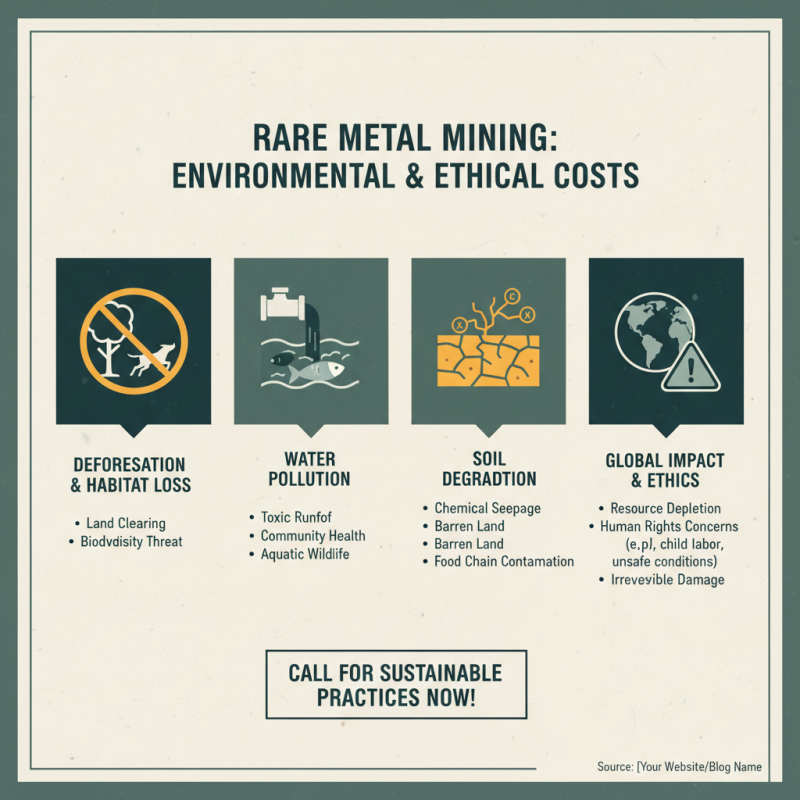
The extraction of rare metals comes with significant environmental costs. Mining activities often lead to deforestation and habitat destruction. Water sources can become polluted, affecting local communities and wildlife. Soil degradation is another concern, as toxic chemicals seep into the ground. The consequences of such practices are alarming, and they call for immediate attention.
Ethical considerations are equally pressing. Many mining operations occur in regions with weak regulations. Workers may face unsafe conditions, long hours, and low wages. Families often endure the repercussions of these mining activities. Communities sometimes have little say in how resources are exploited. The exploitation raises tough questions about sustainability and social justice.
Innovation in technology must weigh these factors carefully. Using rare metals can drive progress, but at what cost? A balance is needed to ensure that technological advancements do not come at the expense of the planet or human rights. Rethinking mining practices could lead to responsible sourcing. This change could foster a future where technology aligns with ethical values. It’s a challenging path, but one that is vital for a sustainable tomorrow.