What Are the Key Uses and Properties of Ytterbium Metal?
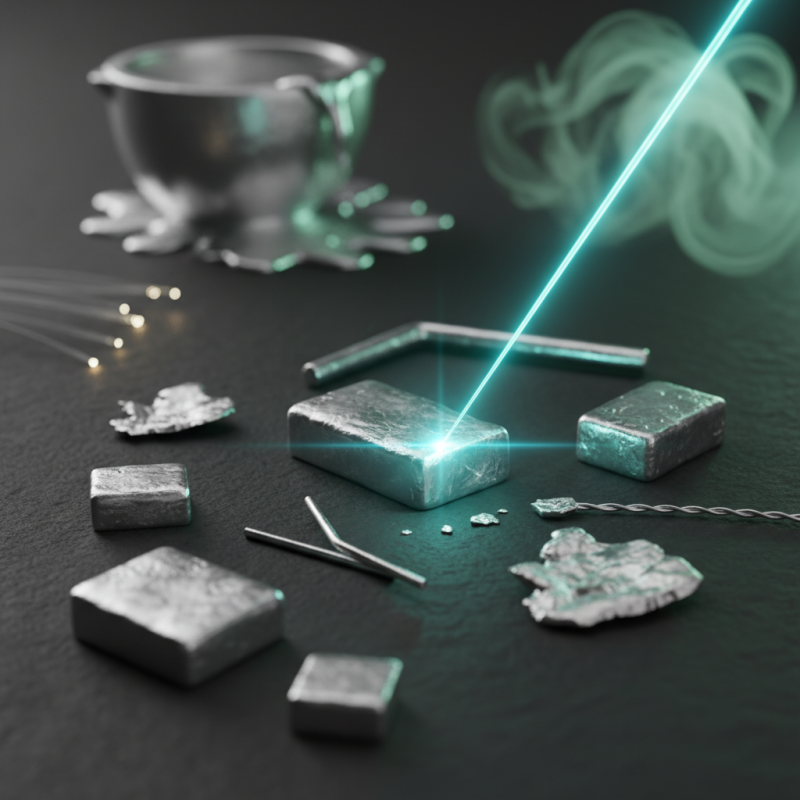
Ytterbium Metal is a fascinating rare earth element. Its unique properties and applications make it stand out in various fields. This metal, with atomic number 70, is soft and silvery-white. It is quite malleable, which allows it to be shaped easily. These characteristics open doors to numerous industrial uses.
The uses of Ytterbium Metal are diverse. For instance, it has applications in lasers and fiber optics. This metal plays a role in creating high-powered laser systems. Furthermore, it is used in alloys to enhance strength and durability. These applications highlight its significance in technology and manufacturing.
However, its extraction and processing can be challenging. Environmental impacts must be considered. The metal can be expensive and difficult to obtain. This raises questions about sustainability in its use. Understanding both the benefits and the drawbacks of Ytterbium Metal is vital for its future applications.
Key Characteristics of Ytterbium Metal
Ytterbium metal is a fascinating material with unique properties. This rare earth element is silver-white and has a metallic luster. Ytterbium is known for its high melting point of about 824 degrees Celsius. This makes it suitable for high-temperature applications. The metal is stable in air and does not easily oxidize. However, it can react with water, which is something users should keep in mind.
Ytterbium exhibits interesting magnetic properties. It is paramagnetic at room temperature and transitions to ferromagnetic below 55 Kelvins. This behavior opens doors for its use in various technological applications, including in magnetic materials. Additionally, its ionized form shows potential in laser technology. The high efficiency of ytterbium-doped lasers contributes to their growing popularity.
Tip: When handling ytterbium, consider its reactivity with moisture. Keep it in a dry environment to avoid unwanted reactions.
Another interesting fact is that ytterbium can absorb neutrons effectively. This feature enhances its appeal in nuclear applications. Yet, the extraction process of ytterbium is complex. This complexity can lead to variability in purity levels, something to keep in mind when sourcing.
Tip: Always check the purity of ytterbium before usage. This step can impact the performance in its applications.
Key Uses and Properties of Ytterbium Metal
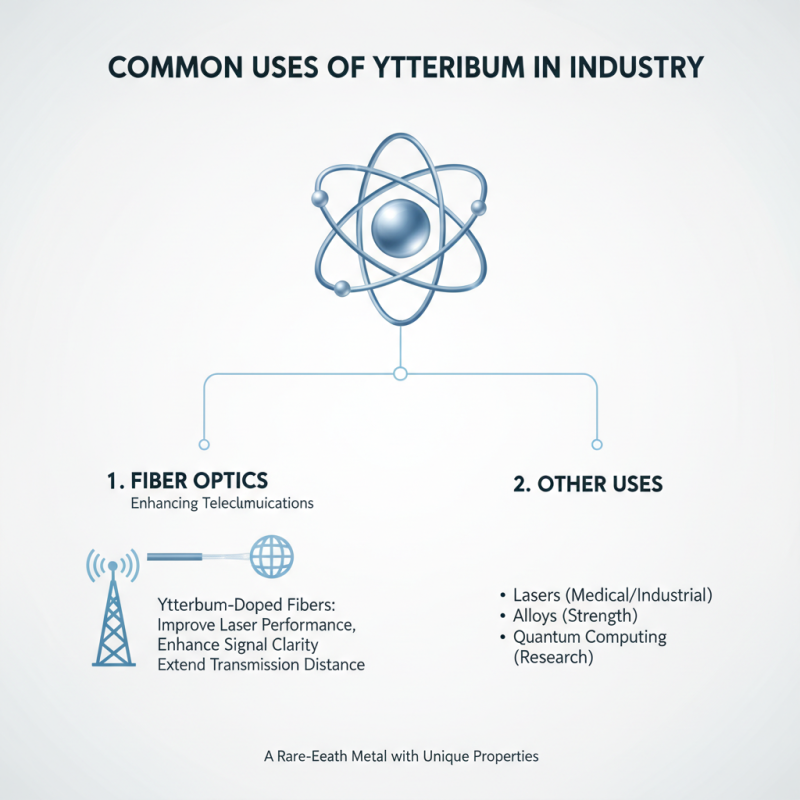
Common Uses of Ytterbium in Industry
Ytterbium is a rare-earth metal that has gained attention for its unique properties. It is often used in various industries due to its exceptional qualities. One common application is in fiber optics. Ytterbium-doped fibers improve laser performance in telecommunications. These fibers enhance signal clarity and transmission distance, which is crucial for modern communication networks.
In electronics, ytterbium plays a vital role as well. It is used in certain types of capacitors and semiconductors. This metal contributes to improved efficiency and miniaturization of electronic components. Increased demand for compact electronic devices drives the use of ytterbium in manufacturing.
**Tip:** When working with ytterbium, ensure proper handling. It can be reactive in certain environments, so precautions are necessary.
Ytterbium's applications extend to metallurgy too. It is sometimes added to steel alloys to improve strength and resistance to corrosion. However, it’s important to balance the proportions to avoid compromising other properties. Experimentation and testing are key in this process.
**Tip:** Always experiment with small quantities first. This approach minimizes potential waste and optimizes results.
Ytterbium's Role in Electronics and Technology
Ytterbium is gaining traction in the electronics industry. This rare earth metal is not just another element in the periodic table. Its unique properties make it invaluable for modern technology. Ytterbium enhances the performance of fiber lasers. These lasers are often used in material processing. Their precision and efficiency rely heavily on this metal.
Moreover, ytterbium plays a significant role in creating high-performance batteries. The metal's characteristics improve energy storage capabilities. This factor is vital as the demand for energy-efficient devices grows. Devices like smartphones and tablets benefit greatly from this technology. However, the production of ytterbium is not without challenges. Extracting it can be complex and environmentally taxing. We need to reflect on these processes as technology advances.
Ytterbium also finds applications in electronics. It is used in semiconductor materials and can help improve data transfer speeds. The implications for computing power are profound. Yet, we must consider sustainability. Striking a balance between advancement and environmental impact is essential. As innovations continue, the conversation around sustainability becomes increasingly important.
What Are the Key Uses and Properties of Ytterbium Metal? - Ytterbium's Role in Electronics and Technology
| Property |
Description |
| Symbol |
Yb |
| Atomic Number |
70 |
| Density |
6.57 g/cm³ |
| Melting Point |
824 °C |
| Boiling Point |
1416 °C |
| Key Uses |
Optical fibers, electronics, laser technology |
| Alloys |
Used in phosphors and to improve strength of metals |
| Catalytic Properties |
Acts as a catalyst for certain reactions in chemical processes |
Health and Safety Considerations for Handling Ytterbium
Ytterbium is a rare earth metal with unique properties. While it is useful in various applications, caution is essential when handling it. Health risks are a primary concern. Skin contact with ytterbium may cause irritation, leading to redness and discomfort. Inhalation of its dust can irritate the respiratory system. Studies reveal that prolonged exposure could lead to serious health effects over time.
Protective gear is vital when working with ytterbium. Gloves, masks, and goggles should be standard equipment. Keeping workspaces ventilated reduces inhalation risks. A report by the International Journal of Occupational Health highlights that even minor exposure can have cumulative effects. These effects are sometimes underestimated.
Proper storage and disposal are also critical. Ytterbium should be stored in airtight containers to prevent contamination. Always follow local regulations for disposal. Environmental consequences are a serious matter. Balancing the use of this metal with safety precautions is necessary. This balance may be challenging but is essential for health.