How to Use Gadolinium Hydroxide in Industrial Applications?
Gadolinium Hydroxide is a versatile compound with significant industrial applications. Its unique properties make it essential in various fields, including electronics, materials science, and medical imaging. Knowledge of how to use Gadolinium Hydroxide effectively can lead to improved product performance and innovation.
In electronics, Gadolinium Hydroxide is used for producing high-performance magnets. These magnets are crucial for many devices, including MRI machines. Its ability to enhance magnetic properties offers substantial advantages. However, improper handling can lead to challenges in application, requiring careful consideration.
In materials science, Gadolinium Hydroxide serves as a precursor for advanced materials. These materials can impact multiple industries, such as energy storage and renewable energy. Users must understand the nuances of its chemical behavior. This ensures reliable results, which can sometimes be overlooked. Exploring these aspects can help industries maximize the benefits of Gadolinium Hydroxide, driving progress and innovation.

Overview of Gadolinium Hydroxide and Its Properties
Gadolinium hydroxide, a rare earth compound, has gained attention due to its unique properties. It is insoluble in water but dissolves in strong acids. This compound exhibits excellent thermal stability, making it suitable for high-temperature applications. Its high magnetic susceptibility also positions it as a valuable material in electronics and magnetic systems.
According to a report by MarketsandMarkets, the demand for gadolinium compounds is projected to grow significantly. The report states that the rare earth elements market is expected to reach USD 20 billion by 2025. This growth indicates a rising need for gadolinium hydroxide in various industrial sectors, particularly in the production of high-performance magnets and phosphors. Utilizing gadolinium hydroxide can enhance the efficiency of these applications, but industry professionals must be cautious about sourcing and quality control.
Despite its advantages, there are challenges in using gadolinium hydroxide. The extraction process can be environmentally taxing, and impurities can affect product performance. Some reports highlight that maintaining consistent quality remains an obstacle for many manufacturers. Addressing these issues requires ongoing research and a commitment to sustainable practices.
Gadolinium Hydroxide Industrial Applications Overview
Industrial Applications of Gadolinium Hydroxide
Gadolinium hydroxide plays a significant role in various industrial applications due to its unique properties. In manufacturing, it's often utilized for producing high-performance magnets. These magnets are crucial in electric motors and generators. Their effectiveness comes from the material's strong magnetic properties and stability at high temperatures.
In the realm of electronic components, gadolinium hydroxide serves as a valuable material in semiconductor production. It helps enhance the efficiency of electronic devices. This enhancement is vital as industries seek to produce smaller, faster, and more efficient technology. However, working with gadolinium compounds can pose challenges. Proper handling and disposal are necessary to avoid environmental concerns.
Also, research is ongoing regarding the long-term effects of gadolinium exposure. Its implications for health and the environment aren’t fully understood. Industries must remain vigilant and explore safer alternatives. This process involves constant learning and adaptation. In the face of these challenges, innovative uses for gadolinium hydroxide continue to emerge, showcasing its potential in advanced applications.
How to Use Gadolinium Hydroxide in Industrial Applications?
| Application Area |
Description |
Benefits |
Typical Dosage |
| Nuclear Industry |
Gadolinium hydroxide is used as a neutron absorber in nuclear reactors. |
Improves safety by controlling neutron levels. |
Varies based on reactor size. |
| Medical Imaging |
Utilized as a contrast agent for MRI scans. |
Enhances image clarity and accuracy. |
0.1 to 0.5 mmol/kg body weight. |
| Electronics |
Incorporated in phosphors for LED technology. |
Improves luminous efficiency. |
Dependent on specific application. |
| Catalyst Support |
Acts as a support in heterogeneous catalytic processes. |
Enhances catalyst activity and lifespan. |
Varies widely based on catalyst system. |
Extraction and Production Techniques of Gadolinium Hydroxide
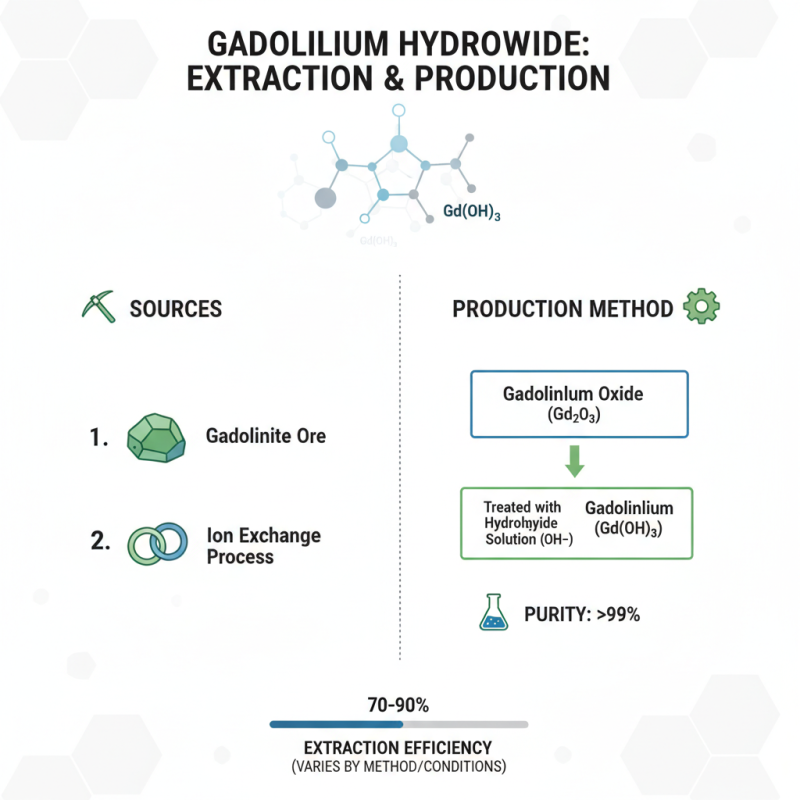
Gadolinium hydroxide is increasingly used across various industrial applications. Its extraction and production are crucial for harnessing its properties effectively. Typically, gadolinium is obtained from gadolinite ore or through the ion exchange process. A common technique involves treating gadolinium oxide with a hydroxide solution. This can achieve a purity of over 99%. However, achieving optimal extraction rates can vary. Some industry reports indicate that extraction efficiencies can range from 70% to 90%, depending on the method and specific conditions used.
Production techniques also incorporate advanced methods like solvent extraction and precipitation. These methods can enhance purity and yield, but they require careful monitoring to prevent contamination. For example, maintaining pH levels during the precipitation process is vital. Deviations can lead to impurities, reducing overall quality. Efficiency can be improved through trial runs, yet industries often face challenges in scaling these processes.
Tips: Regularly audit your extraction methods to identify potential areas for improvement. Consider employing real-time monitoring systems to track pH levels and other crucial parameters. Testing small batches can help refine your process before full-scale production.
Safety and Handling Procedures for Gadolinium Hydroxide in Industry
Gadolinium hydroxide is widely used in various industrial applications, particularly in the field of electronics and material science. Proper safety and handling procedures are essential to minimize risks associated with its use. Workers should understand that while gadolinium compounds are generally safe, mishandling can lead to health hazards.
It is crucial to wear appropriate personal protective equipment (PPE). Gloves, goggles, and lab coats are mandatory. Avoid direct contact with the substance, as skin irritation can occur. Ensure good ventilation in the workspace to prevent inhalation of dust particles. Some may overlook the importance of safety data sheets (SDS), but they provide vital information on handling and potential hazards.
Accidental spills can happen, and knowing how to manage them is key. Containment and clean-up procedures must be established in advance. Spills should be promptly addressed with appropriate neutralizing agents. Regular training sessions on these procedures can enhance safety protocols. Organizations must constantly evaluate their handling practices to ensure compliance and worker safety. Regular reviews of procedures can lead to improvement, decreasing the likelihood of accidents.
Future Trends in the Use of Gadolinium Hydroxide in Various Sectors
The application of gadolinium hydroxide is expanding across multiple sectors, indicating a promising future. Industries like healthcare and electronics are exploring its potential. In medical imaging, gadolinium compounds enhance contrast in MRI scans. This property improves diagnosis accuracy. However, there are concerns regarding gadolinium retention in the body, which requires further study.
In the electronics sector, gadolinium hydroxide is utilized in phosphors and specialized coatings. These applications enhance product performance and durability. Yet, the environmental impact of gadolinium extraction raises questions. Sustainable sourcing is crucial as industries move forward. Innovations in recycling and alternative materials may mitigate these risks.
As industries adopt gadolinium hydroxide, collaboration among researchers, manufacturers, and regulators will be essential. This partnership can address safety and environmental concerns effectively. Continuous exploration of this compound's properties will help identify new applications. Looking ahead, balancing innovation and safety will define the trajectory of gadolinium hydroxide in industrial applications.