
Leave Your Message

10 Essential Tips for Using Dysprosium Oxide in Technology Applications?

Dysprosium Oxide, a critical material in technology, plays a notable role in modern applications. Dr. Alice Turner, a renowned expert in rare earth materials, once stated, “Dysprosium Oxide is vital for advancing green technology.” This highlights its significance across various industries.

Utilizing Dysprosium Oxide effectively requires understanding its unique properties. The material is essential in manufacturing strong permanent magnets, especially for electric vehicles and wind turbines. However, the supply chain for Dysprosium is fragile, which necessitates careful sourcing and management. Each application demands precision and expertise.

Many companies struggle to harness the full potential of Dysprosium Oxide. There are often challenges in achieving the optimal purity levels. Mistakes in processing can lead to costly outcomes. Ensuring proper training and knowledge-sharing within teams can mitigate these issues, enhancing overall efficiency in utilizing this critical material.

10 Essential Tips for Using Dysprosium Oxide in Technology Applications?

Understanding Dysprosium Oxide and Its Importance in Technology

10 Essential Tips for Using Dysprosium Oxide in Technology Applications?

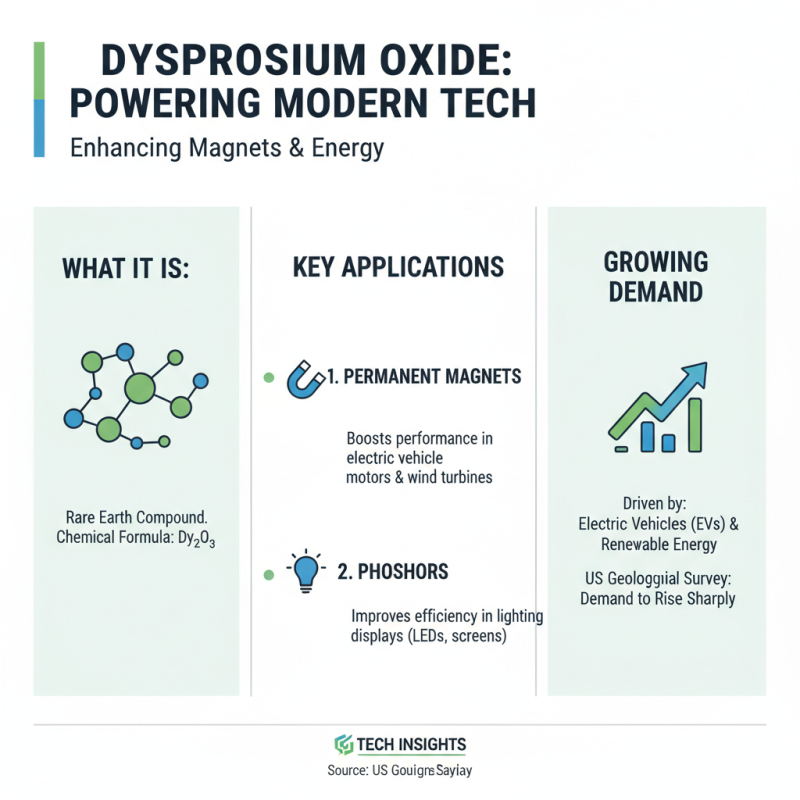
Dysprosium oxide, a key rare earth compound, plays an essential role in modern technology. Its unique properties enhance the performance of many applications, especially in magnets and phosphors. According to a report by the US Geological Survey, dysprosium demand is expected to rise sharply, driven by electric vehicles and renewable energy technologies. It helps improve efficiency and performance in these sectors.

In magnets, dysprosium oxide is vital for high-performance neodymium magnets. These magnets are used in wind turbines and electric motors. The presence of dysprosium enhances magnet strength and longevity, which are critical for these energy solutions. The market for dysprosium oxide is part of a growing trend, with projections indicating a compound annual growth rate (CAGR) of around 10% through 2030.

However, sourcing dysprosium poses challenges. There is an over-reliance on a few countries for this resource. This creates potential risks in the supply chain, impacting technology development. Efforts are needed to find alternative sources or improve recycling methods. As the technology landscape evolves, understanding dysprosium oxide's importance becomes crucial in fostering innovation and sustainability.


Key Properties of Dysprosium Oxide for Technological Applications

Dysprosium oxide (Dy2O3) boasts unique properties that make it essential for various technological applications. It is renowned for its high magnetic susceptibility, excellent thermal stability, and strong luminescent properties. These traits are particularly beneficial in creating advanced materials for electronics and photonics. Its ability to maintain stability at high temperatures enhances its role in manufacturing high-performance magnets.

When working with dysprosium oxide, it is crucial to consider the material's purity. Impurities can significantly affect its performance. Opt for high-grade materials to ensure optimal results.

Another tip involves maximizing its magnetic capabilities. Dysprosium oxide is effective in improving the magnetic properties of neodymium magnets. Careful manipulation of ratios can lead to more powerful and efficient magnets. Experimentation within recommended parameters is necessary, as varying the concentration can yield unexpected results.

Additionally, the luminescent properties of dysprosium oxide can be harnessed in LED technologies. Its ability to emit light at specific wavelengths can enhance color quality. However, overestimating its luminescent strength may lead to disappointing outcomes, so accurate calculations are vital.

10 Essential Tips for Using Dysprosium Oxide in Technology Applications

Dysprosium oxide is essential in various technological applications, particularly in magnetic devices and phosphors. This chart illustrates the estimated usage of Dysprosium Oxide across different applications, highlighting its importance in modern technology.

Best Practices for Handling and Storing Dysprosium Oxide Safely

Handling dysprosium oxide requires careful attention to safety protocols. This rare earth compound can be a health hazard if not managed properly. Use personal protective equipment, such as gloves and goggles, when working with the material. It is essential to avoid inhalation and skin contact. Dust from dysprosium oxide can become airborne easily, so always work in a well-ventilated area.

Storage practices are equally critical. Dysprosium oxide should be kept in a tightly sealed container to prevent moisture absorption. Humidity can alter its properties. Label all containers clearly, indicating contents and hazards. Keep the storage area cool and dry to maintain stability. Regularly inspect stored materials for signs of degradation or leakage. Neglect can lead to serious incidents.

Training staff on safe handling practices is vital. Not everyone may understand the risks associated with dysprosium oxide. Regular safety drills can improve preparedness for potential accidents. Always encourage a culture of safety awareness. Prioritizing safety not only protects individuals but also promotes a responsible approach to using advanced materials in technology.

10 Essential Tips for Using Dysprosium Oxide in Technology Applications

Tip Number Best Practice Description Safety Precautions
1 Proper Storage Store in a cool, dry place away from incompatible materials. Use airtight containers and ensure good ventilation.
2 Personal Protective Equipment (PPE) Always wear gloves, goggles, and a lab coat when handling. Ensure PPE is free from tears or damage.
3 Minimize Dust Generation Use water or appropriate dust suppressants when cleaning. Implement proper exhaust systems.
4 Labeling Clearly label all containers with the chemical name and hazard information. Use internationally recognized labeling standards.
5 Emergency Procedures Be familiar with spill response and first aid procedures. Keep a first aid kit and emergency contacts accessible.
6 Avoid Mixing with Certain Materials Do not mix with strong acids or bases. Keep chemical incompatibilities in mind when working.
7 Regular Training Conduct regular training sessions for all personnel. Include updates on best practices and safety protocols.
8 Waste Disposal Dispose of dysprosium oxide waste according to regulations. Ensure proper labeling and containment during disposal.
9 Controlled Environment Conduct experiments in a fume hood or equivalent. Ensure the hood is functioning properly before use.
10 Documentation Maintain thorough records of usage and safety protocols. Regularly review and update documentation as needed.

Applications of Dysprosium Oxide in Modern Electronics and Beyond

Dysprosium oxide plays a crucial role in modern electronics. Its unique properties make it valuable for various applications. For instance, it is essential in manufacturing high-performance magnets. These magnets are used in wind turbines and electric vehicles, making them more efficient. According to industry reports, the demand for dysprosium in the magnet sector is expected to grow by 15% annually through 2025.

In display technology, dysprosium oxide enhances the brightness and color of screens. It is used in phosphors for LED and OLED displays. This contributes to better energy efficiency and longer lifespans for devices. A study indicated that incorporating dysprosium can improve display performance by up to 30%. However, sourcing this rare earth element remains a challenge.

There are ongoing concerns about the sustainability of dysprosium supply. Mines are often located in regions with geopolitical instability. This raises questions about the long-term availability of dysprosium oxide. Addressing these issues is vital for maintaining stability in high-tech industries. The balance between resource extraction and technological advancement requires careful consideration.

Future Trends in Dysprosium Oxide Usage within Technology Industries

Dysprosium oxide is gaining momentum in various technology sectors. Its magnetic properties make it essential for advanced electronics. Applications range from electric vehicles to renewable energy sources. As industries evolve, the demand for dysprosium oxide will increase. Recognizing future trends is key for businesses.

One vital tip involves staying informed about sustainable practices. This metal has limited sources, and demand is growing. Investing in recycling and responsible sourcing of dysprosium can make a difference. Additionally, optimizing processes can reduce waste. Understanding these factors allows for more efficient production.

Another tip is to focus on research and development. Exploring new composite materials that use dysprosium can lead to innovations. This approach not only enhances performance but also minimizes environmental impact. Companies should foster collaborative projects with research institutions to stay ahead. Embracing these initiatives will position businesses as leaders in technology.