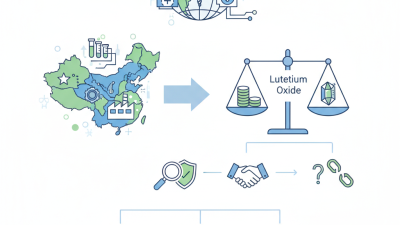
China Top Ytterbium Metal Suppliers and Their Impact on Global Market?
In recent years, Ytterbium Metal has gained significant attention in various industries, including electronics and materials science. As a rare earth element, Ytterbium plays a vital role in improving the performance and efficiency of products. China's position as a top supplier of Ytterbium directly influences its pricing and availability in the global market.
The growing demand for Ytterbium Metal is evident, particularly in advanced technologies. Its unique properties have made it a key component in laser applications and high-tech manufacturing. However, the heavy reliance on Chinese suppliers raises concerns regarding supply chain stability and geopolitical implications. These factors contribute to fluctuations in the market.
Understanding the dynamics between Chinese Ytterbium suppliers and global demand is crucial. It reveals the intricate balance of supply, pricing, and technological advancement. This exploration highlights the importance of strategic sourcing and the need for diversification in Ytterbium Metal procurement. As industries seek sustainable solutions, the role of Ytterbium will continue evolving, challenging us to adapt our strategies accordingly.
China's Dominance in Ytterbium Metal Production and Supply Chains
China has established itself as a powerhouse in the production and supply of ytterbium metal. According to industry reports, China supplies over 90% of the world's ytterbium. This statistic highlights China's crucial role in the global supply chain. Such dominance can be attributed to China's rich mineral resources and significant investments in extraction and processing technologies.
Despite China's strengths, challenges persist. Supply chain vulnerabilities have emerged in recent years. Geopolitical tensions may disrupt trade flows, affecting pricing and availability. A report from the International Energy Agency noted these risks, urging sectors reliant on ytterbium to consider alternative sources. Crystal growth techniques in high-performance fiber optics and other applications need consistent and reliable supplies.
Manufacturers globally face pressure to adapt. The reliance on a single country for critical materials is concerning. This situation calls for diversification strategies. Companies may explore partnerships with suppliers in other regions. The growing demand for advanced materials will shape future supply dynamics. Balancing reliability with cost-effectiveness is essential in this evolving landscape.
Key Players: Major Ytterbium Metal Suppliers in China
China plays a crucial role in the global ytterbium metal market. As one of the largest suppliers, Chinese companies produce around 85% of the world’s ytterbium. This significant share influences prices and availability. The demand for ytterbium is notably rising in the electronics and renewable energy sectors. In 2022, the global ytterbium market reached approximately $200 million, with projections suggesting steady growth.
Key players in China include several state-owned and private enterprises, each contributing to the local and global supply chain. Data from industry reports indicate that these suppliers are investing in technology and efficient extraction methods. This trend may enhance production capabilities, but it also raises concerns about environmental impacts. Balancing industrial growth with sustainability remains a challenge.
Tips: Consider the implications of relying heavily on one region for critical materials. Diversifying sources may mitigate risks effectively. Also, stay informed about regulatory changes regarding rare earth elements; they can significantly affect market dynamics. Frequent updates from industry publications provide valuable insights into these evolving trends.
Market Trends: Ytterbium Metal Pricing and Demand Dynamics
Ytterbium has seen notable shifts in pricing and demand in recent years. Reportedly, the average price for ytterbium metal rose by 15% in 2022. This increase correlates with heightened demand from industries such as electronics and materials science. Many manufacturers rely on ytterbium for its unique properties, including high thermal stability.
The global market is heavily influenced by suppliers in China. Approximately 80% of the world's ytterbium is sourced from this region. The supply chain dynamics can create fluctuations based on production levels. Additionally, geopolitical factors may impact availability and pricing. A recent study highlighted that production cuts can lead to significant price jumps, with predictions of further volatility in the upcoming year.
Demand dynamics are shifting as well. Novel applications in renewable energy technologies are emerging. These applications could drive demand upwards, potentially outpacing supply. Analysts project that the market could grow by another 20% by 2025. Manufacturers must adapt to these changes or risk losing competitive edges. It's essential to monitor these trends closely.
Impact of Chinese Ytterbium on Global Supply and Industrial Applications
China plays a pivotal role in the global supply of
ytterbium, a rare earth element vital for various industrial applications.
The country's abundant resources and advanced refining technologies significantly impact prices and availability.
Numerous industries, including electronics and renewable energy, rely on Chinese ytterbium for manufacturing
specialized components. The competitive pricing strategies adopted by Chinese suppliers can disrupt established markets
and shift demand patterns.
Industrial applications of ytterbium include its use in
fiber lasers, enhancing efficiency in telecommunications.
The increase in fiber optic technology directly correlates with the demand for ytterbium. However, this dependence
creates vulnerabilities in supply chains. Global manufacturers face risks related to fluctuations in Chinese exports
and potential geopolitical tensions. In some cases, reliance on a single country for critical materials may hinder
technological advancements and innovation.
While Chinese suppliers ensure a steady supply, concerns about sustainability arise. Environmental practices in
extraction and production require attention. To establish a more balanced market, diversifying sources and investing
in alternative materials might be necessary. This need invites discussions on ethical sourcing
and sustainable practices in the emerging global landscape of rare earth elements.
Future Projections: Ytterbium Metal Market Growth and Global Dynamics
Ytterbium metal is gaining traction in global markets due to its unique properties. This rare earth element plays a crucial role in various high-tech applications. Industries such as electronics and renewable energy are increasingly using Ytterbium. The demand for green technologies has spurred interest in this metal. Consequently, suppliers are adapting to these shifts, impacting market dynamics significantly.
As the Ytterbium market expands, pricing and supply chain dynamics evolve. Countries with rich Ytterbium deposits are emerging as key players. This creates competitive tension among nations and affects global supply stability. Refining methods and technology improvements are vital for future growth. Such advancements can lower production costs and enhance yield efficiency. However, not all suppliers are equipped for these changes, leading to market disparities.
Tip: Regularly research and analyze market trends. Keeping an eye on developments can offer crucial insights for stakeholders.
While Ytterbium's potential is promising, challenges remain. Environmental impacts of mining and refining processes are critical considerations. Suppliers must reflect on sustainable practices. The quest for balance between growth and responsibility shapes the future of the Ytterbium market.
Tip: Consider both environmental impact and profitability when evaluating suppliers. A comprehensive approach is necessary for long-term success.