The Best Gadolinium Oxide Applications in Modern Technology?
Gadolinium Oxide is a remarkable compound with diverse applications. Its unique properties make it essential in modern technology. This material is widely used in electronics, medical imaging, and even nuclear energy.
In electronics, Gadolinium Oxide enhances the performance of various devices. It is common in capacitors and resistors. Its ability to improve electrical conductivity is invaluable. In medical imaging, this compound plays a critical role. It is a key component in contrast agents for MRI scans. This enhances image clarity and accuracy.
However, despite its many benefits, Gadolinium Oxide poses safety concerns. There are ongoing debates about its environmental impact. Users must approach its application responsibly. Finding a balance between innovation and safety is essential. These factors warrant a deeper examination of Gadolinium Oxide's role in shaping our technological landscape.
The Role of Gadolinium Oxide in Advanced Electronics
Gadolinium oxide has become essential in advanced electronics. Its unique properties enhance performance in various applications. According to a recent market report, the global gadolinium oxide market is projected to grow at a CAGR of 6.5% from 2022 to 2030. This highlights its increasing significance in the electronics sector.
In data storage, gadolinium oxide plays a pivotal role. It improves the stability and efficiency of semiconductor devices. This stability can increase the lifespan of electronics significantly. Additionally, it is used in flat-screen displays. The oxide enables better color range and brightness, making it invaluable for high-definition screens.
Despite its advantages, challenges remain. Gadolinium oxide can be less efficient at high temperatures. This limitation affects certain applications, particularly in automotive electronics. Finding alternative materials or improving the properties of gadolinium oxide is crucial. Balancing these factors requires ongoing research and innovation in the industry.
Gadolinium Oxide's Applications in Medical Imaging Technologies
Gadolinium oxide (Gd2O3) plays a crucial role in medical imaging technologies. Its unique properties make it an ideal choice for enhancing contrast in magnetic resonance imaging (MRI). According to industry reports, the global MRI contrast agent market is expected to reach approximately $6 billion by 2028. Gadolinium compounds help improve image quality, leading to better diagnoses.
In recent years, there have been concerns about gadolinium retention in patients. Some studies indicate that a small percentage may experience MRI-related side effects. This underscores the need for ongoing research into safer alternatives. Balancing effectiveness and safety is a challenge the industry faces.
Tips: Always discuss possible risks with healthcare providers. Consider recent advancements in imaging technology that may utilize alternative agents. Stay informed about developments that could impact patient safety. Gadolinium oxide has immense potential, but vigilance is necessary for better health outcomes.
Utilizing Gadolinium Oxide in Energy Storage Solutions
Gadolinium oxide has emerged as a critical material in energy storage solutions. Its unique properties contribute to improved efficiency in various applications. This compound is often used in the manufacturing of advanced batteries and supercapacitors. These devices benefit from the high dielectric constant of gadolinium oxide. It helps maintain better charge storage and delivery.
Tips for maximally utilizing gadolinium oxide include understanding its incorporation methods. Mixing it with other materials can enhance its performance. However, the right ratios are essential. Too much gadolinium oxide can lead to material imbalance. Testing different concentrations boosts experimental outcomes.
Incorporating gadolinium oxide into energy devices comes with challenges. Often, finding the right synthesis method is complex. Some processes are energy-intensive and costly. These factors could affect overall project feasibility. Balancing performance with economic considerations can be tricky. Reflecting on these aspects will lead to better applications in the future.
The Impact of Gadolinium Oxide in Catalyst Development
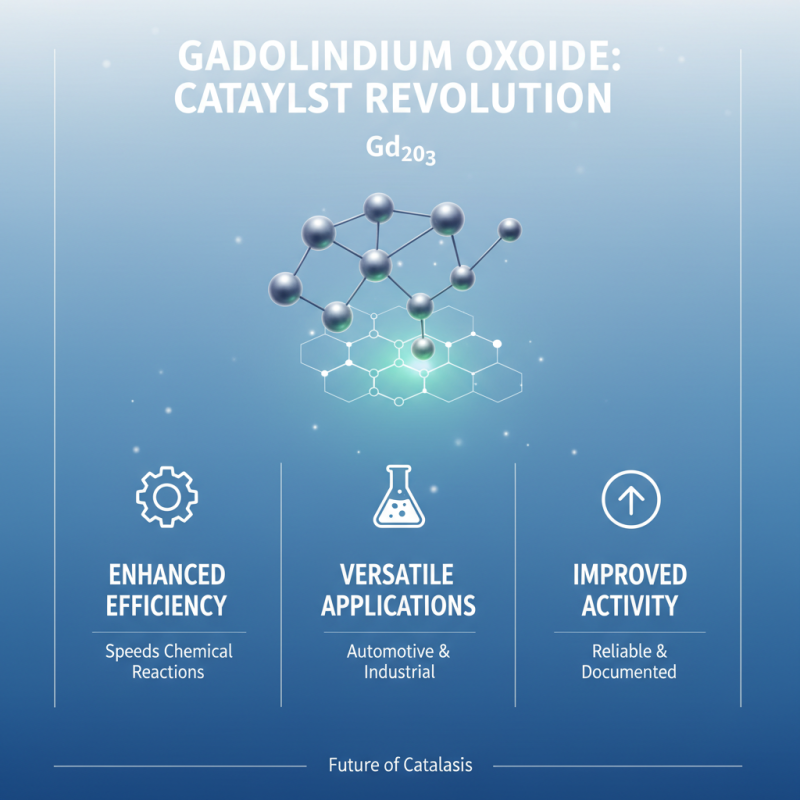
Gadolinium oxide has become a key player in catalyst development. Its unique properties enhance the efficiency of various chemical reactions. The material's ability to improve catalytic activity is well-documented. Researchers are exploring its use in diverse environments, such as automotive and industrial applications. This versatility is both exciting and challenging.
The integration of gadolinium oxide into catalysts can yield remarkable benefits. For instance, it can lower activation energy, making processes faster. This could lead to significant increases in production rates. However, there are still unanswered questions regarding its long-term stability. Not all formulations perform equally well under extreme conditions. Some fail to maintain efficiency, prompting further investigation.
Understanding how gadolinium oxide interacts with different substrates is crucial. This material can vary greatly in its effectiveness, depending on the context. Optimizing its application requires continuous research. Unexpected results are common, leading scientists to reflect on their methods. The journey to perfecting catalyst technology is ongoing, fueled by curiosity and perseverance.
Future Trends: Innovations in Gadolinium Oxide Applications
Gadolinium oxide has emerged as a key player in modern technology. Innovations are continually shaping its applications across various fields. Recent reports highlight that the global gadolinium oxide market is projected to reach over $1.5 billion by 2025. This growth is largely driven by advancements in electronics and healthcare.
In electronics, gadolinium oxide is integral to phosphors used in displays and LED technologies. Its efficiency in luminescence enhances image clarity. Yet, challenges remain in sourcing and refining processes. The environmental impact of mining gadolinium must be addressed. Additionally, the recycling of gadolinium materials is still not well-established. More research is needed to develop sustainable practices.
In healthcare, gadolinium-based contrast agents are essential for MRI scans. They improve diagnostic capabilities significantly. However, the safety concerns associated with gadolinium retention in the body need further exploration. Innovations in chemical formulations aim to reduce these risks. Such developments could enhance the usability of gadolinium oxide in medical applications. The future of this compound seems promising, yet balancing innovation and safety remains crucial.