Choosing China’s best Neodymium Oxide supplier requires more than comparing prices. China remains central to the rare-earth supply chain. The USGS Mineral Commodity Summaries 2025 reports approximately 270,000 metric tons of rare-earth oxide equivalent produced in China during 2024. Global production reached about 390,000 tons. However, these figures cover rare earths broadly, not Neodymium Oxide alone. That distinction matters.
The International Energy Agency reported in 2024 that China controlled about 91% of global rare-earth refining capacity for magnet materials. It also highlighted China’s strong position in permanent-magnet manufacturing. Industry analyst Jack Lifton has often stated, “Rare earths are not rare; they are just not found in economic concentrations.” His point explains the real challenge. Processing quality, not simple availability, often determines supply reliability.
A dependable Chinese supplier should provide a recent certificate of analysis, batch numbers, and clear Nd2O3 purity data. Check moisture, iron, calcium, and other trace impurities. Request production dates and independent laboratory verification. Ask whether the supplier can maintain consistent particle size and packaging during repeated orders. Small details matter. A sealed inner liner, a clean drum, and readable labels can prevent costly confusion.
ISO 9001 certification can support quality management, but it does not guarantee every shipment. No supplier is perfect. Buyers should compare at least three qualified manufacturers, review export experience, and confirm documentation before payment. This guide examines practical supplier-selection methods, technical specifications, verification steps, and warning signs. It aims to make the decision more evidence-based, while recognizing that price, quality, and delivery stability rarely align perfectly.
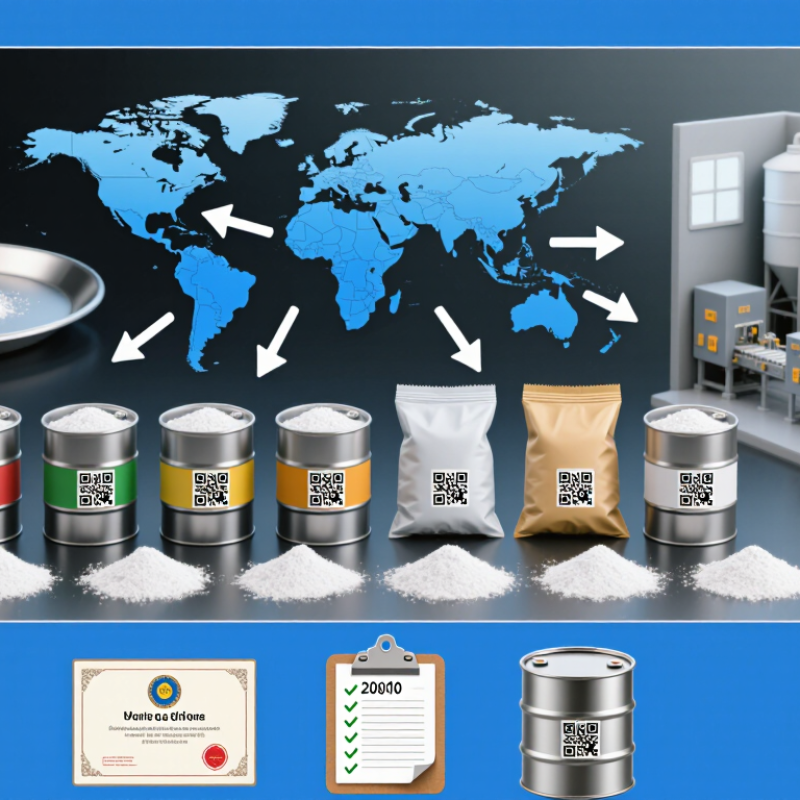
Neodymium oxide is a pale, fine powder containing neodymium in its oxide form. It is mainly used to produce neodymium-praseodymium metals and NdFeB permanent magnets. These magnets support electric vehicles, wind turbines, robotics, and compact electronics. The U.S. Geological Survey reported global rare-earth mine production of about 390,000 metric tons in 2024, measured as rare-earth-oxide equivalent. China contributed approximately 270,000 metric tons. This concentration makes supply quality and continuity important.
Supplier choice affects more than the quoted price. A reliable supplier should provide batch-specific purity data, trace-element results, particle-size information, and clear packaging records. Ask whether the certificate comes from an independent laboratory. Check moisture control, because poorly sealed oxide can absorb water during storage. Small differences matter. The IEA’s Global Critical Minerals Outlook 2024 also highlights rising demand for magnet rare earths, especially as clean-energy technologies expand. However, market forecasts can change quickly. That part deserves caution.
A practical evaluation should compare several production batches, not one attractive sample. Request traceability from feedstock processing to final packing. Review lead times, export documentation, and response quality before placing a large order. A supplier may offer 99.5% purity, yet fail your application because of unsuitable iron, calcium, or particle-size levels. Technical fit comes first. Price still matters, but the cheapest oxide can create higher costs through rejected batches, production delays, and repeated testing.
A practical comparison table for evaluating neodymium oxide quality, documentation, supply capability, and technical support.
| Evaluation Dimension | Verified Information | Typical Technical Reference | Why It Matters When Choosing a Supplier |
|---|---|---|---|
| Chemical identity | Neodymium(III) oxide, also known as neodymium sesquioxide | Chemical formula: Nd2O3 CAS No.: 1313-97-9 Molar mass: approximately 336.48 g/mol |
Correct identification prevents substitution, customs errors, and specification mismatches. |
| Purity grade | The supplier should state total rare-earth oxide purity and individual impurity limits. | Commercial grades commonly include 99.5%, 99.9%, 99.95%, and 99.99% total rare-earth oxide purity. The required grade depends on the application. | Higher purity can reduce color variation, unwanted reactions, and performance instability, but it may increase cost. |
| Rare-earth impurity profile | Request limits and test results for elements such as cerium, praseodymium, lanthanum, samarium, iron, calcium, silicon, and aluminum. | A suitable certificate of analysis should show numerical results or specified maximum limits for each controlled impurity. | Trace impurities may affect glass color, ceramic properties, sintering behavior, and downstream rare-earth processing. |
| Physical appearance | Color, powder uniformity, agglomeration, foreign matter, and visible contamination should be checked. | Neodymium oxide is generally supplied as a light lavender, pale violet, or purple powder. Exact shade can vary with purity and particle characteristics. | Unusual discoloration or contamination can indicate inconsistent processing or storage conditions. |
| Solubility and chemical behavior | The product should match the intended dissolution, reaction, or blending process. | It is generally insoluble in water and dissolves in acids, forming neodymium salts. It is a basic rare-earth oxide. | Unexpected dissolution behavior may cause processing delays or inconsistent formulation results. |
| Particle size and morphology | Ask for D10, D50, D90, mesh information, morphology, and the test method used. | Particle-size requirements are application-specific; a single universal value should not be assumed. | Particle size influences dispersion, reaction rate, packing density, sintering, and handling performance. |
| Moisture and loss on ignition | Confirm moisture, loss on drying, or loss on ignition limits and the laboratory method. | The allowable value should be defined in the purchase specification rather than assumed from a generic catalog description. | Excess moisture can affect weighing accuracy, storage stability, powder flow, and downstream reactions. |
| Testing and certificate of analysis | Request a batch-specific certificate of analysis, test date, lot number, analytical methods, and authorized approval. | Common analytical techniques include ICP-OES or ICP-MS for elemental impurities, XRF for composition screening, and laser diffraction for particle size. | Batch-level evidence is more reliable than a general product brochure and supports incoming-quality control. |
| Application suitability | Clarify whether the material is intended for glass, ceramics, catalysts, research, or rare-earth metal and alloy production. | Neodymium oxide is used as a raw material for neodymium compounds and metal, and in selected glass and ceramic formulations. | The best specification depends on the process; maximum purity alone does not guarantee the best performance. |
| Packaging and storage | Confirm inner liner, container type, net weight, lot identification, tamper protection, and storage recommendations. | Common industrial packaging includes sealed moisture-resistant bags placed in fiber drums or other rigid containers; packaging must be agreed in writing. | Proper packaging helps limit moisture uptake, contamination, label loss, and damage during transport. |
| Production consistency | Evaluate retained samples, lot-to-lot data, process controls, and corrective-action procedures. | A supplier should be able to explain how raw-material control, precipitation, calcination, milling, blending, and final inspection are managed. | Stable production is essential when the oxide is used in repeat manufacturing rather than one-time laboratory work. |
| Regulatory and safety documents | Request a current Safety Data Sheet, transport information, labeling details, and export documentation applicable to the destination country. | The product should be assessed according to the latest applicable chemical classification and workplace-safety requirements. | Complete documentation reduces customs delays and supports safe handling, storage, and regulatory review. |
| Supply capacity and lead time | Check minimum order quantity, monthly capacity, standard lead time, sample availability, and continuity plans. | Lead time and available volume vary by purity grade, particle specification, order size, season, and export destination. | A competitive price is not useful if the supplier cannot maintain dependable delivery or repeat quality. |
| Sample and qualification process | Use a representative sample, compare it with the approved specification, and retain an acceptance sample for future lots. | Qualification should cover chemical composition, physical properties, process trial results, packaging, and documentation. | A documented approval process lowers the risk of receiving material that differs from the trial sample. |
| Commercial terms and total cost | Compare product price, packaging, testing, freight, insurance, duties, payment terms, and replacement or claim procedures. | Total landed cost is more meaningful than the quoted kilogram price alone. | Transparent terms make supplier comparisons more accurate and reduce unexpected procurement costs. |
Defining your neodymium oxide requirements starts with the application, not the supplier’s catalog. For NdFeB magnet production, request Nd2O3 purity on a clearly stated basis, such as 99.5% or 99.9% rare-earth oxide. Confirm whether the figure excludes moisture, packaging residue, and non-rare-earth impurities. Iron, calcium, silicon, and heavy-metal levels can affect sintering behavior. Ask for a recent certificate of analysis and independent test results. A bright powder is not proof of consistent quality.
Particle size matters too. Fine material may disperse quickly, but excessive dust can create handling and process-control problems. Define D50, D90, moisture, bulk density, and packaging weight before purchasing. For glass, ceramics, or polishing uses, optical performance and dispersion may matter more than magnet-grade specifications. Your process decides the specification.
The USGS Mineral Commodity Summaries 2025 reported global rare-earth mine production of about 390,000 metric tons in 2024, measured as rare-earth-oxide equivalent. This scale does not guarantee stable neodymium oxide quality. Supply origin, batch traceability, and production consistency still require verification. The IEA’s Global Critical Minerals Outlook 2024 also identifies rare earths as important for permanent-magnet technologies. Ask for sample testing under your actual process conditions. I once treated purity as the main answer; that was incomplete. A specification that looks excellent on paper may still perform poorly in production.
This chart compares common nominal neodymium oxide (Nd₂O₃) purity levels with the theoretical maximum total content of other constituents. For example, 99.99% purity corresponds to a maximum balance of approximately 100 ppm, assuming the stated purity is reported on a total-material basis. Actual impurity limits, particle size, moisture, packaging, and application qualification requirements should be confirmed with a technical specification and certificate of analysis.
China Best Neodymium Oxide Supplier: How to Choose
How to Evaluate Supplier Purity, Certifications, and Production Capacity
Choosing a neodymium oxide supplier requires more than comparing prices. Request a recent certificate of analysis for every production batch. Check the stated purity, moisture, ignition loss, and trace metal levels. A reliable document should show testing methods, batch numbers, and issue dates. Ask for evidence. Do not accept a generic laboratory sheet without product identification.
Certifications can support trust, but they do not replace technical verification. Review quality systems, environmental controls, and export compliance documents. Confirm whether certificates cover the actual factory and current production site. Production capacity also matters. Ask about monthly output, furnace numbers, raw material control, and delivery records. A supplier may claim large capacity, yet provide inconsistent batches during peak demand. That detail deserves careful questioning. No evaluation is perfect.
Tips: Request three recent batch reports and compare their purity results. Ask for a small sample before signing a long-term agreement. During a factory audit, inspect sealed packaging, labeling, storage conditions, and laboratory equipment. Discuss acceptable variation in writing. Keep communication records for technical changes. A professional supplier should explain delays, corrective actions, and testing limits clearly, even when the answer is inconvenient.
When comparing neodymium oxide suppliers, do not judge by price alone. Request the same purity, particle size, and order quantity in every quotation. A lower price may exclude testing, export packing, or inland transport. Check the certificate of analysis, batch consistency, moisture data, and impurity limits. Experienced buyers also compare payment terms and quotation validity. Prices can change with raw material markets.
Customization should be specific and measurable. Ask whether the supplier can adjust particle size, purity, or packaging weight. Confirm sample approval before placing a larger order. Packaging needs equal attention. Sealed inner bags, rigid outer drums, clear labels, and moisture protection reduce handling risks.
Delivery terms must state the Incoterm, production lead time, inspection point, and transport method. A supplier should explain what happens if shipment dates move. I have found that vague delivery promises create more cost than a slightly higher quote.
Tips: Use a comparison sheet with price, purity, packaging, lead time, and delivery terms. Ask for recent production evidence, not only a standard brochure. Verify whether the quoted price includes testing and documentation. Keep one approved sample for future batch checks. Some details are easy to overlook, especially pallet limits and port charges. That small gap deserves review.
A reliable supplier should provide a traceable sample before discussing large orders. Request neodymium oxide from a clearly identified production lot. Check purity, rare-earth composition, moisture, particle size, and packaging condition. Ask for a certificate of analysis from an independent laboratory when possible. Do not judge quality by color alone. White powder can still contain unwanted impurities.
Test the sample under your actual process conditions. Measure dissolution, reaction stability, and performance after storage. Keep sealed portions for comparison. A supplier who answers technical questions with specific data shows stronger expertise. Vague promises are warning signs. However, one successful sample is not enough. Results can vary between lots, and buyers sometimes overlook this risk.
An on-site or remote audit can reveal more than a polished sales presentation. Review batch records, calibration logs, warehouse humidity controls, and complaint procedures. Confirm whether the stated factory makes the material or only resells it. Ask for recent inspection records, export documents, and a realistic production schedule. Support matters after shipment. Reliable teams should respond quickly to deviations, provide replacement plans, and explain root causes. No supplier passes every test perfectly. That is why written specifications, retained samples, and regular communication remain essential.