Top Benefits of Gadolinium Hydroxide in Modern Applications?
Gadolinium Hydroxide has gained attention in various modern applications. This compound showcases unique properties that make it valuable in multiple fields. Its effectiveness is evident in areas such as medical imaging and electronics.
In medical technology, Gadolinium Hydroxide plays a crucial role. It enhances contrast in MRI scans, helping clinicians make accurate diagnoses. Moreover, its chemical stability is beneficial for producing high-quality imaging agents.
The compound also finds use in the field of nanotechnology. Its application in the creation of nanoparticles shows great promise. Researchers explore how Gadolinium Hydroxide can improve material properties. However, the need for careful handling remains a concern. Balancing benefits and risks is essential for its successful application.
Advantages of Gadolinium Hydroxide in Medical Imaging Technologies
Gadolinium hydroxide has become increasingly relevant in medical imaging technologies. Its unique magnetic properties make it a valuable component in contrast agents. According to a recent report by Market Research Future, the global market for gadolinium-based contrast agents is projected to grow at a compound annual growth rate of 7.3% from 2021 to 2028. This highlights the rising demand for its applications in MRI scans.
The advantages of gadolinium hydroxide in imaging are significant. It enhances the clarity of images, allowing for better diagnosis. The substance has a high relaxivity, which contributes to improved signal intensity in magnetic resonance imaging. Studies indicate that the use of gadolinium in MRI can reduce the amount of time needed for scans, thus improving patient experience and throughput in medical facilities.
While gadolinium hydroxide shows promise, it is not without concerns. There are discussions around possible health implications for patients, particularly those with renal conditions. Reports suggest that some patients may experience gadolinium retention. This raises critical questions about the long-term safety of its use in medical imaging. Ongoing research is essential to fully understand the benefits and risks associated with gadolinium hydroxide, ensuring its applications remain both effective and safe for patients.
Top Benefits of Gadolinium Hydroxide in Modern Applications
This bar chart illustrates the key benefits of gadolinium hydroxide in various modern medical applications. High usage percentages indicate its effectiveness, particularly in medical imaging and radiology, where it serves as a critical component in contrast agents and therapeutics.
Role of Gadolinium Hydroxide in Magnetic Resonance Imaging (MRI)
Gadolinium hydroxide plays a crucial role in
magnetic resonance imaging (MRI). It is a key
component in the formulation of contrast agents
used during imaging procedures. MRI relies on the magnetic properties of gadolinium to enhance image clarity.
The presence of gadolinium allows for the differentiation of soft tissues, improving diagnostic accuracy.
Studies indicate that using gadolinium-based contrast agents can increase the sensitivity of MRI by up to
30%. This is significant in detecting conditions like
tumors and neurological disorders. However, challenges remain. Concerns about gadolinium retention in the
body have emerged. Reports show that some patients develop nephrogenic
systemic fibrosis (NSF). This condition can arise in individuals with impaired kidney function.
Despite these risks, gadolinium hydroxide continues to be valuable. Its effectiveness in providing clear images
is unmatched. Research is ongoing to find safer alternatives or methods to mitigate risks. Increasing awareness
about potential side effects may lead to more informed decision-making in clinical settings. Balancing benefits
and risks remains a priority in the application of gadolinium in MRI.
Applications of Gadolinium Hydroxide in Nuclear Magnetic Resonance (NMR)
Gadolinium hydroxide is gaining attention in modern applications, especially in Nuclear Magnetic Resonance (NMR). This compound enhances the sensitivity of NMR measurements. Its unique properties make it an ideal candidate for use as a contrast agent in imaging techniques. Gadolinium hydroxide improves signal quality, providing clearer images and more reliable data.
In NMR, the accuracy of the results depends on various factors. Gadolinium hydroxide can boost the signal-to-noise ratio. This means researchers can detect smaller concentrations of substances. However, the application is not without flaws. Improper handling can alter chemical behavior, leading to misleading results. Users must approach with caution.
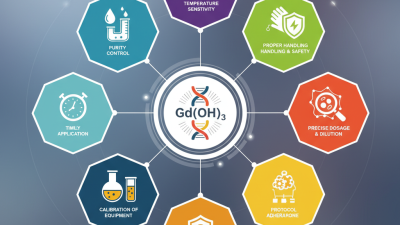
Tips: Always ensure proper calibration of your NMR equipment. Verify the concentration of gadolinium hydroxide before experiments. Regular training on NMR technology can significantly improve outcomes. Understanding its properties is crucial for precise applications. While the benefits are clear, attention to detail is vital in achieving trustworthy results.
Top Benefits of Gadolinium Hydroxide in Modern Applications
| Application Area |
Benefit |
Description |
| Nuclear Magnetic Resonance (NMR) |
Improved Signal Quality |
Gadolinium hydroxide helps enhance the signal-to-noise ratio in NMR studies. |
| Contrast Agent in Imaging |
High Contrast Resolution |
Used as a contrast agent in MRI to highlight tissues with high clarity. |
| Medical Research |
Targeted Drug Delivery |
Facilitates drug delivery to specific tissues, enhancing therapeutic efficacy. |
| Material Science |
Magnetic Properties |
Utilized in creating materials with specific magnetic characteristics. |
| Nanotechnology |
Nanoparticle Synthesis |
Key component in synthesizing nanoparticles for drug delivery applications. |
Gadolinium Hydroxide in Electronics and Semiconductor Industries
Gadolinium hydroxide is emerging as a vital material in the electronics and semiconductor industries. Its unique properties, including high thermal stability and excellent electrical conductivity, make it an ideal component in various applications. For instance, it plays a crucial role in the fabrication of semiconductors, enhancing their performance and longevity. Manufacturers often rely on gadolinium hydroxide to ensure better energy efficiency in electronic devices.
In the semiconductor sector, gadolinium hydroxide acts as a dopant. This integration can improve the characteristics of devices like transistors and integrated circuits. The precise control it offers during the semiconductor manufacturing process is impressive. However, working with such materials requires a deep understanding of their behavior under different conditions. Each stage of implementation needs careful consideration to avoid potential pitfalls.
Moreover, the environmental impact of using gadolinium hydroxide cannot be overlooked. While its benefits are significant, we must also reflect on sustainable practices. The production process must adhere to safety standards to mitigate any adverse effects. Balancing innovation with responsibility is essential to ensure the long-term viability of gadolinium hydroxide in electronics.
Environmental and Safety Considerations in Using Gadolinium Hydroxide
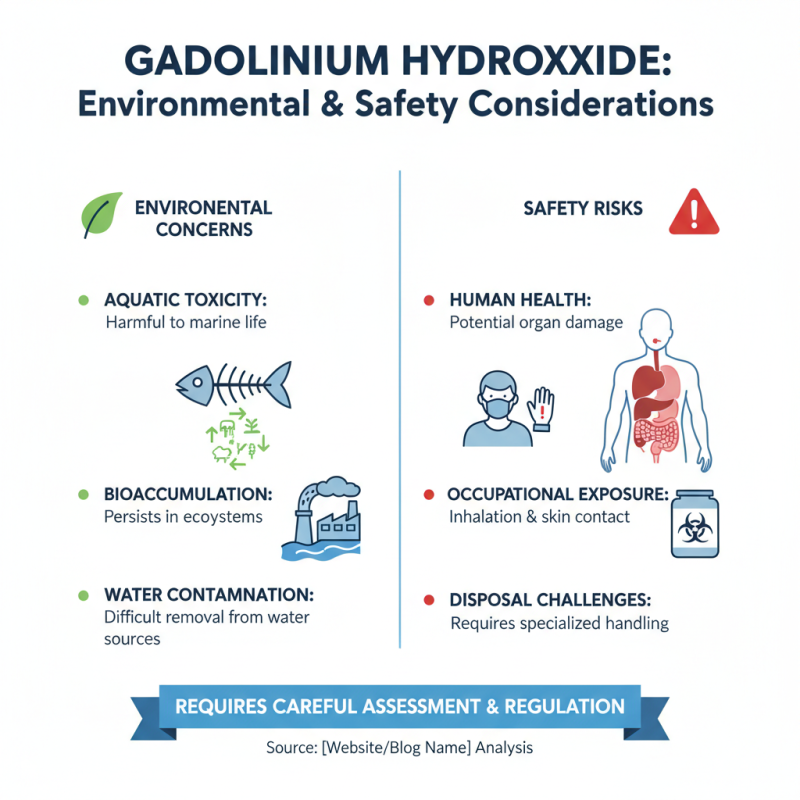
Gadolinium hydroxide is increasingly used in modern applications. However, environmental and safety concerns arise with its use. This compound, while beneficial in various industries, poses risks that require careful assessment.
Environmental impact is a pressing issue. Gadolinium can accumulate in aquatic systems. This raises questions about its effect on local ecosystems. Studies show that even small quantities can disrupt aquatic life. Hence, proper disposal methods must be established. Industries should implement recycling techniques to minimize waste.
Safety considerations are equally important. Exposure to gadolinium compounds can lead to health issues. Workers must use protective equipment when handling the substance. It’s vital to train personnel on safe practices. Despite its advantages, manufacturers should continuously evaluate the risks. Addressing these concerns is crucial for sustainable use.